
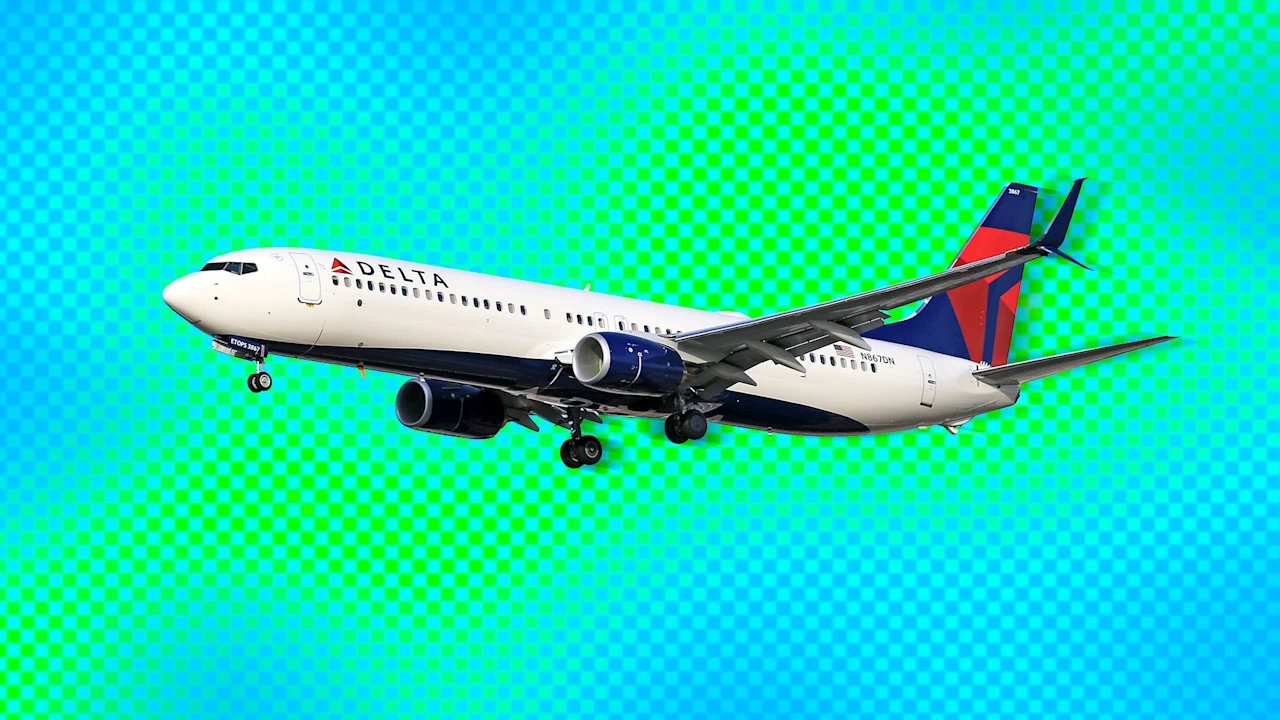
Shares in Delta Air Lines, Inc. (NYSE: DAL) are on the rise this morning after the company reported its Q1 2026 results.
While Delta comfortably beat revenue expectations, the U.S. air carrier also addressed the biggest challenge it is currently facing, rising gas prices, and how it is working to mitigate that challenge. Here’s what you need to know.
Delta’s Q1 beats expectations, stock surges
On Wednesday, Delta Air Lines announced its Q1 2026 financial results, covering the January through March period. The results, announced before markets opened, showed the company had a strong quarter.
The company reported non-GAAP operating revenue of $14.2 billion and an earnings per share (EPS) of $0.64.
To put those numbers into greater perspective, Wall Street analysts were expecting Delta to post $14 billion in revenue and an EPS of $0.57, notes CNBC. In other words, Delta handily beat Wall Street expectations.
In a bit of fortuitous timing for Delta, the airline reported its latest earnings just hours after the U.S. and Iran agreed to a fragile two-week ceasefire, which will see the Strait of Hormuz, a critical oil shipping route, reopened.
That news sent the price of a barrel of oil plunging below the $100 mark for the first time in weeks.
It’s particularly good news for airlines like Delta, whose fuel expenditures are among their greatest potential liabilities when it comes to profitability.
As a result of Delta’s expectation-beating Q1, combined with investor relief over the reopening of the Strait of Hormuz, Delta shares surged in premarket trading. At the time of this writing, they are currently up more than 11% to above $73.
Delta signals how it will combat rising gas prices
But investors might not only be cheering Delta’s earnings and the reopening of the Strait of Hormuz. Many are also likely satisfied with Delta’s game plan for offsetting higher oil and gas prices.
Along with announcing its Q1 results, Delta CEO Ed Bastian confirmed that passenger demand remains strong.
That’s normally a good thing—an airline generally wants as many customers as possible. But at a time of spiraling oil and gas prices, a strong customer base means airlines need to buy more fuel to move passengers from point A to point B. Paying higher costs can eat into profits.
To counteract this potential hit to the company’s bottom line, Bastian said that Delta would take “actions to protect our margins and cash flow.”
Those actions include “meaningfully reducing capacity growth, with a downward bias until the fuel environment improves, and moving quickly to recapture higher fuel costs.”
To put that in plain English, it means that Delta will likely reduce the number of flights it offers, or cancel some routes altogether. This will make fewer seats available, saving on fuel costs, but that scarcity will mean Delta can charge more for the seats it does offer.
And this isn’t the only way Delta plans on combating higher fuel costs. Bastian also said the company will move “quickly to recapture higher fuel costs,” which is basically corporate-speak for passing those increased fuel costs on to customers.
Earlier this week, Delta announced it was raising its checked baggage fee by $10, following other airlines that are doing the same. Another way Delta could recoup higher fuel costs from passengers is by adding fuel surcharges to flight prices.
DAL stock is once again green for the year
Yesterday, Delta’s stock price closed at $65.62 per share, representing a year-to-date loss of around 5.4%. But with today’s double-digit gain, DAL stock is now firmly in the green for the year.
And Delta’s isn’t the only airline stock seeing double-digit growth today.
In addition to Delta, American Airlines Group Inc. (Nasdaq: AAL) is up 11%, United Airlines Holdings, Inc. (Nasdaq: UAL) is up 12%, and Southwest Airlines Co. (NYSE: LUV) is up nearly 11%, as of the time of this writing in premarket trading.
This suggests the primary factor spurring investors to buy into airline stocks this morning is the U.S.-Iran ceasefire agreement to reopen the Strait of Hormuz.
However, the ceasefire is currently scheduled to last only two weeks if the warring nations cannot reach a final agreement.
If the ceasefire expires or, worse, doesn’t hold until then, all the airline stocks getting a boost today could be in for a future beating.



