
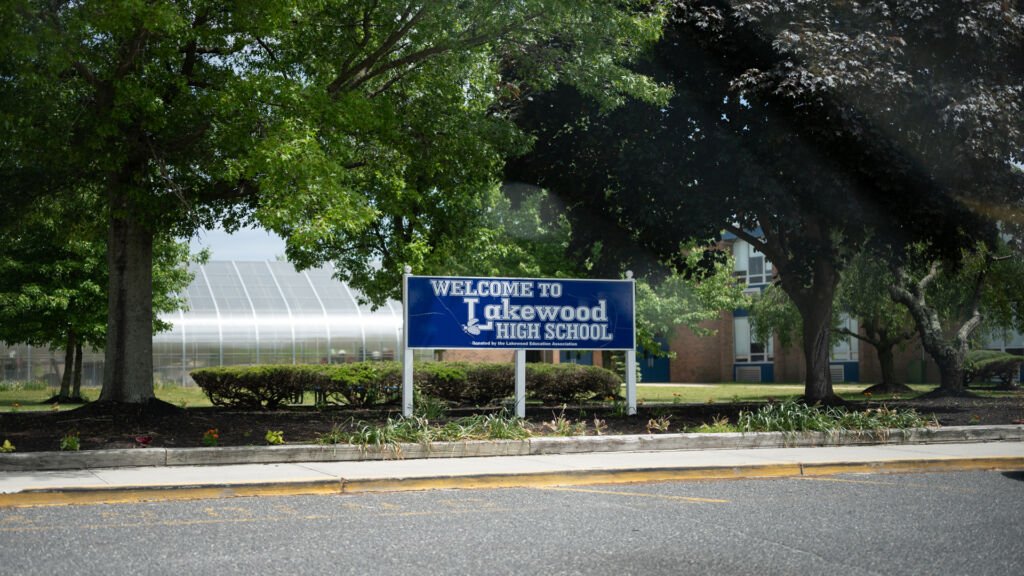
For a dozen years, a group of Lakewood families told the state that their kids were failing to get the “thorough and efficient” education promised to them. All the way to the state Supreme Court they went, ready to argue, once again, that the New Jersey School Funding Reform Act was to blame.
Instead, the high court turned them away, declining in late March to hear the plaintiffs’ appeal of a lower court ruling — one that said, in effect, that the problem wasn’t the state, but Lakewood itself.
With that, the battle, known as the Alcantara case, came to a stop.

“It’s in a way surprising. But more than that, disappointing,” Paul Tractenberg, co-counsel for the plaintiffs, told NJ Spotlight News. “In effect, it’s the end of the case that we’ve been litigating for 12 years.”
The state’s school funding formula, which divvies tax dollars to local districts, has been debated since the law behind it was enacted in 2008. Many districts and education advocates argue that without more state funding, they can’t fulfill recent state mandates related to technology, mental health and special education.
As school boards pitch their budgets for next school year, the pressure grows to modernize the formula, with an increasing number of districts reporting tighter budgets, runaway costs and insufficient revenue streams to offset deficits.
The Alcantara case put into sharp focus the financial constraints of the Lakewood school district, which is largely Hispanic and low-income with a significant percentage of English language learners and students with disabilities.
The plaintiffs argued — initially before the state Department of Education’s administrative law judges and then before the appellate court — that the school funding formula should be adjusted for Lakewood given its unique demographics. The Ocean County township is New Jersey’s fourth-largest municipality by population, fueled in the past decade by a burgeoning Orthodox Jewish community.
In 2023, the township had about 37,000 school-age children, and only 6,000 enrolled in the public school system, according to court records from that year. Since then, the number of children in the township has increased, with most sent to private religious schools, while the public school population has dwindled to fewer than 5,000.
By state law, districts that bus public school students also must cover transportation costs to and from private nonprofit schools. Districts have the option of providing “aid in lieu of transportation,” or family stipends to make their own arrangements.
More than half the district’s $300 million annual budget has gone toward bus transportation costs and special education tuition for nonpublic students, which is also required under state and federal law.
Meanwhile, state aid is a complex calculation based on a school district’s number of students. In Lakewood, the nonpublic school population outweighs the public students, causing a stark funding imbalance and putting a seemingly never-ending strain on the district budget, the plaintiffs argued.
In September an appeals court issued a 19-page decision declaring that the district’s budget crisis was not due to the state funding formula, but rather to years of local documented fiscal mismanagement, a failure to raise taxes and issues involving busing and special-education costs.
That judgment aligned with previous decisions from administrative law judges at the state Department of Education. And it was one that the high court, in a ruling delivered on March 27, declined to revisit.
“In my view, the case sort of implicates the constitutionality of the School Funding Reform Act more broadly, and the Supreme Court just wasn’t willing to engage with that,” Tractenberg said.
After 12 years, Tractenberg said he doesn’t regret a day of the pro bono advocacy work he put into the case, though he called the Supreme Court’s lack of involvement “a bittersweet moment.”
“I’m deeply saddened that the court’s unwillingness to grant our petition for certification may leave Lakewood’s 4,500 low-income public school students of color with no assurance that they will receive T&E in the foreseeable future, let alone now when it really matters to them,” said Tractenberg, referring to the “thorough and efficient” requirement in the constitution.
The state Attorney General’s Office and state Education Department declined to comment on the Supreme Court’s decision.
The district is fighting the state’s effort, initiated in January, to take full control of Lakewood schools due to their ongoing financial problems. Lakewood schools filed a 100-plus page argument against state intervention. The issue will be heard before an administrative law judge in the state Education Department in the weeks to come.
Lakewood schools general counsel Joshua Forsman said in a statement that the district was aware of the denial to review the Alcantara case.
“As the district was not a party to that litigation, it would not be appropriate for us to comment, particularly given the ongoing litigation commenced by the Department of Education,” Forsman said in an email.



