
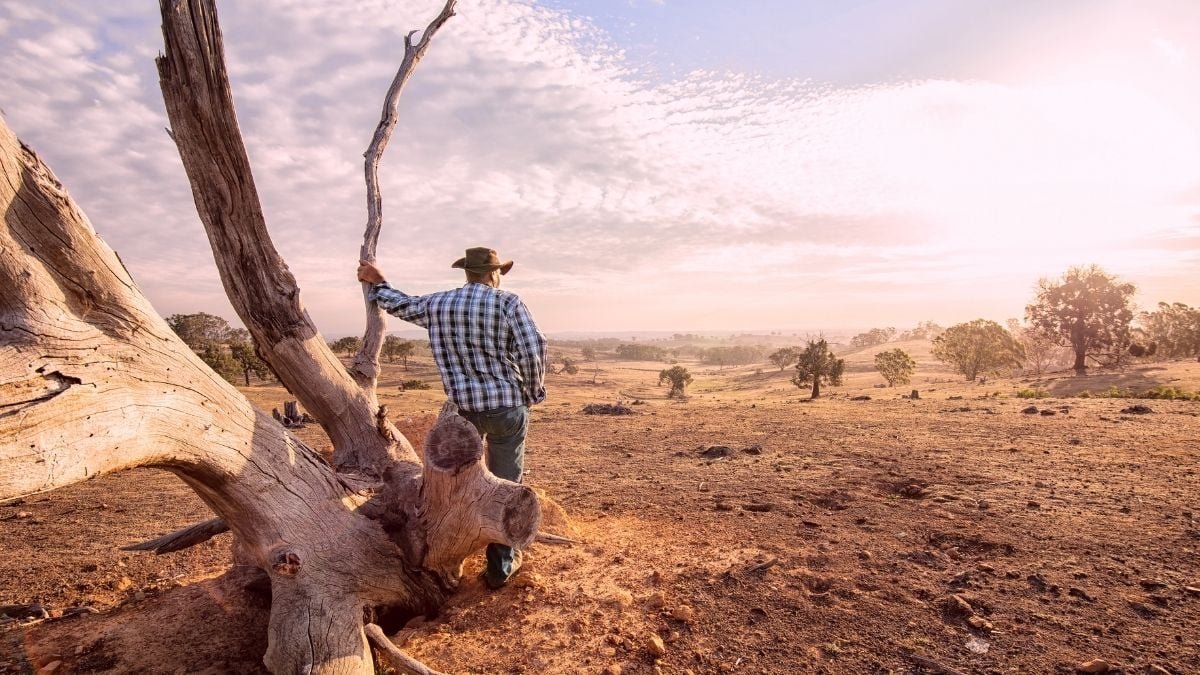
Increasing droughts due to global climate change may be creating the perfect conditions for antibiotic-resistant bacteria to evolve, according to a new study.
Excessive use of antibiotics in medicine, it seems, is not the only factor driving resistant bugs. The new research also suggests that what’s happening outside hospitals, in the Earth’s soil, could impact antibiotic resistance within healthcare settings, too.
The study, from researchers at the California Institute of Technology (CIT), reveals that drought can concentrate natural antibiotics in soil – pushing microbes towards evolving antibiotic-resistant genes.
As drought becomes more frequent, intense, and widespread due to climate change, microbes with the genetic toolkit to survive these concentrated levels of soil antibiotics are having their day in the sun.
Bacteria have been producing antibiotics in the soil long before we harnessed these compounds in medicine, as a way of getting an advantage over their microbial competitors.
“Likewise, antibiotic-resistant bacteria, and the genes that confer their resistance, long predate human medicine, having evolved as natural defenses against antibiotic-producing bacteria,” explains microbial ecologist Timothy Ghaly from Macquarie University in Australia, who was not involved in the study, in an accompanying perspective.
This, he says, “raises a pivotal question: What environmental factors might promote the spread of antibiotic resistance genes from the reservoir of soil bacteria into the built environment and clinical human pathogens?”
To answer this question, the CIT team analyzed five datasets from studies of soil samples collected in the USA, China, and Europe. This captured the effects of drought on soil microbe communities across a range of environments, including cropland, grassland, forests, and wetlands.
Across all five datasets, drought conditions went hand in hand with an uptick in the abundance of genetic material from antibiotic-producing bacteria, as well as genes known to confer antibiotic resistance.
In other words, the bacteria in drought-affected soil samples appeared better adapted to survive antibiotic exposure.
In accompanying lab experiments, scientists added an antibiotic to a miniature soil ecosystem, which they dried out to simulate drought. The conditions increased the concentration of that antibiotic in the soil.
Species of bacteria in the soil that were already resistant to the antibiotic survived just as easily in the dry soils as in damp soils, but strains that were sensitive to the antibiotic almost entirely died off in the ‘drought’ scenario.
Among those that survived were some antibiotic-producing bacteria (which are inherently resistant to their own compounds). In the end, the soil was enriched in both antibiotic producers and antibiotic-resistant bacteria.
“Having established drought’s role in amplifying antibiotic resistance in soil, the authors, in perhaps their most alarming finding, link this natural phenomenon to global public health,” Ghaly explains.

In an analysis of hospitals across 116 countries, the researchers found an extremely strong link between the frequency of antibiotic resistance inside hospitals, and the local aridity index – that’s how dry the climate is – outside.
That link held up, even when the researchers adjusted for national income, a factor that can affect antibiotic usage and the healthcare system overall.
“This suggests that a core driver of clinical resistance operates via a global environmental mechanism, whereby climatic conditions in natural ecosystems can influence pathogen evolution in the built environment, and ultimately human health,” Ghaly writes.
Related: Ancient Killer Is Rapidly Gaining Resistance to Antibiotics, Scientists Warn
While it’s not enough evidence to say that droughts are causing increased antibiotic resistance in clinical settings, it does suggest climate change – and especially the droughts it’s intensifying – could increase the risks.
“Our study offers a clear example of how climate change has the potential to intersect with microbial ecology to shape public health outcomes… [underscoring] the importance of integrating environmental and clinical perspectives… ” the authors conclude.
“As climate instability intensifies, such integrative approaches will be critical for anticipating and mitigating the global trajectory of antibiotic resistance… “
The research is published in Nature Microbiology.



