
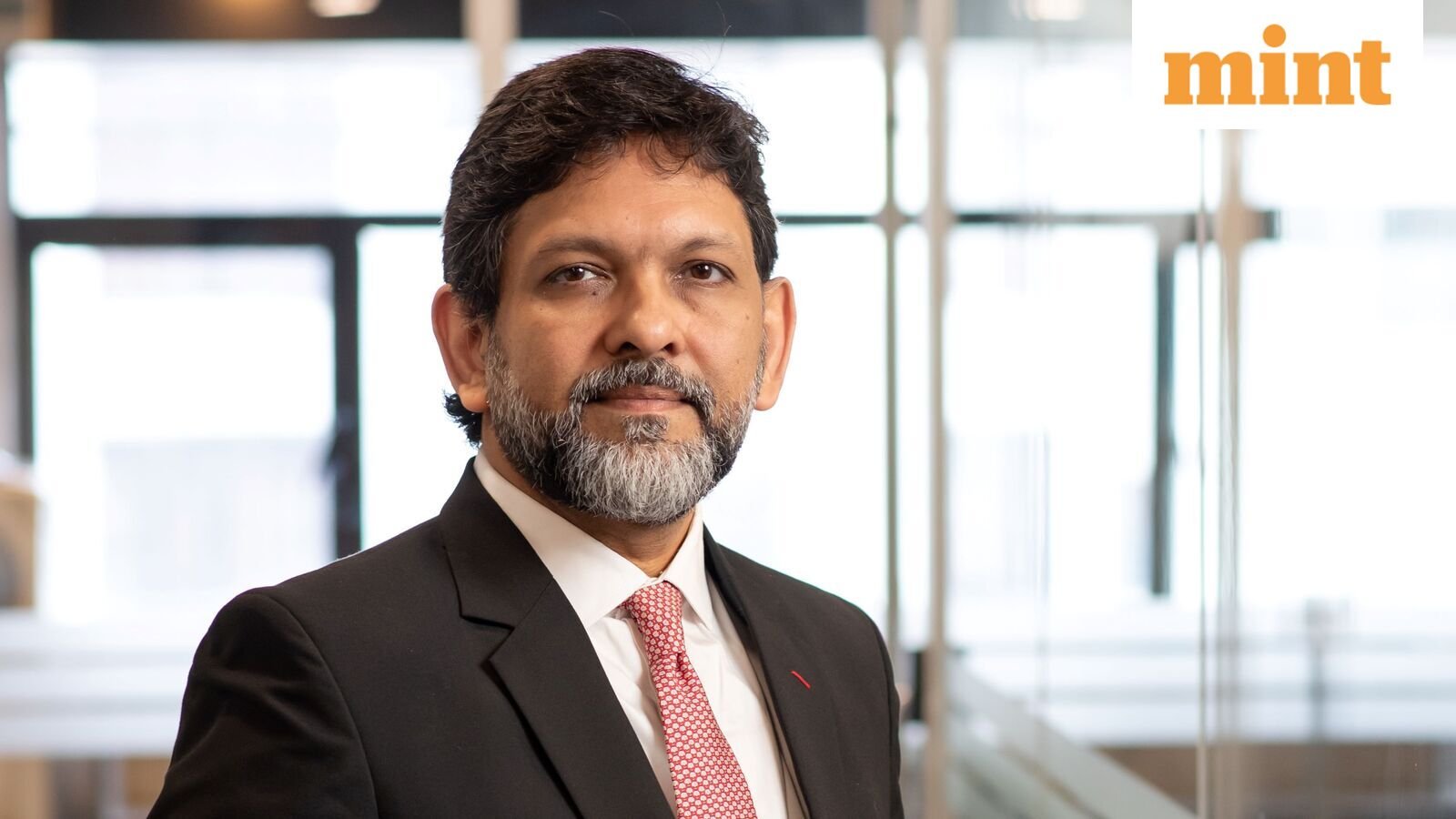
True long-term wealth, however, rarely depends on tax tweaks or daily headlines. Mint spoke with Kalpen Parekh, managing director and chief executive officer of DSP Mutual Fund, about the discipline of tuning out the noise, risks for the Indian market over the coming year, avoiding common behavioural traps, and recent rebalances within his own portfolio.
Here are some edited excerpts from the interview.
How should investors look at events like the Union Budget?
I’ve been an investor since 1998. There is a Budget almost every year, and some years there are two. Over 30 years, with all the ups and downs, the Indian markets have compounded at more than 13% annually. The Budget is an annual accounting exercise of the government of India, like our household budget that we make once a month or so. We tend to over-allocate our time and attention to such annual events when managing our money over several decades.
Over the medium to long term, the Budget has a very limited bearing on an investor’s returns. The only thing that truly matters is an investor’s behaviour at different points in time. So long as investors remain disciplined, don’t get excited when markets rise sharply or fearful when they fall, they should be fine.
Obsessing about Budgets, credit policy, or Fed statements makes for interesting conversations, which have almost no connection to return outcomes. We are perhaps the only industry in which these conversations happen. To investors, I say: do not obsess, build long-term portfolios. Markets are fine, they might fall 1% or 2% on an event, but over a 20- or 30-year period, those movements have no impact.
There was a change in futures & options (F&O) taxation in the Budget. How will it affect the mutual fund industry and investors?
This marginal tax increase is to discourage intense speculation among retail investors, most of whom lose money in the segment. While it may impact high-frequency trading (HFT) firms and near-term liquidity of the market, an investor who is not doing F&O will not be affected. For the industry, there is no impact as 99% of mutual fund investors are in equity funds.
The only marginal impact is on arbitrage funds. In these funds, you buy stock in the cash market and sell in the futures, rolling the position every month. The rolling costs will likely increase by 25–30 basis points. This affects bigger investors who invest in arbitrage funds. For the average investor, this is not something to worry about.
In a world of financial FOMO, how can investors stay disciplined?
Rolf Dobelli has said that “news is to the mind what sugar is to the body”. This is especially true for investing decisions. I’ve learned over time, after making my own investing mistakes and reacting to everyday noise, that by the time news has come to me, the market already knows, so reacting is futile and counterproductive. React less and spend more time focusing on skills and your job.
Investing has to be meditative; it’s not easy. If you want mediocre outcomes, follow the FOMO, buy when silver is rising, and sell when it’s falling. To get superior outcomes, you must identify bad investing practises and avoid them.
Good investors are the ones who look at personal financial plans that match their time horizon and stay invested in the right asset class. If you have a one-year goal, keep that money in safe assets such as debt or arbitrage funds. If your goal is five years away, look at hybrid funds. For 10 to 20-year goals, choose equity.
Your portfolio’s risk appetite should match to your goal’s timeline. This is the first thing to do and it’s timeless. The beauty of a systematic investment plan (SIP) is that you aren’t buying ‘today’s’ market; you are averaging your cost over time. Whether the market is high or low today becomes irrelevant.
We’ve seen a massive run-up in gold and silver. What does the risk-return equation looking like to you?
The best time to discuss gold and silver was two or three years ago, when they were cheap. We launched a silver fund three years ago, and it’s up 500% since then. But when an asset class with no cash flows goes up five times in a few years, getting excited about it is a mistake.
What is popular today is rarely profitable over the next few years. The best returns are earned by investing in asset classes that have had poor recent returns and are currently out of favour. Gold and silver have reached a stage where they are the talk of the town, which often signals a phase of volatility.
How should one manage these precious metals in a portfolio now?
They should never be seen in isolation but as part of a diversified, multi-asset portfolio. Gold and silver can go 10 years with zero returns and can fall 70% after a peak. If you have zero exposure, start a small SIP to build a 3-5% position.
But don’t dump 10% of your portfolio into it just because it’s down 30% from a high. If you find these cycles too complex, give your money to a multi-asset fund where the manager can tactically shift between 10% and 20% based on valuations.
How should investors choose between active and passive funds?
Passive funds have a cost advantage, but you must know what you are buying, as there are over 200 funds in the passive category itself. If you want to start with a passive fund, it should be a broad market index fund.
There are too many ‘smart-beta funds’ that people invest in at the wrong times, when that ‘smartness’ has become extremely expensive. It’s important to know the underlying formula behind these funds, as there are so many dimensions. If at all one wants to start, they can do so with a Nifty 50 or a Nifty Equal Weight 50 fund.
Active funds have higher fees but offer a chance to outperform the index. Sometimes they have high returns, and more money comes in when the high returns have already come in.
Every manager goes through rough patches. Even Warren Buffett has underperformed the S&P 500 for long stretches. I would actually prefer to invest in an active fund when it is underperforming its benchmark, rather than when it is at an all-time high. I would also tell investors to be loyal to their fund manager in the bad times.
What are some of the primary risks you see for the Indian market over the next year?
The Indian market has risen sharply over the past five years, but over the past year we have seen consolidation. Valuations are still not cheap. For a market like India’s, a fair price-to-earnings (PE) multiple is around 17 to 18. We are currently at 21 to 22. We are essentially 18 months ahead of our fair value. The market is expensive, so our return expectations must be moderated.
Where do you see opportunities in the market now?
The opportunity lies in the consolidation itself. The period between 2008 and 2013 saw zero market returns, yet SIP investors earned 9–10% through discipline. Today, bond yields have drifted up to 7% while inflation is at 4%, offering a healthy 3% real rate of return. The opportunity today is diversifying into Indian and global companies, precious metals, and fixed income.
Banking stocks have also underperformed for the past five to six years and now present an interesting value proposition. A good fund manager will be able to identify these and put a portfolio together.
How have you rebalanced your own portfolio recently?
I don’t rebalance too often. I only act when an asset class hits an extreme. Recently, I trimmed my exposure to gold mining stocks by about 3–4% after they rose sharply. Otherwise, my core portfolio is 65% in growth assets (Indian and global stocks), 25% in bonds, and about 12% in gold.



