
WASHINGTON — Mikayla Pivec said she worked more than 50 hours per week as a women’s college basketball player, but earned less than $8 an hour from a $1,600 monthly stipend.
The professional basketball player and former star at Oregon State University said she was testifying at Thursday’s U.S. Senate panel hearing on reshaping college athletics because “the NCAA has failed and continues to fail to protect and respect college athletes.”
Pivec, who worked for a food delivery service and “collected cans” to make ends meet in college, played for Oregon State prior to the NCAA’s 2021 guidelines that allowed student-athletes to profit from their name, image and likeness, or NIL.
“NIL has helped some players, but most still earn less than $10 an hour and struggle to pay for basic necessities,” she told the Senate Committee on Health, Education, Labor and Pensions.
Pivec said “the lack of protections goes way beyond money,” noting that she had a foot injury that needed surgery and was denied an MRI “every single time” she requested one.
She is the co-founder and organizing director of the United College Athletes Association, a players’ association that aims to ensure college athletes are protected, educated and fairly compensated.
Another ‘unfair system’
The college sports landscape continues to grapple with gender inequity in NIL deals, a patchwork of state NIL laws, booster collectives and the NCAA’s controversial transfer portal, among other issues.
Just last year, a federal judge approved the terms of a nearly $2.8 billion antitrust settlement that paved the way for schools to directly pay athletes.
At a White House roundtable this month, President Donald Trump vowed to imminently deliver an executive order aimed at reshaping college sports.
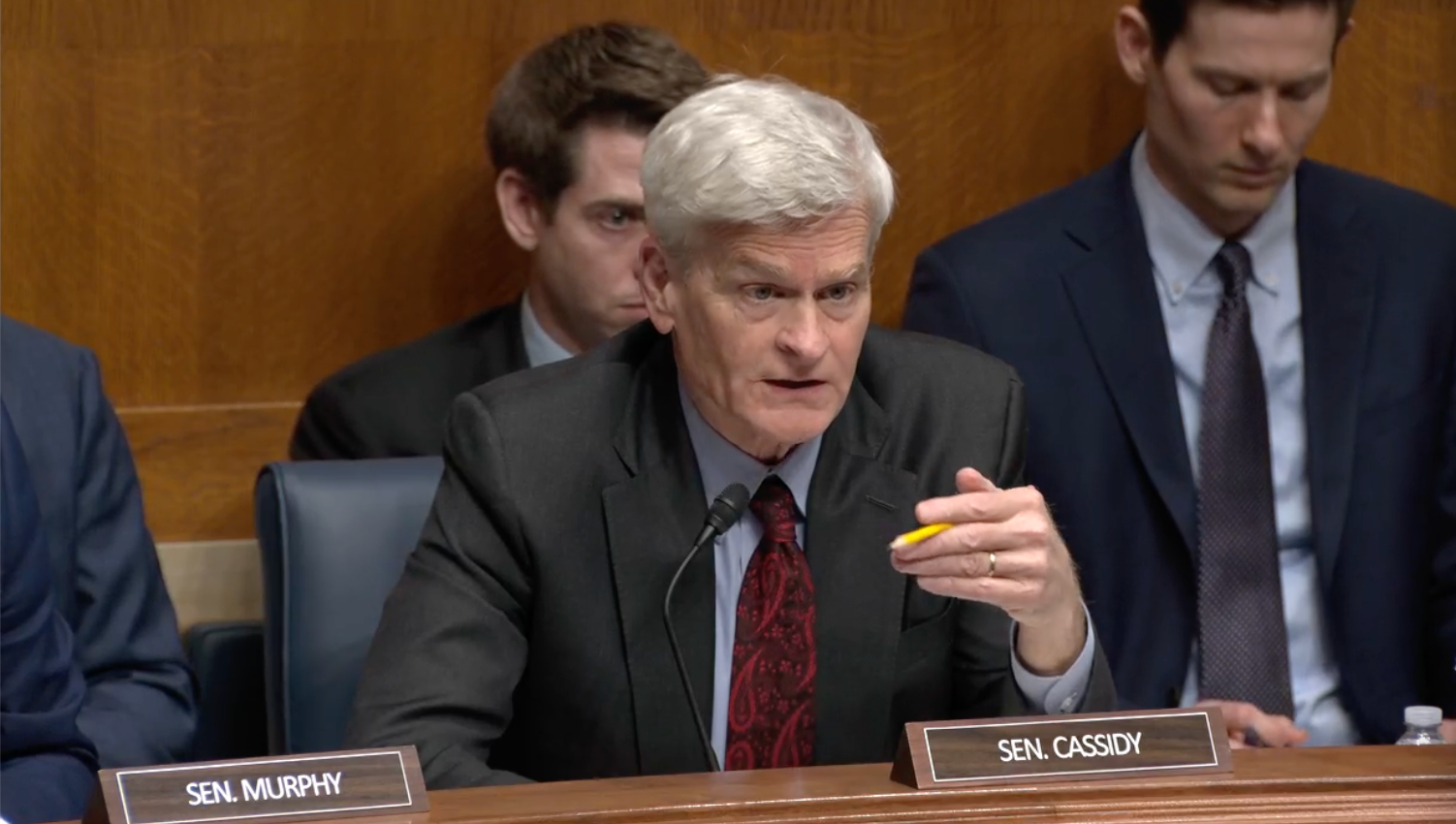
“The current landscape is just replacing one unfair system for another,” said Sen. Bill Cassidy, chair of the Senate HELP Committee.
“Short-term financial gain with NIL deals is overshadowing the value of an education and the value of Olympic and women’s sports,” the Louisiana Republican said.
Employees?
The fierce debate over whether college athletes should be considered employees took center stage Thursday, drawing mixed attitudes from senators, experts, leaders and athletes.
“I think the political dynamic is that Republicans and Democrats aren’t that far off from what we agree on — it’s just this one small issue that gets in the way from us passing something related to unionization and how we treat students-athletes, whether we treat them as employees or not,” said Sen. Jim Banks, an Indiana Republican.
A bipartisan bill on pause in the U.S. House looks to create a national framework for college athletes’ compensation and would prohibit college athletes from being classified as employees.
The measure would also give broad antitrust immunity to the NCAA and college sports conferences.
Sen. Chris Murphy, who has advocated for collective bargaining, said he does not want Congress “in the business of micromanaging college athletics and how compensation works.”
“That just doesn’t feel like our role,” the Connecticut Democrat said, while blasting the bipartisan bill as an “effort to put the big schools back in a position where they can collude and wage-suppress.”
Trayvean Scott, vice president of Intercollegiate Athletics at Grambling State University in Louisiana, pointed to a “strain” that athletic departments, and under-resourced institutions in particular, would begin to face as a consequence of student-athletes becoming employees.
“When you look at that, my belief is that roster spots will start to be reduced, specifically to those non-revenue sports, specifically on the men’s side,” he said. “For an institution at Grambling State University, where we have 15 Division I sports, that means baseball is probably going to go first.”



