
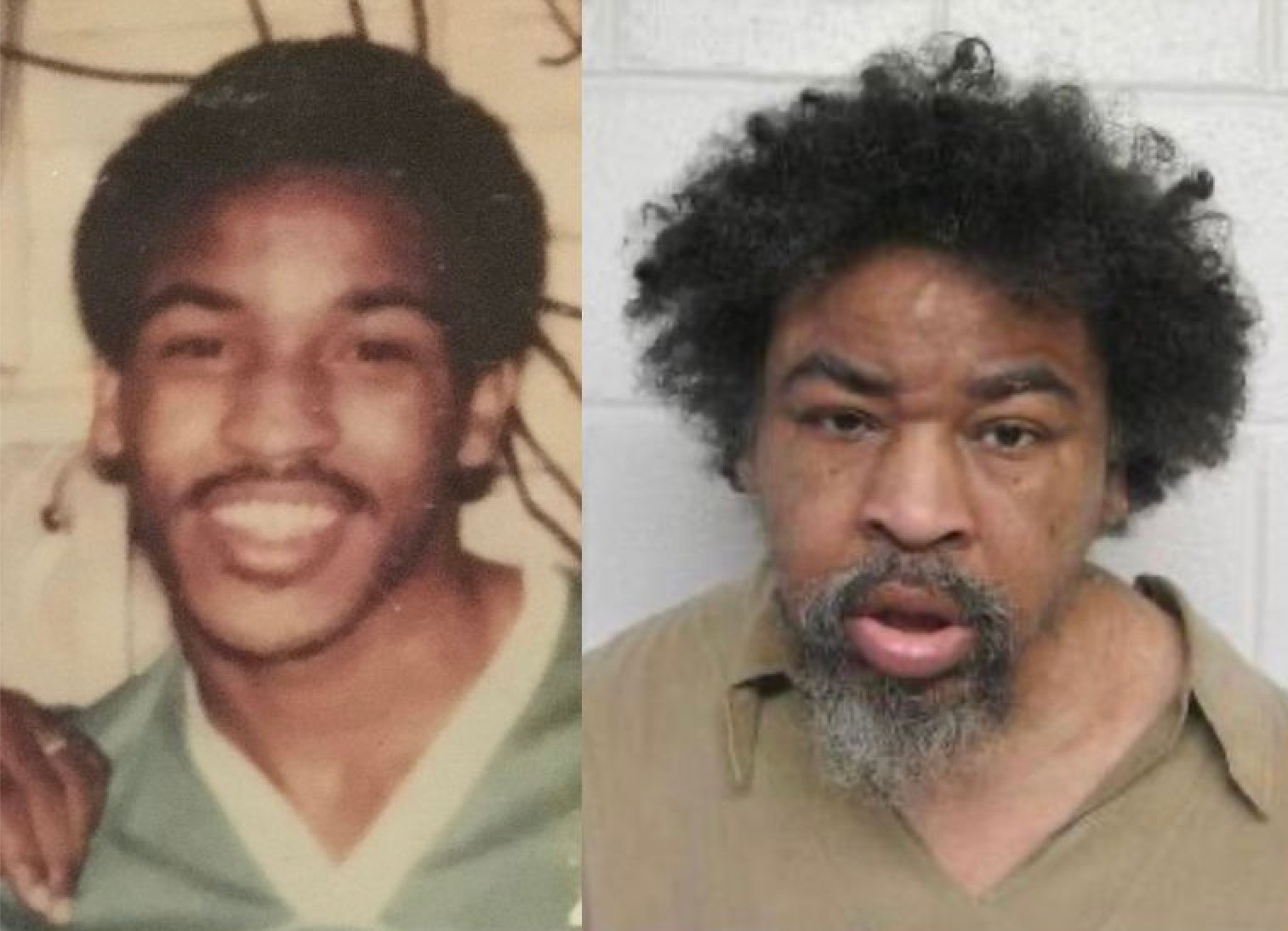
An Essex County prosecutor wants a state judge to reject a Newark man’s bid to vacate his murder conviction.
Former Gov. Phil Murphy commuted Darren Boykins’ prison sentence in January after Boykins spent 45 years behind bars, but Boykins continues to fight for exoneration because he has always maintained his innocence in the 1981 murder of a carpet salesman.
In a brief filed Thursday, Assistant Essex County Prosecutor Nidhi Goel urged state Judge John I. Gizzo to deny Boykins’ request for a hearing, calling his claims of injustice “subjective.”
Goel argued that John Crayton, the pro bono attorney who represents Boykins, rehashes old evidence that a state judge rejected during a six-day post-conviction relief hearing in 1989. An appellate panel affirmed that judge’s ruling, she added.
“Here, the petition offers no new affidavits, no witness recantations beyond those already rejected, and only speculation. The 1,451-page transcript record is complete. Credibility determinations were made in 1989 and affirmed. A hearing would be an unwarranted expenditure of judicial resources 45 years after the crime,” Goel wrote.
Crayton has accused police, prosecutors, judges, and others of misconduct, saying authorities hid exculpatory evidence during Boykins’ trial and subsequent post-conviction and parole hearings that could have cleared him in the May 22, 1981, slaying of Milton Laufer.
He told the New Jersey Monitor he found Goel’s brief disappointing but “very predictable.”
“The one comment about wasting judicial resources after 45 years is pretty heartless — we’re talking about a man’s life here,” Crayton said.
He pointed to Philadelphia, where more than 50 people have been exonerated since 2016, most since District Attorney Larry Krasner, a former public defender and civil rights attorney, stepped up conviction integrity reviews after he took his post in 2018. In comparison, Essex County has had just one exoneration since Theodore N. Stephens became prosecutor in 2018, according to the National Registry of Exonerations. In that case, Naeem Miller was exonerated in the 2001 shooting death of a man after a bar fight in Newark. A judge in 2023 agreed with Miller’s attorney that Essex County prosecutors wrongly hid exculpatory evidence during his 2005 trial and granted Miller a new trial; a jury acquitted him last August.
In a response filed with the court Saturday, Crayton urged Gizzo to proceed with a hearing.
“The Essex County Prosecutor’s Office does not even consider the possibility, or in this case the probability, that some of its former employees and a Newark detective could have been unethical or even criminals. That seems to be an overall office policy,” Crayton wrote.
A spokesperson for Stephens’ office did not respond to a request for comment. A telephone conference is scheduled before Gizzo on May 8.
Boykins, who was 19 at the time of his arrest, had an alibi the day of the murder that five people backed up, investigators never found a murder weapon, and two witnesses repeatedly could not identify him as the killer. But jurors convicted him largely on the word of a jailhouse informant, who later recanted, and a photo lineup 39 days after the homicide that Crayton contends was improper and unconstitutional. Boykins was sentenced to life, with no possibility for parole for 25 years. While he has been eligible for parole since 2006, he had been denied parole repeatedly.
He was among one of 148 people Murphy granted clemency to on his last day in office in January. Most people granted commutations leave prison as soon as the paperwork is done, usually within days or a week.
Boykins, though, remains institutionalized after state corrections officials in February secured a court order in Mercer County to have him involuntarily committed to the Ann Klein Forensic Center in West Trenton. That’s a locked, state-run psychiatric hospital where the courts typically send people with serious mental disorders who are incarcerated in state prisons and county jails.
Boykins, now 64, had been in psychiatric care at New Jersey State Prison in Trenton, with diagnoses of schizophrenia and antisocial personality disorder, before his transfer to Ann Klein a month after his commutation. Crayton hopes to persuade a judge to eventually move him to a community-based psychiatric-care home closer to his family in Newark.
“There’s never going to be a happy ending for Darren,” Crayton said. “After 45 years, all you have to do is look at Darren’s before and after pictures, and you know there’s no happy ending anywhere. But at least he’s not still in prison.”
Crayton said he keeps fighting for exoneration because society must acknowledge its injustices.
“If he hadn’t been commuted, these people would still be arguing that he should stay in jail,” he said. “It’s just crazy.”
GET THE MORNING HEADLINES.



