
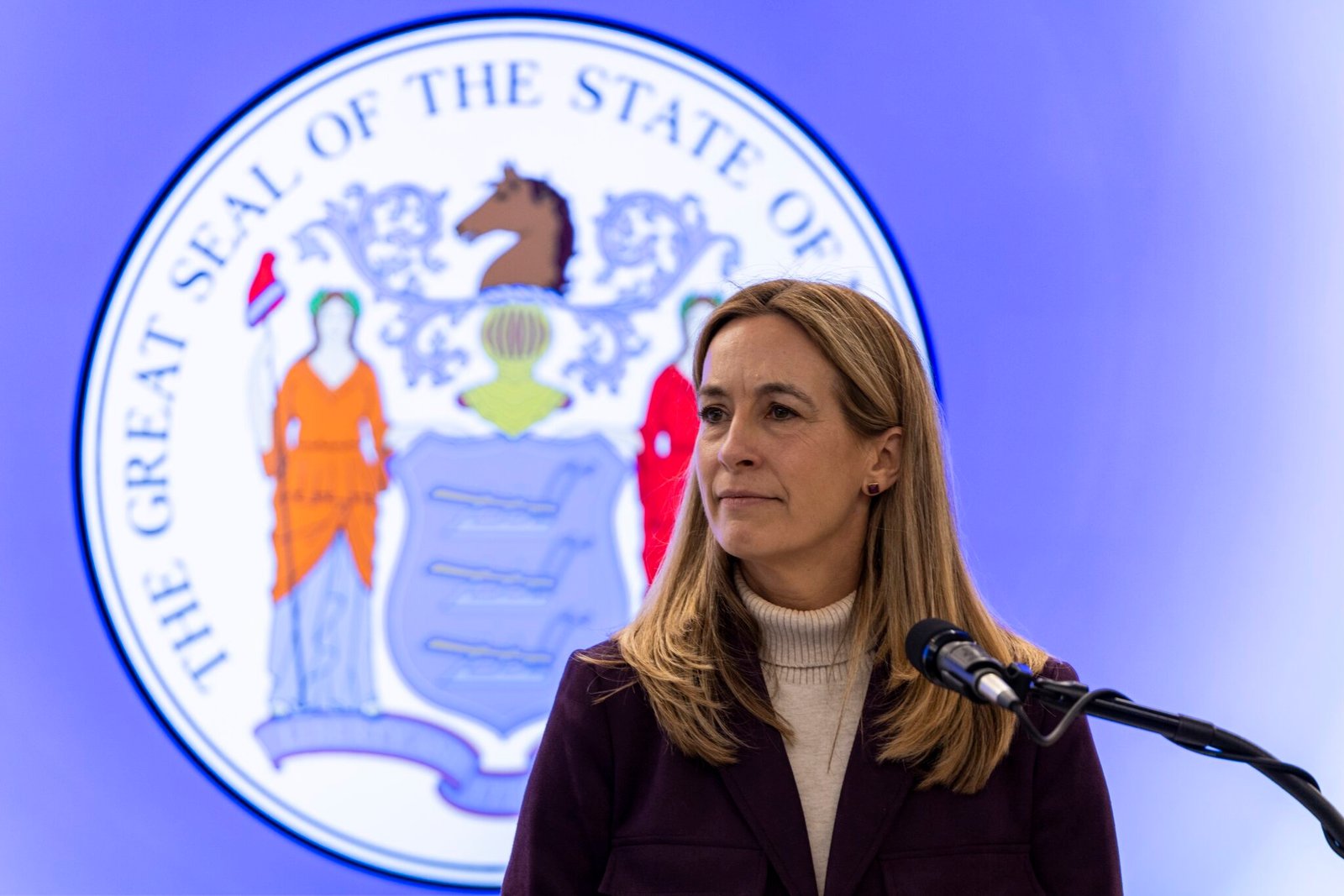
The Visiting Nurse Association Health Group runs programs across New Jersey that support struggling first-time moms, connect people with addiction treatment, prevent HIV, and help people with AIDS navigate care.
The nonprofit stands to lose $2 million under Gov. Mikie Sherrill’s $60.7 billion budget proposal, cuts that endanger these services, according to VNA Health Group President and CEO Christopher Rinn. The proposed cuts were detailed in a budget document the Sherrill administration released Tuesday.
“We were surprised and disappointed,” Rinn told the New Jersey Monitor. “These are important safety net programs. And make no mistake about it, without this funding, services will be scaled back.”
Gov. Sherrill aims to fund home nurse visits for newborns, moms in all 21 counties
Also at risk are LGBTQ services offered through the federally supported clinic run by a VNA Health Group affiliate in Asbury Park, Rinn said.
The VNA Health Group, which also offers home health care and hospice services through local affiliates, is one of more than 30 organizations that previously received grants from the state Department of Health to provide free cancer screenings, address diabetes, or reduce homelessness that Sherrill has recommended get no state dollars in the fiscal year that begins July 1.
Sherrill said she was forced to trim costs in the wake of federal funding cuts and rising inflation, but sought to protect access to essential health care. State lawmakers have until July 1 to draft and adopt a final state budget based on her proposal (in the past, lawmakers have restored some or all of the funding missing from a governor’s initial spending plan).
The Senate and Assembly budget committees held public hearings on Tuesday and Wednesday to get public input about the budget.
Many organizations, including hospitals and grassroots health groups, are especially concerned about Trump administration changes to the publicly funded Medicaid program, which could lead some 350,000 New Jerseyans to lose health care coverage and reduce federal hospital aid by $3.3 billion annually in the years to come. Sherrill’s budget allocates nearly $26 billion for the program, run by the Department of Human Services, with $7.1 billion from state taxpayers.
“Medicaid for us is critically important,” Axel Tores-Marrero, a leader at the Hyacinth AIDS Foundation, told lawmakers.
Nearly two-thirds of people living with or at risk for HIV/AIDS are covered by Medicaid, he said.
Rinn, with VNA Health, said Sherrill’s health care transition team warned about the impact of these changes and urged the state to work with private sector partners to support safety net health care options.
“These budget cuts will weaken an already fragile system,” he said.
When asked about the funding cuts on Wednesday, Sherrill’s office pointed to her message in the budget overview released earlier this month.
“The Governor’s budget acknowledges that public health investments and access to affordable preventative care are key to improving outcomes while reducing long-term costs. Even as the Sherrill Administration makes difficult decisions to ensure every dollar is spent wisely, the budget continues targeted investments in evidence-based programs that support individuals with disabilities and older adults, address mental health needs and the opioid crisis, and expand access to reproductive health care. These investments also help confront persistent health challenges, including protecting children and reducing Black maternal mortality,” it reads.
These budget cuts will weaken an already fragile system.
– Visiting Nurse Association Health Group President and CEO Christopher Rinn
Multiple groups asked lawmakers to restore funding reduced or eliminated in Sherrill’s proposal, warning that services will be suspended if the state doesn’t provide support. Her plan would eliminate funding for several free health clinics, a maternal health care initiative in Trenton, palliative care programs, resources for people with Tourette syndrome, and the Kindersmile Foundation, which provides free and low-cost dental care to kids.
The New Jersey Center for Tourette Syndrome and Associated Disorder, which received $455,000 in state funding the current fiscal year, would get zero under Sherrill’s plan. Emily Muldowney, a high school student with Tourette syndrome and member of the center’s youth council, urged lawmakers Wednesday to reverse Sherrill’s planned cuts.
“The Tourette families in New Jersey need your help. Please don’t forget about us,” Muldowney said.
Kathleen Noonan, president and CEO of the Camden Coalition, which runs various social services in South Jersey, said the organization needs $750,000 to continue housing roughly 50 chronically homeless people — people with mental illness and other chronic health needs who might otherwise be on the street.
The Coalition is also seeking $500,000 for a program designed to connect 6,000 patients who regularly ping-pong between emergency rooms with coordinated care, Noonan said. One man visited the emergency department at four different hospitals 97 times in six months before the Coalition’s “pledge to connect” program linked him to stable outpatient services, according to her testimony.
The group received a total of $2.5 million for these programs through legislative requests in the current fiscal year. Sherrill’s proposal provides nothing for this work.
“The people you walk by on the street, and you wonder who might be taking care of them. People like that are who the Camden Coalition works with,” Noonan said on Tuesday. “We need more programs like housing first and pledge to connect and we’re hoping that you’ll support us again to keep these programs running in 2027.”
In all, Sherrill’s budget for the Department of Health allocates $1.42 billion for the coming year, 7.3% less than the current year. The Department of Human Services would receive $11.4 billion, an increase of 9.3% from this budget year.
GET THE MORNING HEADLINES.



