31

 If you want to stay informed and join in on efforts to preserve and prosper South Jersey, follow South Jersey Preservation!
From Salem County to Valley Forge: The Revolutionary Cattle Drive That Fed Washington’s Army
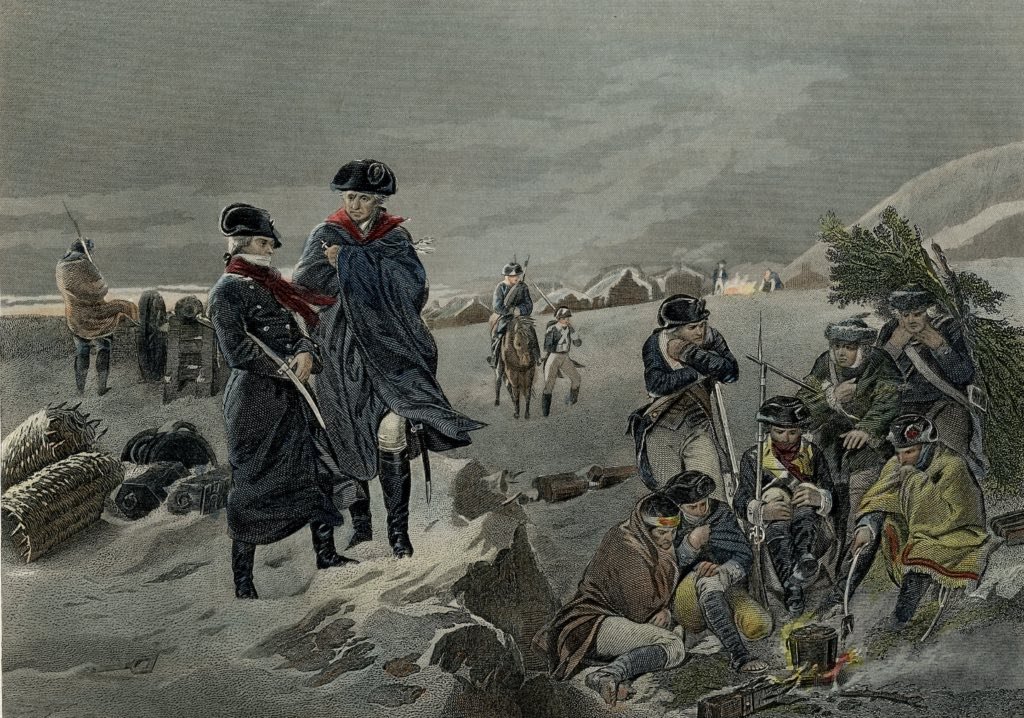
In the brutal winter of 1777 to 1778, George Washington’s Continental Army faced starvation at Valley Forge, PA. Soldiers suffered from shortages of food, clothing, and morale, with desertions rising amid freezing conditions. Southern NJ, often called the Revolution’s “Breadbasket” due to its rich farms, offered hope. Washington sent Brigadier General Anthony Wayne, known as “Mad Anthony” for his fearless style, to gather desperately needed supplies, especially cattle for meat and hides.
Wayne’s force of about 550 men crossed the Delaware River into Salem County on February 19, 1778, reaching the town of Salem that evening. Local farmers, wary of worthless Continental currency, had hidden livestock in swamps and woods. Wayne’s troops persisted, rounding up roughly 150 cattle in the county over several days. He also directed naval officer John Barry to burn hundreds of tons of hay along the Delaware to deny it to British forces in Philadelphia.
A local Loyalist tipped off the British, who sent over 2,000 troops under Lieutenant Colonel James Abercrombie to pursue. Wayne outmaneuvered them, heading north along King’s Highway through Sharptown and Swedesboro. The herd moved inland to avoid river patrols, linking up with militia under Colonel Joseph Ellis near Haddonfield in Gloucester County.
The 50-mile trek on foot tested men and animals through rough winter terrain. Skirmishes followed Wayne’s men along the way. Wayne recrossed the Delaware higher up, likely near Burlington or Trenton, to skirt occupied Philadelphia.
By early March, the fresh supplies reached Valley Forge. Estimates range from 150 to 250 cattle plus dozens of horses delivered to the desperate soldiers. This vital shipment provided fresh beef, leather for shoes and gear, and a crucial boost, bringing essential provisions to avert disaster and sustain the army until spring.
Though Wayne’s success frustrated the British, it sparked retaliation in Salem County. In March 1778, forces led by Colonels Charles Mawhood and John Graves Simcoe raided the area. At Quinton’s Bridge on March 18, they lured American militia into an ambush across Alloways Creek, inflicting losses but failing to break the line. On March 21, Simcoe’s troops surprised defenders at Hancock’s Bridge, storming the 1734 Hancock House in a nighttime attack that killed most inside, including owner, Judge William Hancock. These clashes marked Salem County’s heaviest Revolutionary fighting, after which major action ceased, though locals continued serving in the Continental Army.
The Hancock House remains a state-owned historic site today, featuring reenactments each March to honor these events.
For the nation’s Bicentennial, Salem County revived this history with a symbolic cattle drive in June 1976. Organized by the county’s Bicentennial Commission and led by 73-year-old rancher Howard “Stoney” Harris Jr., a Cowtown Rodeo founder whose ancestors served at Valley Forge. The event featured 51 steers standing in for the original herd.
Starting from Pointers on June 10, cowboys in period-style clothing herded the cattle along parts of the King’s Highway through Salem, Gloucester, Camden, and Burlington Counties over three days. A chuckwagon led, with police escorts and support vehicles. Crowds watched in towns like Swedesboro, and the drive ended near Mount Holly due to modern restrictions. It celebrated Wayne’s feat, drew media attention, and highlighted Salem County’s Revolutionary contributions.
Wayne’s daring journey from Salem County to Valley Forge played a key role in keeping the Continental Army alive through its toughest winter, contributing to the fight for independence and ultimate victory.
 If you want to stay informed and join in on efforts to preserve and prosper South Jersey, follow South Jersey Preservation!
source: https://www.facebook.com/groups/1198313975003952/posts/1408837573951590/
Photos courtesy of Weird NJ, Revolutionary War NJ, The New York Times, and History.com