
Construction of an economically vital rail tunnel under the Hudson River between New Jersey and Manhattan will soon stop because the Trump administration is withholding federal funding.
The Gateway Development Commission, a bistate agency overseeing the $16 billion project, detailed the consequences of the high-stakes funding stalemate during a public meeting Tuesday in lower Manhattan.
Agency officials said the pause in construction would begin Feb. 6, unless the Trump administration ends its hold that began in early October, forcing the use of a line of credit and other funds to cover costs.
A “winding down” of active work at construction sites, including in New Jersey, will also take place over the next two weeks, with nearly 1,000 jobs at risk of being lost in the near-term, the officials said.
“We have done everything in our power to keep construction moving forward as planned, but we cannot fund this work on credit indefinitely,” said Thomas Prendergast, the agency’s chief executive officer.
“Pausing construction is the absolute last resort, and we will continue working around the clock to secure funding so that the workers who are counting on this project to pay their bills can stay on the job and we can continue delivering the reliable, 21st-century infrastructure America needs,” he said.
During a lengthy public comment period at Tuesday’s meeting, numerous speakers, including elected officials and union workers, pointed the finger directly at the president. Trump, the increasingly unpopular Republican, last year bragged about “terminating” the tunnel project amid a partisan dispute with Chuck Schumer, the top Democrat in the U.S. Senate.
Schumer, who has long championed the tunnel project, was among the elected officials attending Tuesday’s meeting in-person.
“This makes absolutely no sense, yet here we are,” Schumer said. “There is only one person who terminated Gateway, and there is only one person who could get it back on track, and that is President Trump.”
Also addressing Trump directly during the meeting was Mike Hellstrom, vice president and eastern regional manager of the Laborers’ International Union of North America, which has 20,000 employees in New Jersey.

He said there’s no better example of the idea of an “America first” agenda than the ongoing tunnel project.
“It’s time to stop using this tunnel as a political pawn, in a political fight — it doesn’t serve any of us,” Hellstrom said. “We really implore Donald Trump to do just the right thing and continue to fund this project, to continue to employ thousands of Americans.”
The tunnel project is part of the broader Gateway Program, an ambitious infrastructure renewal initiative that involves 11 core projects between Newark, New Jersey and Penn Station in New York City.
Once completed, the infrastructure work will upgrade an aging and increasingly unreliable section of the nation’s rail network that currently carries over 200,000 daily passengers through the region on Amtrak and New Jersey Transit trains.
Arguably the most pressing concern is the age and condition of an existing trans-Hudson rail tunnel that currently links train stations in New Jersey with Manhattan’s Penn Station.
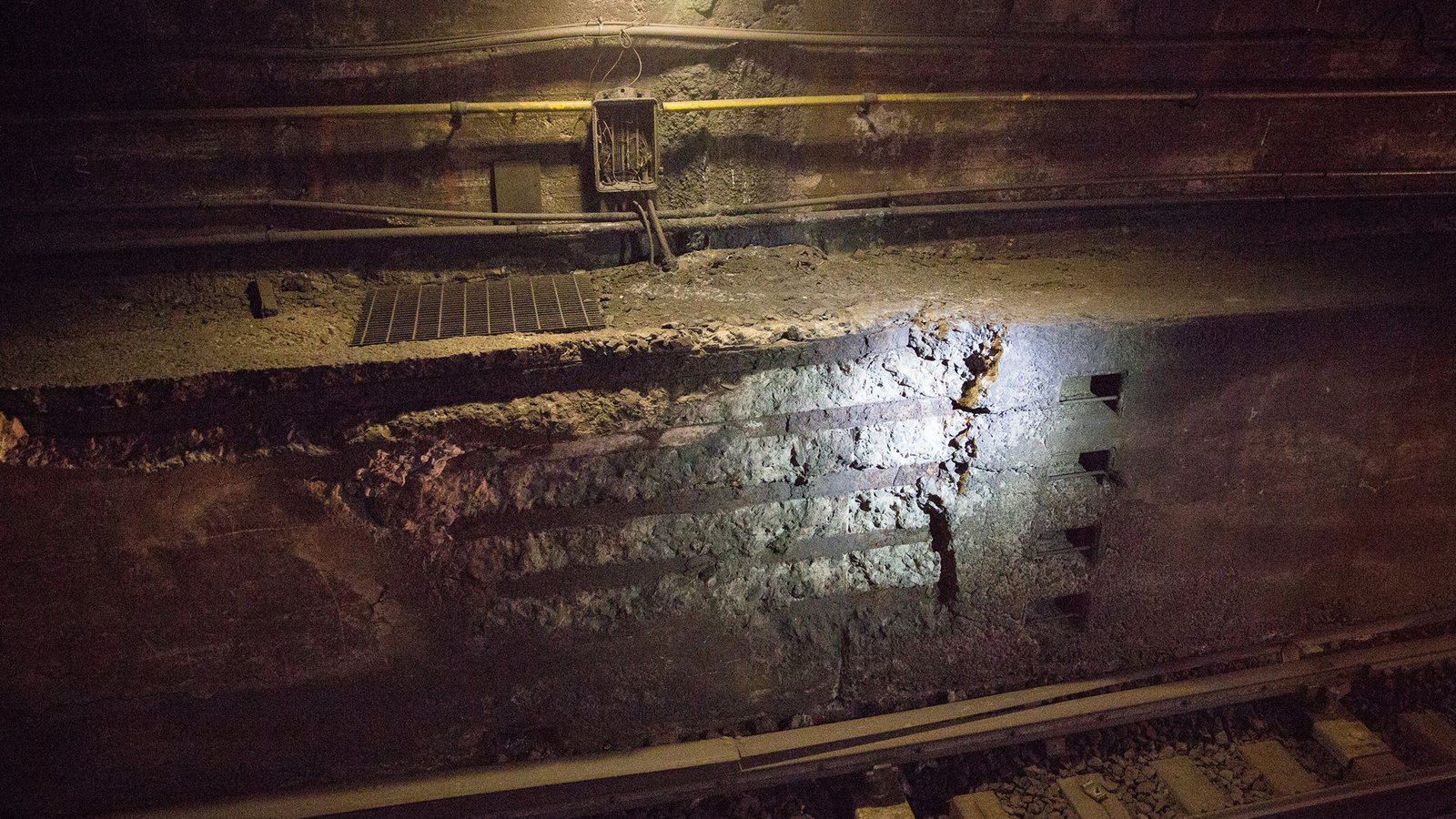
That tunnel and its two tubes, which allow for simultaneous travel in each direction, was built in 1910 and was heavily damaged during 2012’s Superstorm Sandy.
Construction of a new tunnel began in November 2023, during the tenure of then-President Joe Biden, under a finance plan where the federal government covers 70% of the project’s overall, $16 billion cost. The balance of that cost is being funded by New Jersey, New York and the Port Authority of New York and New Jersey.
Earlier this week, NJ Spotlight News reported that the latest federal spending legislation, which recently won approval from the GOP-controlled U.S. House of Representatives, sets aside $700 million to keep the tunnel project on schedule.
Federal lawmakers from both sides of the aisle praised that allocation, including New York Republican Elise Stefanik, a Trump ally who last week said on social media that it is “very important that the funding be released to ensure this important project stays on track.”
The freezing of federal disbursements for the tunnel project began Oct. 1, according to officials from the GDC.
That hold is purportedly enabling a federal Department of Transportation review of an agency program, mandated under federal law, that seeks to remove barriers that can keep firms owned by socially and economically disadvantaged individuals from getting work on major federal transportation projects.
Reached via email Tuesday, officials from the federal Department of Transportation referred questions about the funding hold to the White House. White House officials did not respond to a request for comment.
Since October, the GDC has been able to utilize a line of credit and other available funding sources to keep construction on schedule, agency officials said. In New Jersey, that effort has included the procurement of a tunnel boring machine that is currently, “on site” and “ready for assembly,” the officials said.
To date, more than $4 billion in federal funding has been obligated for the tunnel project, with $1 billion already spent on the ongoing construction, the officials said.
Last year, the New York-based Regional Plan Association released a study that detailed the tunnel project’s long-term economic benefits, which totaled an estimated $445 billion through 2060.
Tom Wright, the group’s president and chief executive officer, spoke about the long-term consequences of not building a new tunnel during Tuesday’s meeting.
“Nearly a half million commuters regularly travel from New Jersey to New York every day. They generate over $60 billion a year in wages. They pay roughly $13 billion a year in federal taxes,” Wright said.
“The closure of just one of the existing tunnels will impact all of them,” Wright said.
In a statement, Gov. Mikie Sherrill said Trump will be to blame for the lost jobs and missed economic activity that would result from a prolonged hold on the funding for the new tunnel.
“New Jersey and New York make up the most powerful economic region in the world, and this is the most urgent and consequential infrastructure project in the country,” Sherrill said.



