“Irkalla: Dreams of Gilgamesh” is one of the most ambitious projects by Iraqi filmmaker Mohamed Jabarah Al Daradji, a director internationally known for works such as “Son of Babylon” and “The Journey”, which have repeatedly examined the human cost of conflict in Iraq. Completed in 2025, the work reimagines the ancient Mesopotamian epic of Gilgamesh within the contemporary reality of Baghdad, blending mythology with the lived experiences of a city still marked by political instability and social upheaval. The result is a project that merges historical symbolism with modern urban storytelling. The movie premiered in Locarno before continuing its international festival run in Toronto and the Red Sea.
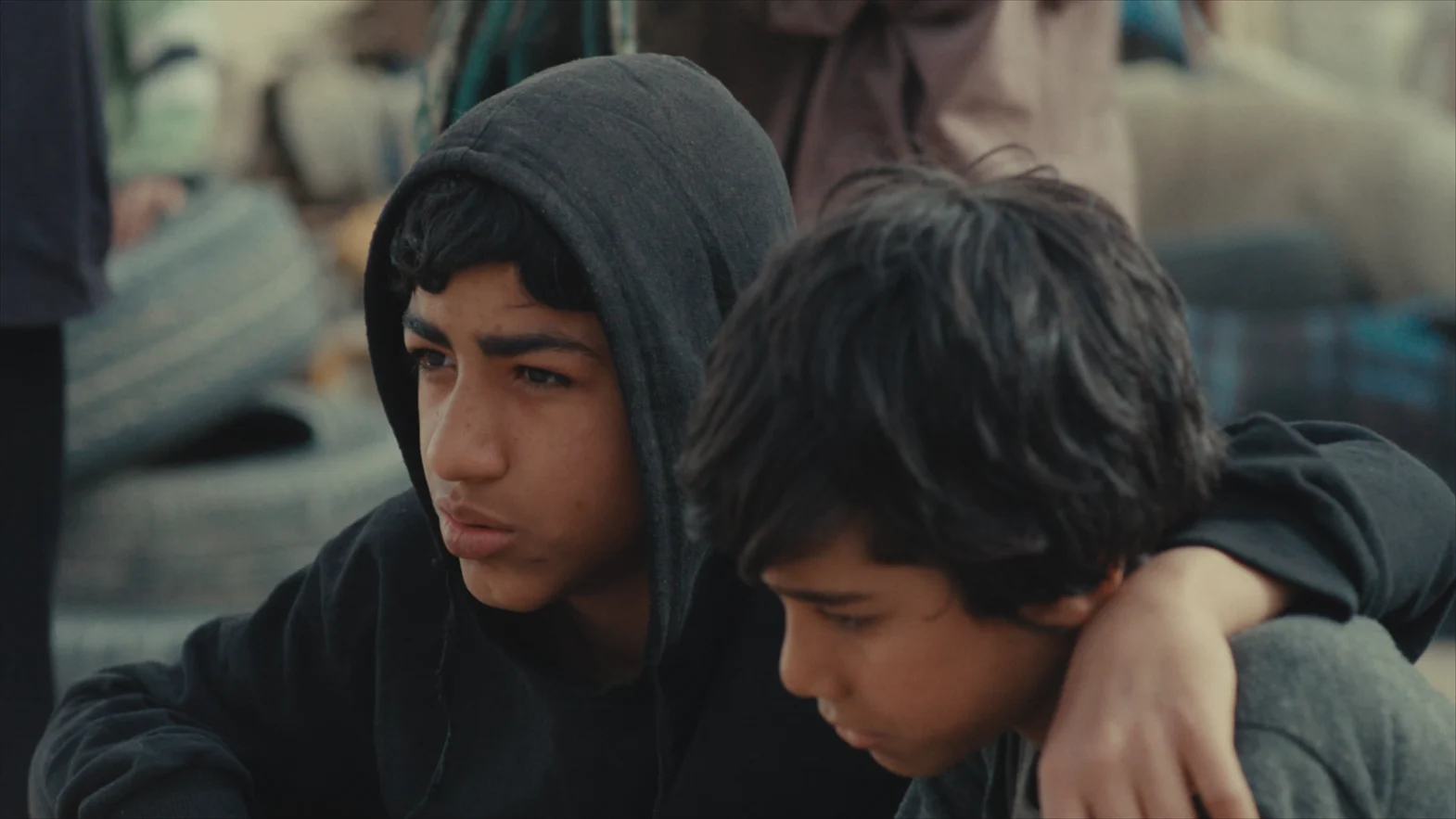
Set in Baghdad in 2019, “Irkalla: Dreams of Gilgamesh” follows Moody, a teenager struggling to survive in a city defined by instability, economic hardship, and lingering trauma from decades of conflict. His journey unfolds alongside Chum Chum and Maryam, a woman who shelters and cares for children displaced by violence while emotionally distancing herself from them due to her own trauma. As these characters attempt to navigate their fragile lives, the narrative gradually intertwines their experiences with the symbolic presence of Gilgamesh, the legendary king searching for his lost companion Enkidu.
One of the first elements that becomes evident is how children living in circumstances similar to Moody’s in Baghdad behave more like adults, essentially having lost their innocence and childhood due to the harsh environment in which they were forced to grow up. Moody in particular smokes, deals with smugglers, takes care of Chum Chum, and even develops a romantic interest in Sarah, Chum Chum’s sister, while constantly finding himself in situations boys his age should never have to face. His attempt to gather 6000 dollars so he and his friends can leave the country for the Netherlands repeatedly places him in danger, while even more striking is the fact that the people around him rarely treat him as a child.
Although the basis of the story is clearly dramatic, the way Al-Daradji occasionally incorporates humor emerges as one of the narrative’s most distinctive traits. The scene with the beer cans the boys attempt to sell is indicative of this approach while adding further depth to Moody’s character. Furthermore, the bond between the boys evolves in a way that softens the misery surrounding them, while the director also takes care to present the beauty of Baghdad. In this regard, the city itself becomes an essential narrative force. The Tigris River in particular, which the director views as a living archive of the city’s history and memory, emerges almost as a character in its own right.
Check the interview with the director
At the same time, the peripheral figures, particularly Sheikh, the crime boss of the area, and Maryam, become quite compelling presences rather than simple footnotes in the story. Through them, Al Daradji portrays additional layers of the hardships faced by local communities and the fact that it is the circumstances that made them seem harsh and cruel. Through the ensemble of characters he also explores themes of loss, resilience, and the longing for connection in a society attempting to rebuild itself, thus cementing the contextual depth of the narrative. Jabbar Al Janabi as Sheikh and Samar Kadhim Jawad as Maryam deliver excellent performances, matching those of Youssef Husham Al Thahabi as Chum Chum and Hussein Raad Zuwayr as Moody, with the latter clearly emerging as the standout.
From a technical standpoint, “Irkalla: Dreams of Gilgamesh” combines realism with mythological imagery in striking ways. Italian SFX artist Filippo Polesel supervised the creation of visual elements such as the Lamassu, drawing on consultations with the Baghdad Museum to ensure historical accuracy rather than fantasy spectacle, with the result proving quite impressive. Meanwhile, production designer Ali crafted one of the most memorable settings in the story, a refurbished Mosul bus that functions both as shelter and symbolic refuge for the characters. The vehicle, marked with bullet scars and modified over six months, becomes almost a character itself, embodying both destruction and survival.
The cinematography reinforces this atmosphere by capturing Baghdad’s streets, protests, and river landscapes with raw immediacy, blending footage shot across different periods into a coherent visual narrative that reflects both the mythic past and the turbulent present of Iraq, in a style that moves between documentary realism and fairy tale imagery. The framing remains exceptional throughout, with the panoramic compositions and several night sequences standing out. The editing maintains a mid tempo rhythm that accelerates on occasion, shaping the pacing of the story in an effective manner. In addition, the animated segments are well integrated into the narrative, providing brief relief from the bleakness while reminding the audience that, despite everything, children still search for moments of imagination and escape.
Ultimately, “Irkalla: Dreams of Gilgamesh” emerges as an excellent work and another testament that Iraqi cinema, despite producing relatively few titles, is moving forward on a promising path.