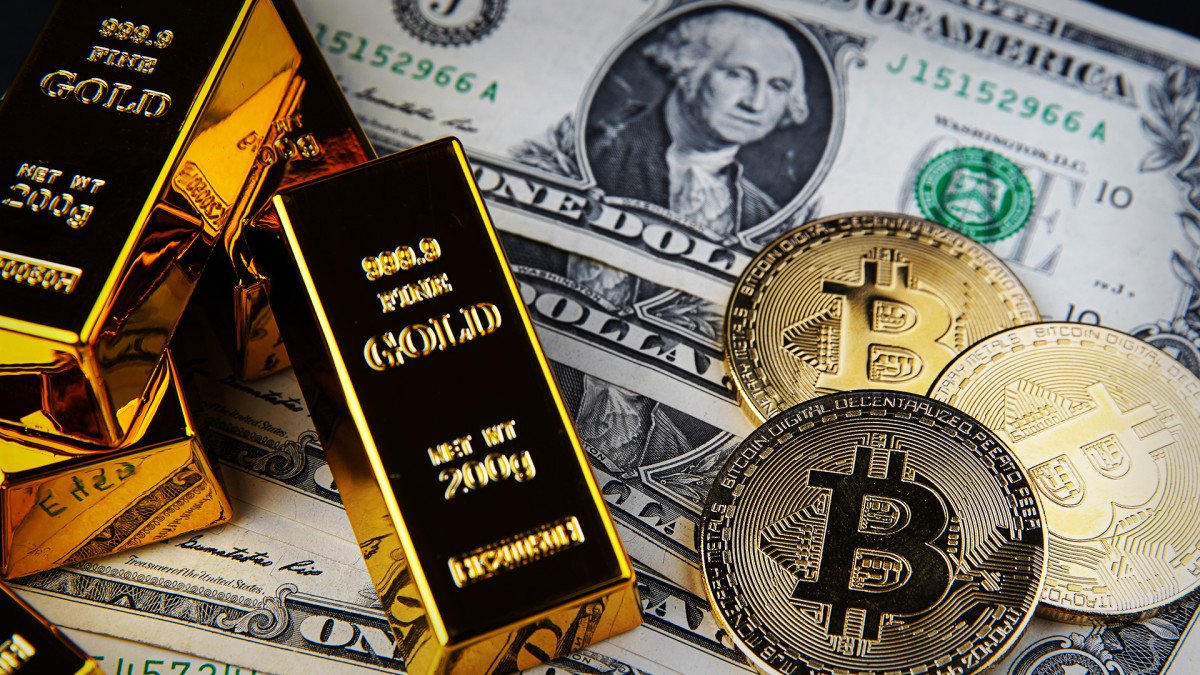
For thousands of years, gold has carried a simple reputation. When the world feels unstable, gold feels safe.
One of the strongest examples came in 1979–1980. The Iranian Revolution, the U.S. embassy hostage crisis in Tehran, and the Soviet invasion of Afghanistan sent shockwaves across global markets.
Investors rushed to protect their wealth, and gold delivered. Prices jumped from roughly $250 per ounce in early 1979 to nearly $850 by January 1980, a stunning 240% surge in about a year.
That rally cemented gold’s identity as the ultimate crisis hedge.
Fast forward to 2026, and we are once again watching tensions flare around Iran. But this time, gold’s reaction looks different.
Related: Gold is winning the fear trade as crypto bleeds
When U.S. President Donald Trump announced military action on Feb. 28, gold initially behaved exactly as expected. Prices surged to $5,274.64, and by Mar. 2, gold touched $5,414 per ounce.
The move followed military strikes that killed Iran’s Supreme Leader Ayatollah Khamenei, triggering retaliation and fears of disruptions through the Strait of Hormuz, one of the world’s most critical oil chokepoints.
But the rally didn’t last.
As of March 3, gold was down 2.1% over the past 24 hours, roughly $106 lower, trading near $5,190.66 per ounce.
Analysts suggest inflation expectations may be tempering the rally. Thu Lan Nguyen of Commerzbank told The Wall Street Journal that markets are now focusing more on inflation risks tied to the war, reducing expectations for interest rate cuts. A stronger U.S. dollar may also be weighing on gold.
Meanwhile, last week, Bank of America set $6,000 per ounce as the new gold price target and predicted it would be achieved in the next 12 months.
Gold has historically been seen as a hedge against inflation because it cannot be printed or easily expanded like fiat currency. When inflation rises, investors often buy gold to preserve purchasing power.
Bitcoin (BTC) operates on a similar principle but in digital form. Its supply is capped at 21 million coins, making it mathematically scarce. Supporters argue that this fixed supply protects against currency debasement, and hence it is often called “digital gold.”
But unlike gold, Bitcoin behaves more like a risk asset during crises, meaning its hedge narrative remains debated among traditional investors.
Source: finance.yahoo.com