
In the pantheon of the worst filmmakers ever, there has to be a (golden) statue of Godfrey Ho, probably dressed as a ninja – with the word “ninja” tacked on its headband just to make sure everyone gets it, as in some of his movies. And if anyone needs to be reminded why, “Golden Ninja Warrior” is as good a film to start with as any in Ho’s long, very long, filmography.
Granted, nothing whatsoever makes sense in this movie, but then, nothing makes sense in the more than 80 pictures Godfrey Ho is supposed to have directed in the 1980s (17 in 1986 alone, according to his IMDb page). “Supposed to,” because the concept of directing a film becomes a fuzzy one when it comes to Ho and his rather questionable filmmaking methods.
The 1980s were the golden age of cheap, straight-to-video Z movies featuring ninjas – films whose best redeeming quality was, almost systematically, the poster or VHS cover. If those images were not enough to make aspiring cinephiles run away screaming, the English titles did their best to finish the job: “Ninja Demon Massacre”, “Empire of the Spiritual Ninja”, “Golden Ninja Invasion”, “Ninja Knight Thunder Fox”, “Bionic Ninja”, “Ninja Terminator”, etc.
Such titles already give away the basic filmmaking technique favored by Ho: shooting various scenes as cheaply as possible and reusing them in dozens of different movies that all feel – and are – interchangeable. Also added to these new edits is footage from other, totally unrelated features – Ho’s legendary cut-and-paste technique, boosted by re-recording new dialogue to pretend (half-heartedly) that there is an actual storyline connecting these disjointed scenes.
“Golden Ninja Warrior” is a good case in point. The film wastes no time in using recycled footage, inserting the final duel from “Ninja Terminator” as its opening – with Ho speeding up the scene to pretend this is exciting action. That fight features Richard Harrison, an American actor popular among deviant cinephiles, whose career nosedived from the glories of low-cost B-movies in Italy to rock-bottom Z films in Hong Kong. Harrison, who has gone on record explaining how he was basically scammed by Ho and has felt “dirty” ever since, never actually played in “Golden Ninja Warrior” and does not show up again in the film.
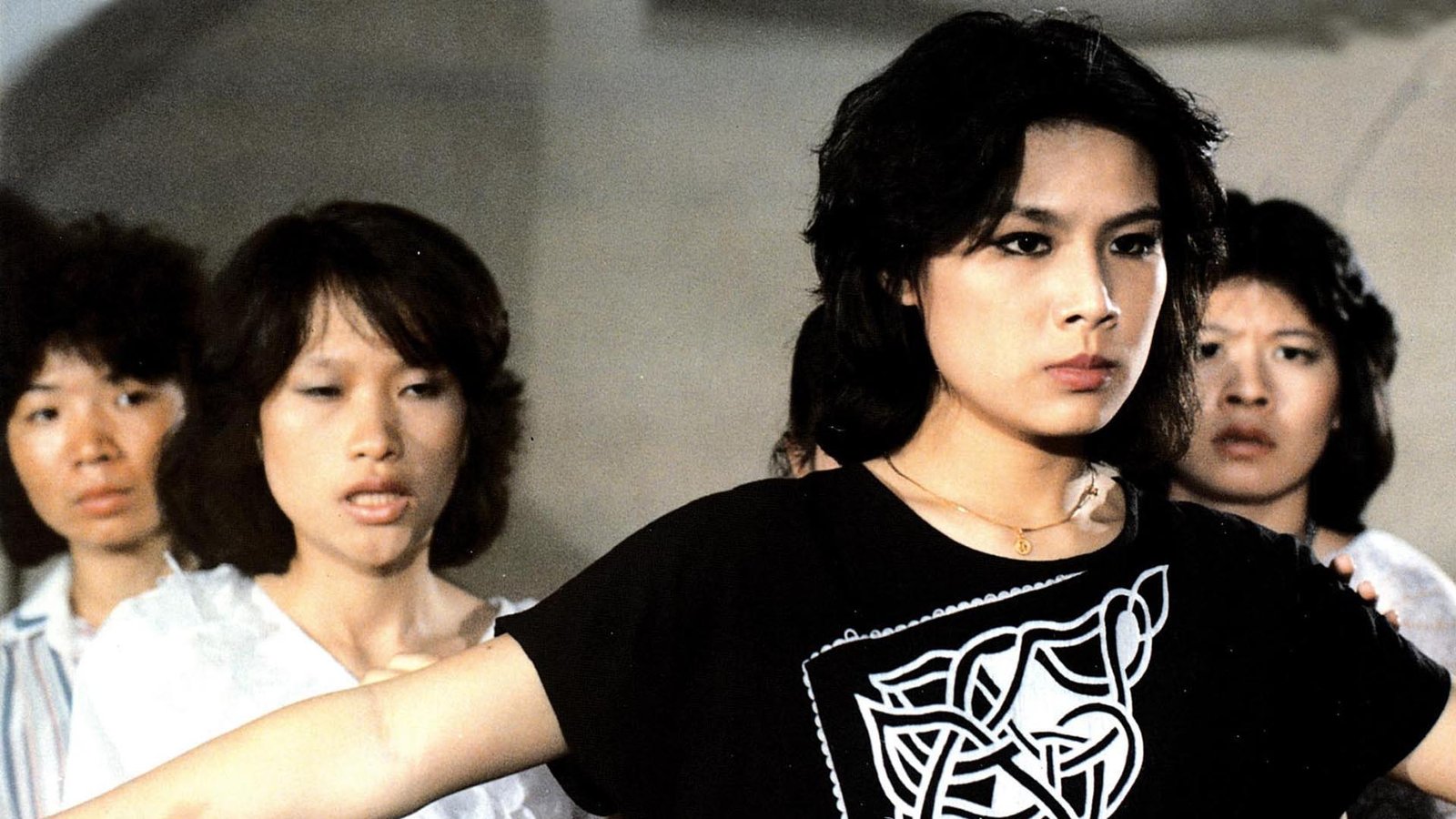
What passes for a story has to do (if one is to believe an early voiceover) with a mysterious ninja statuette – except that it actually has little to do with the plot. This is just a forgotten vestige from the storyline of “Ninja Terminator” (perhaps we are meant to believe this is its sequel). Most of the narrative instead follows a female ninja (Huei-Chie Yang) out to avenge her father’s brutal assassination. That part, along with many of the shots featuring our heroine, is actually taken from “Thunder Cat Woman”, a Taiwanese feature from the previous year.
“Golden Ninja Warrior” is like a (feverish) reimagining of that earlier movie – with more ninjas. This explains why, during fight scenes, the characters sometimes wear ninja costumes and sometimes do not, depending on the shot. This is typical of a film – and a filmmaker – that could not care less, although at least here the additional footage was shot in the same locations as the earlier film, which was not usually the case. This includes the so-called Sanzhi UFO houses, a visually striking abandoned apartment complex in Taiwan, where the final battle is situated. From that perspective, “Golden Ninja Warrior” is one of the least terrible features directed by Ho.
If you tend, like me, to feel sympathy for films that are so-bad-they’re-good, you may enjoy some of the scenes of this movie. In particular, perhaps, the point-of-view shot of a heat-seeking (??) knife stuck to the camera, darting and zigzagging toward our fleeing heroine like a low-cost, low-thrill version of “Evil Dead”.
Unfortunately, other scenes may well leave a bad aftertaste. “Golden Ninja Warrior” seems to take particular pleasure in showing naked women being slapped, beaten, and, in one disturbing scene, raped. The camera lingers far too long on these moments, well beyond the bounds of good taste. The fact that our heroine herself – supposedly a powerful ninja – is subjected to this treatment, only to be saved repeatedly by a white savior (Donald Owen), only adds to the disappointment. “Golden Ninja Warrior” should rightfully be a fun watch for anyone who enjoys ridiculously bad films, but this picture does not deserve anyone’s respect – even ironically.



