
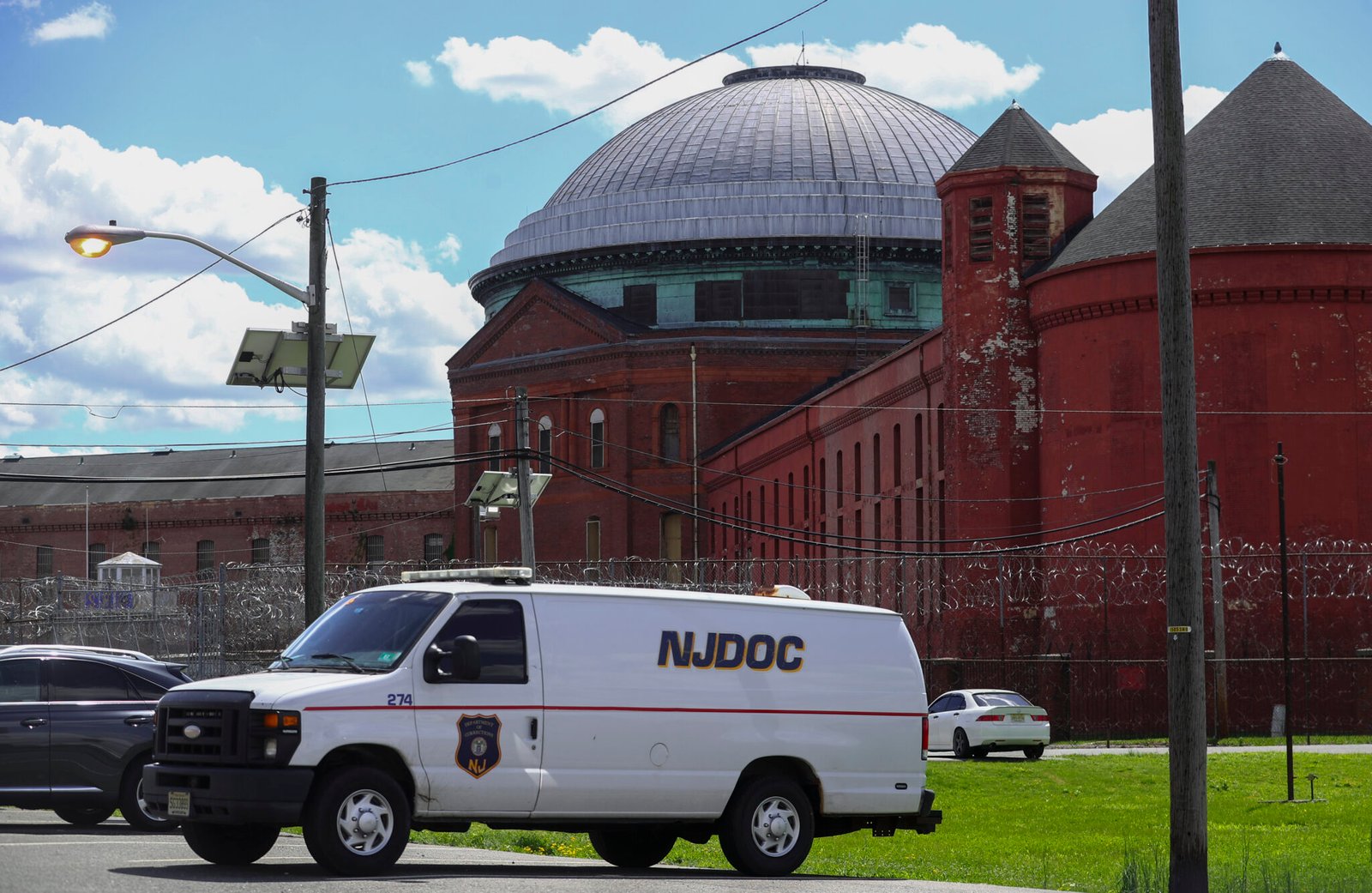
New Jersey taxpayers pay more than half a million dollars a day to cover the health care costs of people incarcerated in state prisons, a price tag that’s expected to climb soon with corrections officials now negotiating a new contract with the system’s medical provider.
Rutgers University Correctional Health Care has done that job since 2005 at a cost that has soared 44% over two decades, even though the number of people in state prisons fell by half during that period, according to a New Jersey Monitor analysis.
State prison officials have blamed the rising costs on longer sentences that keep more and more people behind bars into old age, when their medical needs mount.
But prisoner advocates say the trend demands scrutiny, especially considering state officials and observers have called for belt-tightening in the wake of federal funding threats and a structural deficit in the state budget.
Bonnie Kerness, coordinator of the American Friends Service Committee’s prison watch program, said the trend also should spur lawmakers to embrace strategies to lower prison health care costs, such as early release for elderly prisoners.
“If the population is down, it is only logical to most of us that the cost to the department would go down,” Kerness said. “If the population has been cut in half, why is the bill to the department still the same, or more?”
University Correctional Health Care is a nonprofit operated by Rutgers. That’s an unusual model; only a handful of states contract prison care out wholly to their university health systems. Most instead pay private providers or don’t contract it out at all, according to the Reason Foundation, a libertarian think tank.
That arrangement only raises more questions, Kerness added.
“If the state pays the state, I would expect a higher standard of medical care and a lower cost than I would to a private corporation,” she said.
University Correctional Health Care is now operating under a two-year 2018 contract that allowed five one-year extensions. Negotiations for a new contract began in January 2024, when the fifth contract extension ended, said Department of Corrections spokesman Dan Sperrazza. A new contract is being finalized now and is expected to be completed by the end of March, he said.
The contract cost the department $183.1 million in the last fiscal year, up from the $127.3 million the department paid in 2005 for its first contract with Rutgers, data shows. That doesn’t include the overtime of correctional officers assigned to guard inmates who are hospitalized, which added up to almost $24 million in the past three years combined, Sperrazza said.
The jump in contract costs came even though the prison population plummeted from about 27,000 in 2005 to around 13,000 now, prison census reports show.
It also comes despite widespread complaints about care, with prisoners filing 8,085 grievances about prison medical, mental, and dental care last year alone, department data shows. State corrections ombudsperson Terry Schuster said his office fields 160 to 180 calls a month about prison medical services, with complaints about access, bedside manner, canceled appointments, timeliness and quality of care, and more.
Rutgers spokeswoman Patti Zielinski declined to comment, citing ongoing contract negotiations and directing questions to the state Department of Corrections.
The state conducts semiannual audits of Rutgers University Correctional Health Care’s performance, but state corrections officials declined the New Jersey Monitor’s request for them, citing health privacy.
Graying population
People in prison tend to be much less healthy than the general public.
The conditions of confinement — including overcrowding, poor nutrition, violence, and exposure to environmental toxins — can worsen health, with incarcerated people experiencing higher rates of infectious diseases, mental and physical health disorders, and drug addiction, studies show.
Many also arrive at prison with preexisting health conditions that went untreated or were poorly managed before they were incarcerated, state Corrections Commissioner Victoria Kuhn wrote in a response to a watchdog’s recent report on deaths in custody.
The aging prison population is the biggest driver of spiking health care costs, Kuhn wrote. Twenty-two percent of people imprisoned in New Jersey are older than 50, representing a 7% increase over the past decade, according to departmental data.
Sick call requests, encounters with medical providers, visits to health care facilities, and psychiatric visits all rose from 2024 to last year, the data shows.

Kuhn wrote that the the demand for medical services provided by Rutgers University Correctional Health Care remains high despite the decline in population, resulting in a continued increase in costs for the state.
“This trend is directly attributable to the aging population and the prevalence of longer sentences, which necessitate more intensive and specialized medical care,” she wrote.
A potential response would be to release elderly people who have languished behind bars for decades, Kerness said. Prisoner advocates have long called for such a policy shift, noting that recidivism risks plummet as people age.
But an effort to pass a geriatric release law for imprisoned people 60 or older failed in the two-year legislative session that ended last month because the bill, which the full Assembly passed, stalled in the Senate. New Jersey has a compassionate release law to free gravely ill people from prison, but very few people have benefited from it.
Wanda Bertram of Prison Policy Initiative said early release should be a no-brainer for policymakers, especially considering most states including New Jersey suspend Medicaid coverage for people behind bars.
“This is a population of people that, were they not incarcerated, most of them would qualify for Medicaid,” Bertram said. “States that insist on continuing to incarcerate people, including those who could probably go home very safely like older people, face this budget squeeze.”
Copays coming
Other states looking to cap prison health care costs have expanded telemedicine, reduced referrals to outside health care facilities, cut 24-hour services, and charged people in prison copays to access care and medication, among other things.
Kerness’ group warned in a 2018 report that such strategies can backfire and ultimately drive up costs, because they eliminate opportunities for medical staff to diagnose and treat ailments before they become chronic.
New Jersey, though, has embraced at least two of those strategies. State prison officials have expanded telemedicine since 2020 and continue to evaluate its further expansion, Kuhn wrote.
Officials also soon will require people in state custody to shoulder some of the costs of their care again.
Correctional Medical Services, the for-profit provider that handled prison health care in New Jersey before Rutgers landed the contract, began charging incarcerated people copays in 1996, and state lawmakers later codified them.
Former Gov. Phil Murphy suspended the copays early in the COVID-19 pandemic to remove barriers to care.
Christopher Greeder, a Department of Corrections spokesman, told the New Jersey Monitor that copays will resume at a date that has yet to be determined. Murphy in 2022 ended the public health emergency declaration that prompted the copays’ suspension, and copays are required by statute, Greeder noted.
Schuster’s office and several incarcerated people told the New Jersey Monitor that copays for medications have already resumed.
Supporters defend copays as a way to reduce abuse of sick calls by people who have minor ailments, or aren’t sick at all. They also don’t cost much, they say. Copays are set by law at $5 for medical visits and $1 for medications.
But prisoner advocates say even those prices can be insurmountable in a system where prison jobs pay just $1 to $7 a day.

“We’re dealing with a population that certainly can’t afford it. This was recognized by the fact that they dismissed the copays during COVID,” Kerness said.
Chronically ill people incarcerated in states with copays were substantially more likely to have not seen a doctor since admission than those in the 13 states (including New York and Delaware) that do not charge copays, the Prison Policy Initiative said in a policy brief last May.
“The purpose of copays is to stop people from requesting medical care, which often means that important medical issues go without being seen,” Bertram said. “This is something that, overall, works to the detriment of health in prisons and jails.”
It’s also something that can lead to debt for people incarcerated in New Jersey prisons.
State law bars the denial of care for those who can’t pay, but the department still charges copays directly to a prisoner’s commissary account, even if that account is empty.
“The charge is recorded and reconciled when additional funds become available,” Greeder said.
Bertram questioned the fiscal point of copays, noting they drain money from people trying to save for reentry and make little difference to a prison system’s bottom line.
New Jersey corrections officials use medical copays to offset the costs of care, Sperrazza said. The department collected $358,000 in copays in the 2019 fiscal year, the last full year they were collected before the pandemic, he said. That’s 0.03% of the department’s $1.2 billion budget.
“You’re not really bringing in enough money to make a meaningful difference in what is usually a huge budget, and at the same time, you’re taking money away from people who really need it,” Bertram said.
GET THE MORNING HEADLINES.



