
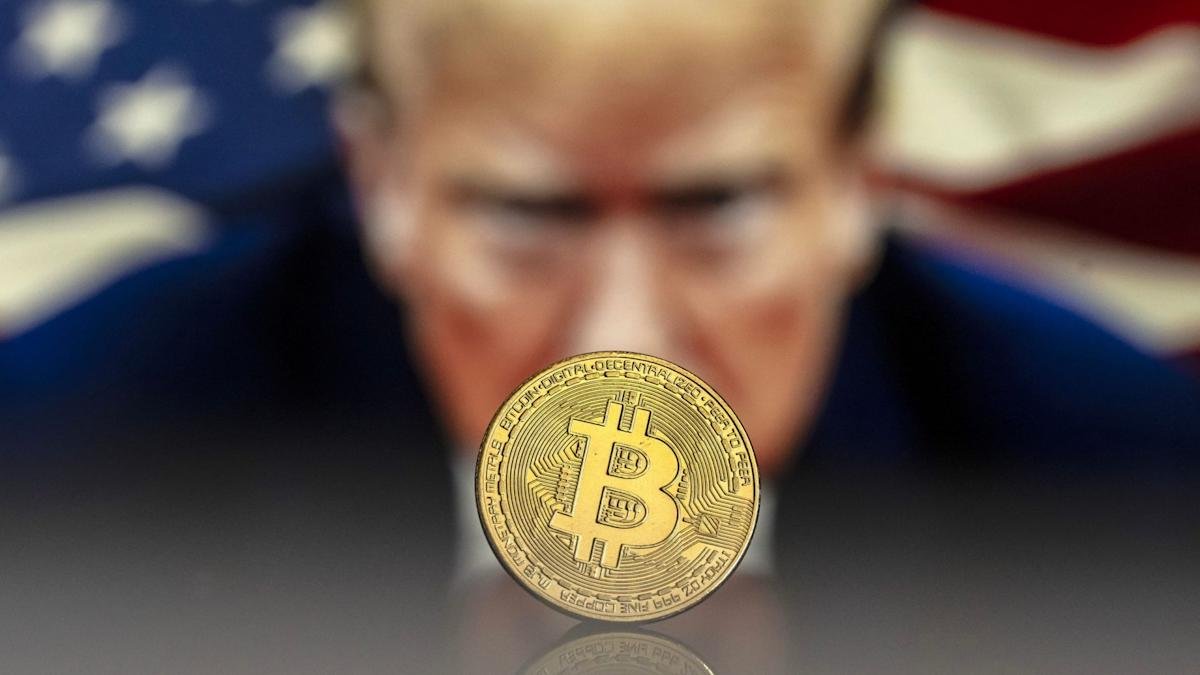
When President Donald Trump took office, it seemed as if cryptocurrency — specifically bitcoin — could gain increased legitimacy and market stability. The GENIUS Act was introduced with the goal of making the United States the “crypto capital of the world,” according to a White House fact sheet.
But one year into the president’s second term, many experts advise against investing in bitcoin. The Trump family’s involvement in cryptocurrency with an eye on personal gains, including the World Liberty Financial venture, may muddy the waters.
“[D]igital assets are perhaps the most obvious place to look for conflicts of interest that could infect the larger economy,” according to an opinion piece by Rana Foroohar on the Financial Times.
Dean Lyulkin, co-CEO of Cardiff, an alternative business lending company, agreed. “The family is now fairly synonymous with cryptocurrency and some forms of cronyism,” he said, citing the presidential pardon of Changpeng Zhao, who co-founded Binance, which was involved in deals with World Liberty Financial.
Here’s why Lyulkin suggested not buying bitcoin while Trump is in office.
See Next: 3 Safest Investments To Hold In The Current Trump Economy
For You: How Middle-Class Earners Are Quietly Becoming Millionaires — and How You Can, Too
Lyulkin also conveyed other issues related to the Trump family and crypto investments. “Because of their affinity for — and business dealings in — crypto, it becomes a target from bad actors like China and Russia,” Lyulkin said. “They have the power to move these types of markets around today because of how small they are still.”
Lyulkin recommended against holding any more than 5% of your portfolio in crypto because of the risks.
Read Next: How To Get a 10% Return on Investment (ROI): 10 Proven Ways
Jay Zigmont, Ph.D., certified financial planner (CFP) and founder of Childfree Trust, agreed that investors should limit their exposure to crypto. “For our clients who absolutely want crypto in their portfolio, we strongly encourage them to keep it as a small percentage of their assets,” he said. “If a client wants to take 10 percent or less and invest in a speculative stock or crypto, then that’s OK as long as it’s not more than that.”
As assets go, cryptocurrency is a relatively new invention. “Crypto assets are largely unregulated and lack the strong history of stocks and bonds,” he said.
Some investors viewed bitcoin as a hedge against inflation or even economic collapse, but Lyulkin doesn’t embrace the analogy of bitcoin as liquid gold. “Bitcoin is not acting in the same way that gold is a hedge. Bitcoin is essentially flat for the year and gold is up 60-plus percent,” he said. “Bitcoin has not been able to clearly attract the dollars that investors have poured into precious metals.”



