
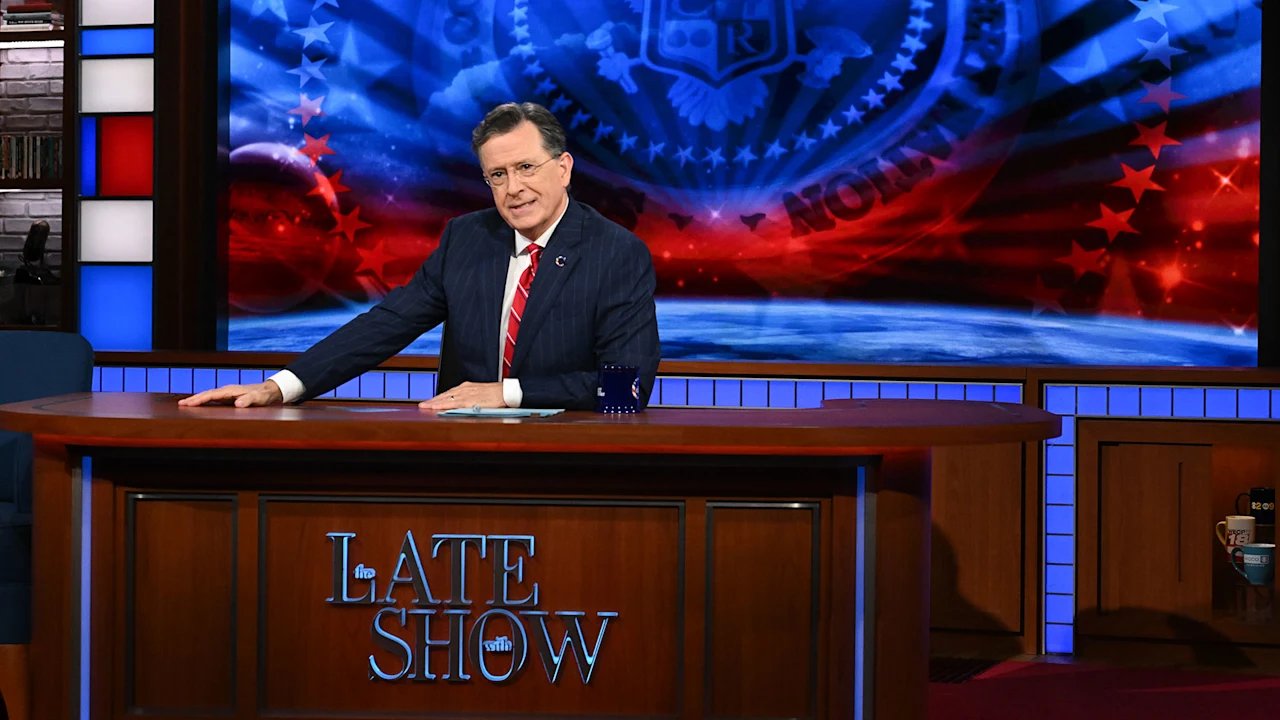
Monday night’s episode of The Late Show with Stephen Colbert was missing something—an entire interview. But viewers weren’t left in the dark about why—host Stephen Colbert told his audience that CBS didn’t air his interview with Texas State Rep. James Talarico due to concerns it could run afoul of shifting FCC rules.
“We were told in no uncertain terms by our network’s lawyers, who called us directly, that we could not have him on the broadcast,” Colbert said on the air Monday.
That didn’t stop him from calling out the move in the episode and poking at FCC chair Brendan Carr and CBS—and it didn’t stop him uploading the entire interview to YouTube. But the incident offers a look at how networks are responding to Trump administration pressure in the wake of ABC sidelining Jimmy Kimmel for six days last fall.
Shifting FCC rules
According to Colbert, CBS’ lawyers were acting in compliance with a recent letter from FCC Chairman Brendan Carr about the FCC’s equal time rule. It says that a broadcast station granting airtime to a legally qualified candidate for public office must offer the same amount of time to all other candidates for the same office.
The Jan. 21 letter suggested that late-night shows—which have been exempted from the rule as “bona fide news interview programs” (aka, non-partisan, regularly scheduled newscasts)—no longer fit that definition and could be subject to the equal time rule. The FCC has not formally changed how it classifies late-night shows.
In a statement to Fast Company, CBS said it did not prohibit the show from airing the interview, but offered legal guidance that airing it could trigger the FCC equal time rule for Talarico’s opponents in the Democratic primary for the Senate seat currently held by John Cornyn.
“The show was provided legal guidance that the broadcast could trigger the FCC equal-time rule for two other candidates, including Rep. Jasmine Crockett, and presented options for how the equal time for other candidates could be fulfilled,” the statement said. “The Late Show decided to present the interview through its YouTube channel with on-air promotion on the broadcast rather than potentially providing the equal-time options.”
An online loophole
As CBS’ statement said, The Late Show’s solution was to post the interview with Talarico to its YouTube channel rather than air it live on CBS. In the interview, Colbert highlighted that Talarico’s recent appearance on The View also prompted the FCC to open a probe into the daytime talk show. “Do you mean to cause trouble?” Colbert joked.
“I think that Donald Trump is worried that we’re about to flip Texas,” Talarico replied. “This is the party that ran against cancel culture, and now they’re trying to control what we watch, what we say, what we read. And this is the most dangerous kind of cancel culture, the kind that comes from the top.”
On his show Monday, Colbert pointed out that the FCC’s bona fide news exemption for late night hasn’t been revoked yet; Carr has merely implied he intends to eliminate it.
“He hasn’t done away with it yet, but my network is unilaterally enforcing it as if he had,” Colbert said.
That was the element of the story that caught the attention of FCC commissioner Anna Gomez, the lone Democrat at top of the agency.
“CBS is fully protected under the First Amendment to determine what interviews it airs,” she wrote. “That makes its decision to yield to political pressure all the more disappointing. Corporate interests cannot justify retreating from airing newsworthy content.”
The FCC did not respond to Fast Company’s Tuesday afternoon request for comment by press time Tuesday evening.



