About six months ago, I noted an interesting divide among the right-leaning or politics-adjacent podcasters and influencers who helped get Donald Trump reelected. They were either shutting up about politics, bending over backward to justify his policies, or citing a couple of issues — ICE and the Epstein files — as red lines causing them to turn on him.
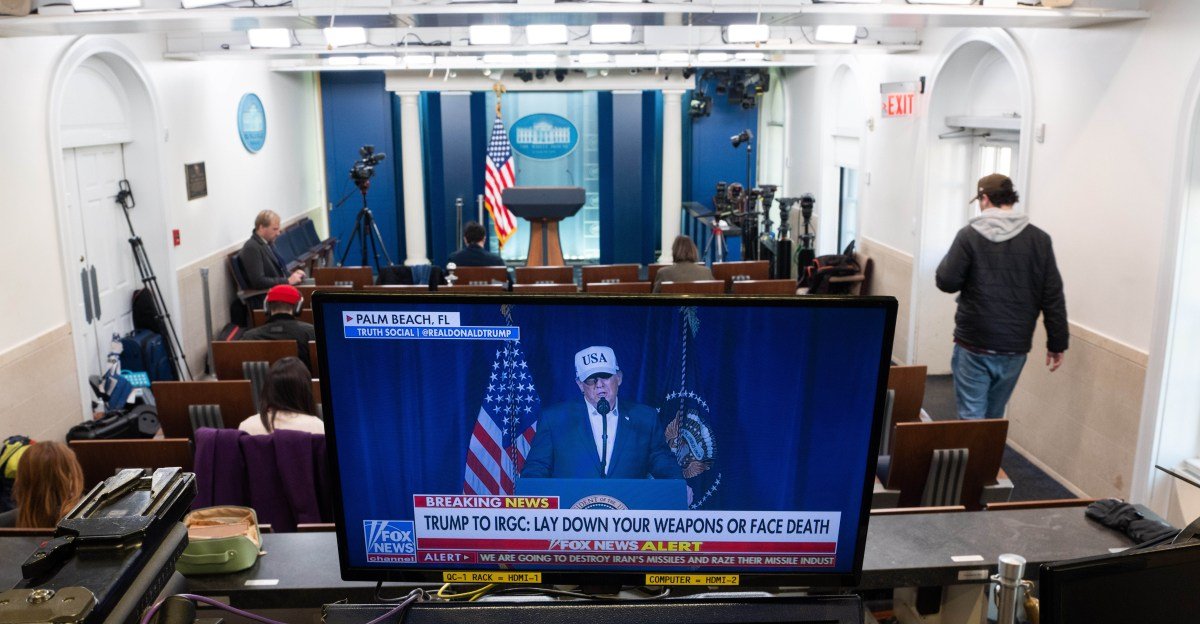
What united them all was a loss of enthusiasm for him: not really championing him the way they did when they gave him a platform during the 2024 campaign season. That’s why I was especially curious to see how this MAGA-manosphere would process yet another breach of their trust, after the joint American-Israeli attacks on Iran that took out Iran’s senior leadership this weekend. This regional conflict has already cost us three American lives, let alone the billions of dollars funding the American military presence in the region.
As someone who has been following this universe of yappers and influencers for some time, I was expecting universal outrage — ending foreign entanglements and intervention abroad, in favor of investment and economic growth at home, were central to this media ecosystem’s support of Trump and distrust of Democrats. They fully bought into the idea of “Donald the Dove,” who spent years railing against neoconservatives, Middle East involvement, and the Democratic Party’s embrace of hawkish military action since the turn of the century.
Instead, what I’ve been seeing has surprised me: disparate reactions across the alternative media ecosystem that suggest, at least at the elite level, another splintering of the Trump coalition — though not one as straightforward as the pod bros and MAGA influencers simply turning on Trump.
What’s emerged is a collection of strange bedfellows: Some anti-war MAGA influencers have turned into foreign policy hawks, some MAGA influencers are speaking out about the action, and the pod bros seem to be reserving their commentary until they can see how this unfolds and get in front of microphones.
An unexpected MAGA influencer breakup is underway
Already, plenty of media reports suggest that Trump is facing “a furious MAGA backlash,” that his base is revolting, and that “MAGA stalwarts” are turning on him over the Iran attacks. The early polling, at least, indicates that these attacks are inspiring some caution among everyday Trump supporters. But at the elite and influencer level, the picture is a little more muddled.
Yes, Tucker Carlson and Marjorie Taylor Greene are condemning this military action and arguing that it’s another blatant betrayal of “America First” principles by the president. But that’s not new — they’ve been sounding that beat for the last four months at least, since both began to criticize not just the Trump administration, but Trump himself more forcefully around his foreign policy and his refusal to be transparent about the Epstein files.
Joining them this time around are an interesting collection of MAGA and manosphere figures: Andrew Tate, the misogynistic influencer who was accused of sex trafficking in Romania, also denounced the actions, tweeting, “NOBODY WANTS THIS WAR.” Popular pro-Trump Twitter accounts, like the Hodge Twins, are highlighting Israel’s role in getting America involved, saying, they “don’t care if we lose all our followers over this war we won’t stay quiet about Americans getting sent to die for Israel.”
More radical figures, such as Candace Owens and Nick Fuentes, are condemning the strikes as well. Charlie Kirk Show producer Blake Neff is calling this “extremely depressing” and a reason for “never voting in a national election again.”
And even Erik Prince, the mercenary army founder, was skeptical of the attacks while debriefing with Steve Bannon and Pizzagate conspiracist Jack Posobiec. Posobiec himself was urging caution over the weekend, telling Politico that “There is a MAGA generational divide on this. Older voters support it, younger voters do not… Gen Z MAGA wants arrests on Epstein, deportations, and economic relief, not more war.”
And there’s still the politics-adjacent comedians and podcasters to come, who are likely to weigh in more forcefully starting Monday when they publish their episodes — and who seem primed to rail against this. The comedian Tim Dillon, for example, spent the latter half of his last show before the weekend priming his audience for a war with Iran, sounding depressed and resigned.
“This whole thing is about remaking the Middle East,” he said. “America does not want this war. … We don’t need a war. Unless all those white-collar consultants join the military and go fight and die in Iran, we don’t need a fucking war in the Middle East. So we can either do something fake, which I’m for, a pretend show of force, but … it feels like we’re too far down the line. There’s a little bit of war fever in Washington, and that it’s gripped people, and that there’s an inertia that’s moving us forward towards this conflict, no matter what we do. And that once we’re on a path like this, it’s very hard to completely reverse course.”
Comedians like Andrew Schulz and Theo Von have not weighed in; they’re anti-interventionist for the most part and have railed against the last few Trump-led foreign strikes against Iran and in Venezuela. Podcasters Shawn Ryan, Lex Fridman, and Joe Rogan have not commented yet either, but given their past comments, their reactions will probably be lukewarm at best; Ryan has turned sharply on Trump and Republicans over their opposition to the release of the Epstein files, while Rogan has also soured on Trump’s immigration enforcement actions.
And their audiences, too, will probably be demanding analysis. Already, some of the comments on Fridman’s latest episode bemoan his silence on “current events” (the episode, which Fridman promoted on Saturday, was an interview with a musician).
But Trump still counts support among another part of this alternative media ecosystem: during an emergency show on Saturday, podcaster Patrick Bet-David, himself Iranian-born, tried to walk a careful line between feeling emotional and hopeful about a “free Iran,” and cautious about endorsing full-scale war.
“For Americans that are saying, ‘Pat, but we don’t want to go to war,’ I get that as well,” he said. “It’s not an easy thing. It’s going to be nasty. It’s going to be ugly. And god-willing, it’s not going to be something that’s prolonged. For all the people that are criticizing and saying, ‘What if this thing drags out?’ Fair criticism. I’m hopeful it goes a few weeks. God-willing, less, as soon as possible to get it done. … But we have to also be realistic and realize that this may not be a popular war that a lot of people want.”
This cautious line — “I don’t want to see another Afghanistan” — will likely be replicated by other influencers as time passes. But it will also be balanced with a different sentiment Bet-David shared: “I voted for this man to be in a negotiating room, having access to the information and make the decisions based on his instinct. And I give this man a lot of credit for having the courage to do what a lot of presidents couldn’t do.”
For now, there is a whole cohort of anti-war MAGA influencers who are pushing that line and staying loyal to Trump. One Democratic operative kindly assembled that list already.
But the next few days will be crucial to this limbo state in the manosphere: additional escalation, more American or civilian casualties, or domestic economic fallout will all help determine whether these divided voices close ranks as they have during previous moments of foreign entanglement in Trump 2.0, or turn more fully against Trump’s position, as they have during moments of domestic crises.