
Editor’s note: This column ran yesterday in our Best of Times newsletter. The newsletter is published twice a month and includes an exclusive, behind-the-scenes window into how our newsroom works. Subscribe here to read it today.
Outside the pink stone building that serves as the FBI’s Tampa field office, a pair of security guards told us to shut off the Wi-Fi and Bluetooth on our phones.
Times Editor Mark Katches and I stood by a gate with a lawyer for our newsroom, waiting under the sharp afternoon sun.
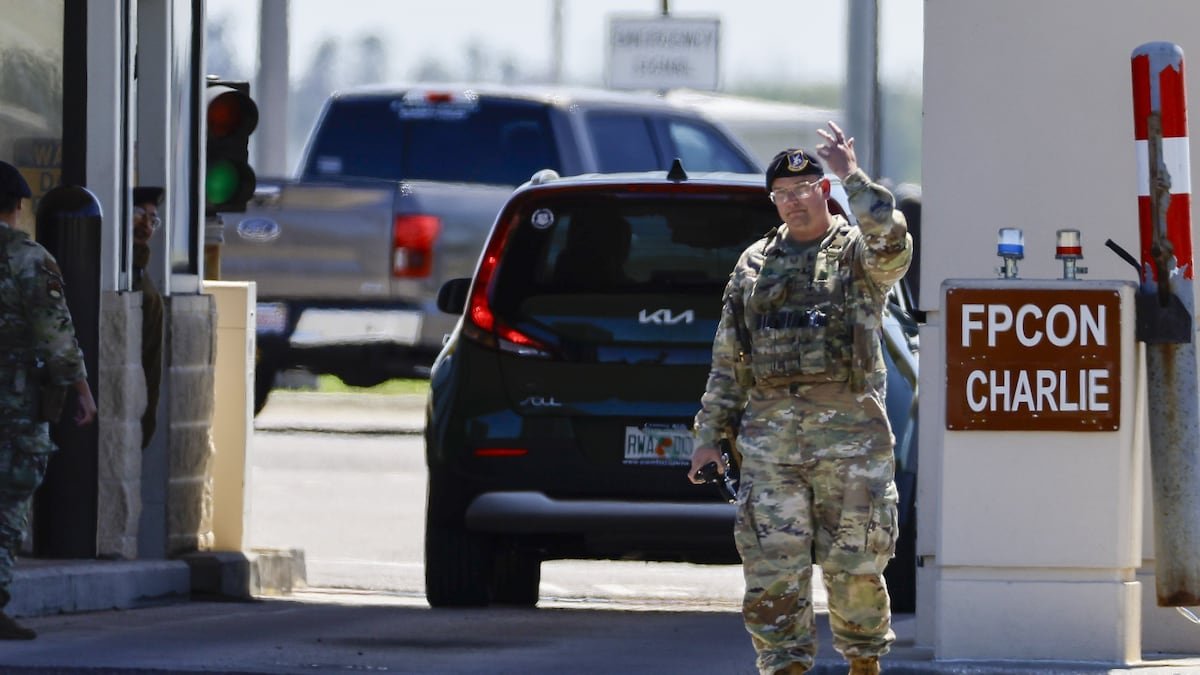
About 16 hours earlier, on March 23, someone had sent an anonymous message to my phone, claiming credit for planting an explosive device at MacDill Air Force Base. They then threatened to place another bomb at the installation, which is central to U.S. planning for the war in Iran.
Now, FBI agents wanted to interview us — a strange switch that posed thorny ethical and legal questions about two journalists’ role in the story.
As local reporters, the news is never far from home. We live in the communities we cover, which almost always serves as an advantage. But in this instance, I was unnerved to be thrust into an evolving crisis my colleagues were scrambling to cover.
Few staffers in our office by that point even knew I’d received a threat.
Stepping into the empty lobby, Mark and I were unsure what to expect. We only knew we had a story to tell.
The anonymous message
My wife (also a journalist) and I were in the Home Depot garden center buying flower pots on a Monday night when my phone buzzed and our week changed.
I glanced at the screen to see a Signal message from “Anonymou” — a tip, I figured, similar to the kind I get a few times a month.
When I took over as the Times investigative editor in December, I got rid of an old, broken iPhone that used to house a secure tips line. I switched the Signal contact on our website to my personal username.
Sensitive texts started coming to me directly. Usually, they contained story ideas.
I didn’t read the “Anonymou” message fully until I got home about an hour later.
“I have information on the Macdill air base package scare,” it read. A video was attached, about 3 minutes long.
“We are the New Weathermen Underground, and we planted a bomb at the MacDill Air Base,” a low voice said. The screen showed a figure in silhouette with closed captions.
“The bomb was not a success. We have taken actions to rectify this. We have a newly improved design that we plan to use in the coming days.”
I called my wife — energy reporter Emily L. Mahoney — into the room to take a look. We agreed: This message was a blatant threat. Though I thought it was likely a sham, it felt like something we needed to report to law enforcement.
At 9:08 p.m., I texted Mark, who was rewatching Game of Thrones at his house not too far from MacDill. He asked me to share the video. Mark agreed we needed to send it to the authorities. He contacted Hillsborough Sheriff Chad Chronister, who is a member of the local joint terrorism task force, around 9:30 p.m.
Within 15 minutes, Mark was talking to the top-ranking FBI official in Tampa.
Deciding to publish
The video contained a piece of information that had not yet been reported publicly. The figure said they placed a bomb at MacDill on March 10 and made a 911 call the same day — nearly a week before a suspicious device was discovered near the base’s Dale Mabry Gate.
Sitting in an FBI interview room, we didn’t know the March 10 timeline was true. We wouldn’t learn for certain until two days later, when federal prosecutors accused a 20-year-old Land O’Lakes man of planting a bomb and calling Tampa police shortly after.
Yet it was clear the FBI was taking the message I received very seriously. We’d provided agents with a screenshot and the full video. We didn’t know anything else.
“Anonymou” had no phone number or name attached to their Signal account. I didn’t correspond with them.
The interview was a delicate situation. Journalists fiercely guard their independence. Months ago, in a chilling case for press freedom, federal investigators searched a Washington Post reporter’s home and seized her devices.
One of our media lawyers accompanied us to the FBI offices and made it clear from the outset that we did not want to hand over our phones to the FBI. We shared the threat because we were concerned about public safety. But we also didn’t intend to correspond with “Anonymou” on the FBI’s behalf.
The Times is, of course, not an investigative arm of the U.S. government. Our reporting doesn’t happen at anyone’s behest. And in an era when getting an accurate view of the day’s news feels as difficult as ever, we report on our community without fear or favor to powerful entities.
Mark told the agents we felt we should share with our readers that the FBI’s investigation had widened to include the video. We knew the threat was serious. He explained that the decision of when and what to publish would be ours and ours alone.
About an hour after we left the FBI’s field office, reporters Katelyn Ferral and Shreya Vuttaluru started preparing a story under the direction of Allison Ross, an assistant managing editor, and Claire McNeill, our interim managing editor for news.
At that point, Mark and I were essentially sources.
By the time the reporters were done, it was late in the day, and our newsroom was covering a tight special Senate election in Tampa. We decided to run the article the next morning at about 9 a.m.
Most of our newsroom learned about the “Anonymou” message at the same time as our readers.

Staying on top of the story
The story isn’t over.
A couple of days after the first contact, I received two late-night messages from “Anonymou” — including a threat on the president. Mark shared that with the FBI.
The account has been silent since.
Our newsroom continues to hustle on MacDill coverage. Veteran Tampa courts reporter Dan Sullivan combed through records and learned about the indictment against two suspects before the FBI publicly announced it. Ferral has worked the phones with military contacts and teamed with investigative reporter Christopher O’Donnell to find out how an explosive device could have gone undiscovered for multiple days near a base.
We’ve sent a reporter to the area around MacDill to try to find the spot where the bomb was planted. We’ve called neighbors and knocked on doors where the suspects lived. And we’ve kept an eye on our inboxes and phones.
What’s the lesson? You never know when community news is going to intersect with national security.
Once again, our local connections are serving us well.



