
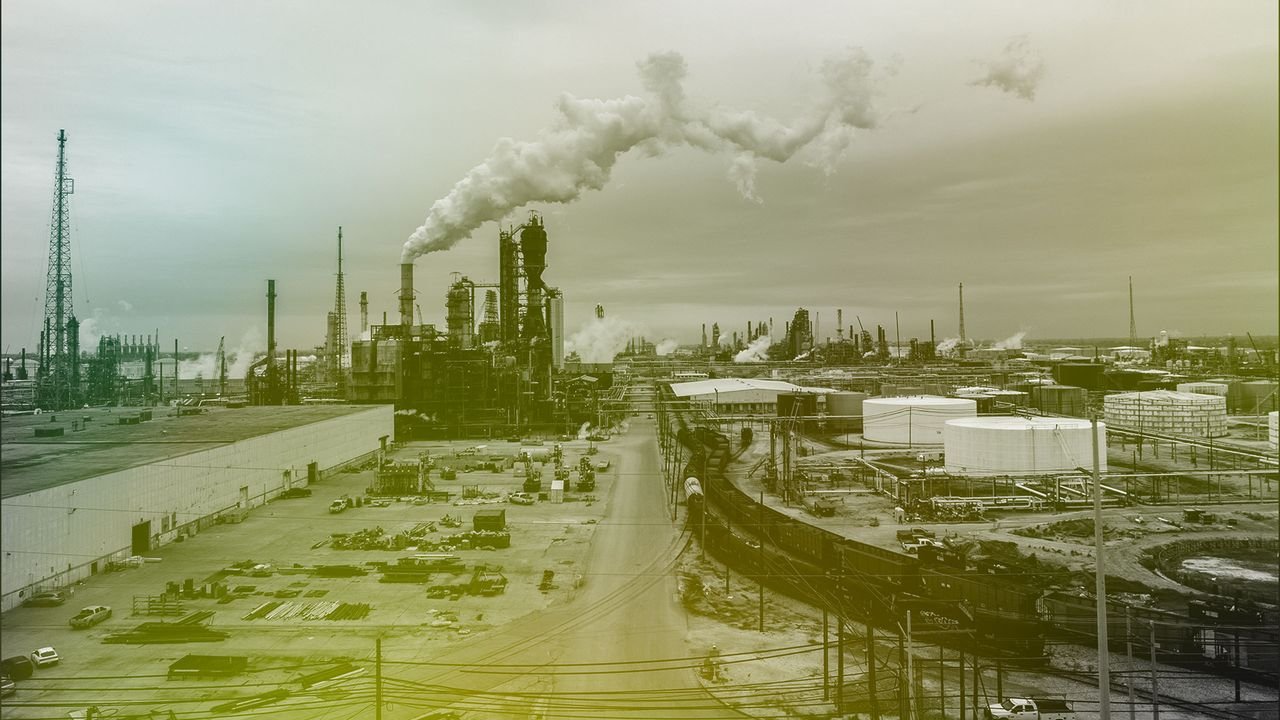
The key thing that the Administration’s national-security strategy neglects is that the market for oil is global, not national. Even as the explosive growth of fracking has turned the U.S. into the world’s leading oil producer, bigger even than Saudi Arabia, the oil price in the U.S. still gets determined in the global financial markets, where prices adjust to balance global supply with global demand. Inevitably, that adjustment process reflects developments in the Middle East, where about fifty per cent of the world’s oil reserves and about forty per cent of its natural-gas reserves are situated. Over the longer term, the rise of renewable sources of energy, such as solar and wind, could greatly reduce the importance of the Gulf producers. But with hydrocarbons currently meeting about eighty per cent of the world’s energy needs that hasn’t happened yet.
When I asked Flowers, half a century after the oil-price shocks of the nineteen-seventies, why energy markets are still so dependent on the Gulf, his response was telling. “Oil demand keeps growing and the supply has got to come from somewhere: that’s the core of it,” he said. Many countries in Europe and Asia don’t produce any oil, and they have no option but to import it. Taken together, the oil importers purchase about forty million barrels a day, of which at least fifteen million originate in the Gulf. If a large chunk of this supply gets shut off, as it did when Iran closed the Strait immediately after the U.S.-Israel attack, there is inevitably a significant impact on prices. “You can’t lose fifteen million barrels overnight and not see major repercussions,” Flowers noted.
Since the war began, its impact on the oil supply chain has taken place in stages, the analyst explained. Once the Strait was closed, insurers refused to cover cargoes destined for the narrow channel. “Ships couldn’t travel, and the whole supply chain was disrupted,” he said. With hundreds of fully loaded tankers stranded at sea, there was a shortage of empty ships to pick up new cargoes. For a short time, the four leading producers apart from Iran—Saudi Arabia, Iraq, Kuwait, and the U.A.E.—kept their wells operating and let the oil pile up in onshore storage facilities. But, by the start of last week, most of these facilities were full. The producers were forced to stop pumping operations at some of the wells, shutting in the oil beneath them. According to Wood Mackenzie’s calculations, across the four countries, about nine million barrels of oil a day have now been shut-in, which is more than eight per cent of the prewar total.
The oil shock is unprecedented—bigger in percentage terms than the shocks of the nineteen-seventies—but, at least until last week, it had unfolded much as Flowers and his colleagues expected after the war began. They had not, however, accounted for the possibility that the conflict would expand to large-scale attacks on energy infrastructure. The chief executive of the state-owned Qatar Energy said that the Iranian missile strikes knocked out about a sixth of its L.N.G. facilities, and it would take up to five years to repair them. At about the same time, the Pentagon confirmed that U.S. warplanes and helicopters were flying over the Strait in an effort to blast Iranian speedboats and shoot down Iranian attack drones. “In the first couple of weeks, it was possible to believe that the war would be quite short, and oil production could resume quite quickly after it ended,” Flowers said. “But that is looking less and less likely.”
With hostilities expanding, oil analysts are raising their estimates of the damage it is projected to cause. In 2008, in an environment of strong demand and stagnant production, the price of Brent reached close to a hundred and forty dollars a barrel. Last week, Goldman Sachs said that the price is expected to exceed its all-time high if the threat of a lengthier disruption persisted.
For many Americans, the most visible and immediate effect of an oil-price shock is higher gasoline prices. The average gas price across the country is now close to four dollars, compared with less than three dollars before the war began. If the oil price keeps rising, the gas price could reach five dollars. But over time rising oil prices also raise the cost of many other things, including airfares, plastics, and fertilizers. Oil shocks can also alarm investors—the Dow has fallen for four weeks in a row—and in recent years high asset prices have been a key prop for consumer spending. Despite these warning signs, many economists think that the economy will scrape through this year without a recession—Goldman, for example, puts the probability of one developing at just twenty-five per cent. But this is simply guesswork. As Jerome Powell, the Fed chairman, said last week, the surge in oil prices represents “an energy shock of some size and duration,” which has created so much uncertainty that “we just don’t know” what will happen.



