
 Three bills meant to protect New Jersey immigrants are on Gov. Mikie Sherrill’s desk after Democrats called them necessary to counter the Trump administration’s ramped-up enforcement.
The votes Monday give Sherrill her first opportunity to sign or reject the Immigrant Trust Directive, a ban on masked agents and a privacy effort that would limit sharing personal information.
For more than hour, Democrats argued for the need to protect immigrants they called largely law-abiding people who work, pay taxes and strive to make good lives for their families. Republicans said “illegals” are dangerous, naming a number of people charged with crimes in New Jersey, and argued that the state should be helping the federal government’s immigration enforcement.
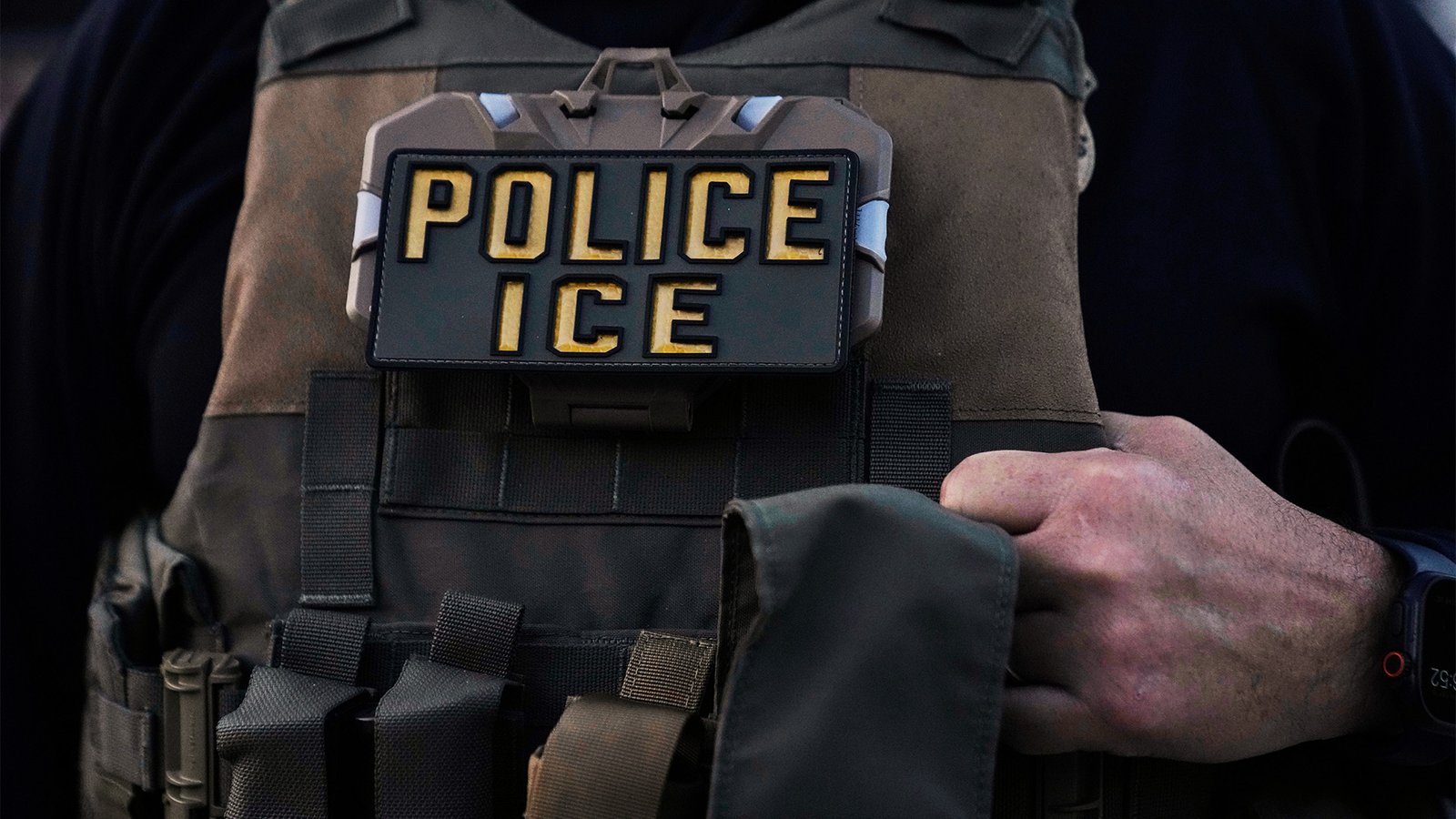
The Senate and Assembly passed the three-bill package largely along party lines. One notable exception: Sen. Jon Bramnick (R-Union) voted with the Democrats for S-3114 to require local, state and federal law enforcement to show their faces and identification when interacting with the public. Face coverings could be worn for medical needs, in emergencies and for undercover work.
‘You should be unmasked’
Bramnick said the images and videos showing masked Immigration and Customs Enforcement agents grabbing and arresting people around the U.S. “does not look like my country.”

“This is an important moment in our history,” Bramnick said. “If you are going to arrest someone, you should be unmasked.”
Assemblyman Gerald Scharfenberger (R-Monmouth) called the bill “a direct attack on law enforcement and will end up putting the lives of men and women agents and officers and their families in danger.”
While the governor’s office typically does not comment on pending legislation, as a candidate Sherrill called for a ban on masked immigration agents.
A 2018 New Jersey attorney general’s directive limits local and state law enforcement’s cooperation with ICE. On the potential for signing that into law, Sherrill, on the campaign trail, said she wouldn’t want to bring new scrutiny on a policy affirmed by the courts. Former Gov. Phil Murphy declined to sign another version of the legislation, warning that the bill went beyond the directive and might be overturned in court.
Democratic sponsors revised the bill, A-4071, to resemble more closely the current Attorney General’s Office directive. The measure would prohibit state, county and municipal police from helping ICE detention efforts unless agents have criminal warrants. It also would preclude law enforcement from stopping, questioning, arresting, searching or detaining anyone based solely on actual or suspected citizenship or immigration status, and would stop police from inquiring about an individual’s immigration status unless it is relevant to the investigation of an indictable offense committed by the person.
‘This chamber plays games’
Assemblyman Gregory Myhre (R-Ocean) said New Jersey should be helping to remove “lawbreakers.” He lauded the unprecedented billions of dollars for ICE in the federal budget for “aggressive enforcement” across the country.
“While this chamber plays games trying to hide people from ICE, Washington is building the machine to remove them fast,” Myhre said. “Efficient and determined local police chiefs and sheriffs, not Trenton bureaucrats, should decide when coordination with federal partners protects our community.”
Assemblyman Ravi Bhalla (D-Hudson) said the bill properly prioritizes the enforcement of state and local laws by police in New Jersey and lets federal agents enforce federal laws.
“It has made our immigrant communities willing to report crimes, cooperate with police, send their kids to school and seek medical care without fear that a routine encounter with a government agency becomes a one-way ticket to a detention center,” Bhalla said.
He echoed concerns, though, from some immigrant advocates who complained that the bill should go further to protect immigrants, such as people who were arrested but not yet convicted of a crime.
“This is a floor, not a ceiling,” said Bhalla, adding there is nothing in the bill to prevent localities from putting additional immigrant protections in place.
The third bill, A-4070, would ban government and health care facilities from collecting and sharing immigration and citizenship status, birthplace and Social Security taxpayer ID numbers unless the information is needed for benefits, services or professional licensure. The bill also would restrict when the Motor Vehicle Commission could share personal data on drivers.
Murphy did not sign the measure in January, saying some of its language could have jeopardized “billions of dollars in federal funding for critical programs.” The bill text was amended.



