
Welcome back to World Brief, where we’re looking at possible talks between the United States and Iran to end the war, several crucial elections in Europe, and a deadly attack on a Sudanese teaching hospital.
Contradictory Claims
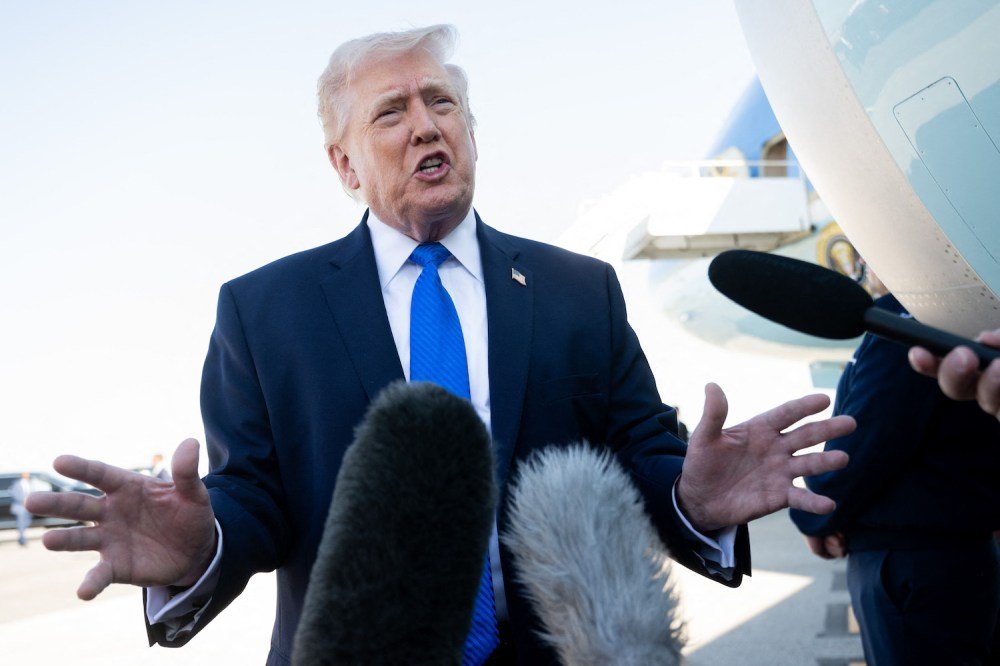
U.S. President Donald Trump claimed on Monday that Washington and Tehran were engaging in “very, very strong talks” to end the U.S.-Israeli war against Iran. According to Trump, U.S. envoy Steve Witkoff and Trump’s son-in-law Jared Kushner were “dealing with the man who I believe is the most respected and the leader” of Iran. The president did not specify who that was, though he confirmed that Washington had not spoken to Iranian Supreme Leader Mojtaba Khamenei.
Welcome back to World Brief, where we’re looking at possible talks between the United States and Iran to end the war, several crucial elections in Europe, and a deadly attack on a Sudanese teaching hospital.
Contradictory Claims
U.S. President Donald Trump claimed on Monday that Washington and Tehran were engaging in “very, very strong talks” to end the U.S.-Israeli war against Iran. According to Trump, U.S. envoy Steve Witkoff and Trump’s son-in-law Jared Kushner were “dealing with the man who I believe is the most respected and the leader” of Iran. The president did not specify who that was, though he confirmed that Washington had not spoken to Iranian Supreme Leader Mojtaba Khamenei.
As part of these alleged talks, Trump ordered the U.S. military on Monday to “POSTPONE ANY AND ALL MILITARY STRIKES AGAINST IRANIAN POWER PLANTS AND ENERGY INFRASTRUCTURE FOR A FIVE DAY PERIOD, SUBJECT TO THE SUCCESS OF THE ONGOING MEETINGS AND DISCUSSIONS.”
The statement follows Trump’s threat on Saturday to “obliterate” Iran’s power plants if the country did not reopen the Strait of Hormuz within 48 hours, which it still has not done. Traffic in the strategic waterway—through which around one-fifth of the world’s oil normally passes—has largely stopped due to Iranian attacks, causing an unprecedented disruption to global energy flows.
Reports suggest that Iranian parliamentary Speaker Mohammad Bagher Ghalibaf is the official negotiating with Witkoff and Kushner; however, Ghalibaf wrote in a post on X on Monday that “[n]o negotiations have been held with the US” and that fake news was being employed to “manipulate the financial and oil markets and escape the quagmire in which the US and Israel are trapped.”
Following Trump’s announcement, Brent crude prices dropped roughly 13 percent on Monday to around $99 a barrel after hitting nearly $114 earlier in the day.
Israeli Prime Minister Benjamin Netanyahu spoke to Trump on Monday to discuss the White House’s alleged talks. “President Trump believes there is an opportunity to leverage the tremendous achievements we have reached alongside the U.S. military to realize the goals of the war through an agreement, an agreement that will safeguard our vital interests,” Netanyahu said. “At the same time, we are continuing to strike in both Iran and Lebanon.”
The United States wants Iran to relinquish control of its enriched uranium as part of a larger U.S. effort to curtail Tehran’s nuclear program. Iran has thus far refused to do so, arguing that it has the right to enrich uranium for peaceful purposes; Tehran insists that its nuclear program is for civilian use only.
Trump told CNN on Monday that the United States and Iran have reached 15 points of agreement, though he only specified one: that Tehran has agreed not to have a nuclear weapon, a promise that it has made in the past.
According to Iran’s semiofficial news agency Mehr News, the Iranian Foreign Ministry refuted the White House’s claims, saying that regional countries have offered “initiatives” intended to “reduce tensions” but that direct dialogue with Washington had not occurred. Iranian Foreign Minister Abbas Araghchi confirmed on Sunday that he had spoken by phone with Turkish Foreign Minister Hakan Fidan.
Today’s Most Read
The World This Week
Tuesday, March 24: Denmark holds snap parliamentary elections.
Australian Prime Minister Anthony Albanese hosts European Commission President Ursula von der Leyen.
France kicks off the three-day Paris Forum on Defense and Strategy.
Thursday, March 26: France hosts a two-day G-7 foreign ministers’ meeting.
Finland hosts a leaders’ summit of the Joint Expeditionary Force.
Former Venezuelan President Nicolás Maduro and his wife appear before a U.S. court in New York City on several charges, including conspiracy of narcoterrorism.
The Faroe Islands hold parliamentary elections.
Cameroon kicks off a four-day ministerial conference of the World Trade Organization.
Friday, March 27: Eurozone finance ministers hold a virtual meeting to discuss the Middle East crisis.
Sunday, March 29: Indonesian President Prabowo Subianto begins a three-day trip to Japan.
Monday, March 30: Faustin-Archange Touadéra begins his third term as president of the Central African Republic.
What We’re Following
Election roundup. This weekend was one for the ballot boxes, as several European countries held crucial elections.
Slovenian lawmakers called for urgent coalition talks on Monday after Sunday’s parliamentary election resulted in a near tie. With more than 99 percent of ballots tallied, Prime Minister Robert Golob’s Freedom Movement secured 28.56 percent of the vote, whereas the nationalist Slovenian Democratic Party—led by pro-Trump populist Janez Jansa—clinched 28.12 percent. Jansa has accused the country’s election commission of incorrect counting, without citing evidence. Meanwhile, Golob accused “foreign services” last week of interfering in the country’s election; Jansa has admitted to meeting with a representative of a private Israeli intelligence firm but has denied any wrongdoing.
Early polling on Monday showed that 54 percent of Italian voters have rejected a key judicial reform referendum championed by far-right Prime Minister Giorgia Meloni. Had the referendum passed, oversight of judges and prosecutors would have been divided and a new council created to discipline them, which Meloni argued would have made the system “more just, more efficient, more meritocratic, and more free”; Meloni has long accused Italian judges of impeding her immigration crackdown. Analysts suggest that the referendum’s failure signals growing discontent with Meloni’s far-right policies and could help unify the fragmented center-left opposition.
German Chancellor Friedrich Merz vowed on Monday to push forward promised tax and social security reforms after his conservative Christian Democratic Union (CDU) won a key election in the state of Rhineland-Palatinate on Sunday. This was the first time in 35 years that the CDU had defeated its coalition partner, the center-left Social Democratic Party, in that state. However, experts argue that the biggest winner was the far-right Alternative for Germany party, which more than doubled its share of the vote.
France’s far-right National Rally (RN) party suffered a significant electoral setback on Sunday, when it failed to win control of several major cities in nationwide municipal elections. The votes were seen as a test for the right wing’s base ahead of presidential elections next year. RN leader Jordan Bardella and far-right figure Marine Le Pen are both projected to perform well in that race, particularly as severe fragmentation within France’s mainstream parties has embroiled centrist President Emmanuel Macron in political instability. But Sunday’s poor showing could mean that the far right does not yet have the public support it needs to clinch the top job.
Targeting health care. An attack on a Sudanese teaching hospital in Darfur late Friday killed at least 64 people, including 13 children, and injured nearly 90 others. World Health Organization chief Tedros Adhanom Ghebreyesus confirmed the incident the following day. Since Sudan’s civil war erupted in April 2023, more than 2,000 people have been killed in 213 recorded attacks on health care infrastructure.
It is unclear who was responsible for the assault on Al Daein Teaching Hospital. Both the Sudanese military and paramilitary Rapid Support Forces (RSF) have denied culpability. Sudan’s army called the attack “characteristic” of the RSF’s tactics, whereas the paramilitary group argued that it “reflects a systematic pattern of targeting innocent civilians and civil facilities, foremost among them healthcare facilities,” by the Sudanese Armed Forces.
Since fighting began nearly three years ago, clashes have killed tens of thousands of people and displaced more than 11 million others, making Sudan the epicenter of one of the world’s worst humanitarian crises. Last month, the United Nations accused the RSF of acting with “genocidal intent” when it seized the North Darfur city of El Fasher in October. During that siege, more than 450 people were massacred at the city’s last functioning hospital.
Odds and Ends
Permission to dance? K-pop boy band BTS is back in business. The global superstars kicked off their return with an hourlong concert in Seoul’s historic Gwanghwamun Square on Saturday. This was the group’s first performance since 2022, when BTS went on temporary hiatus to allow its members to fulfill their mandatory service in the South Korean military. But though this music genre is experiencing a fresh wave of global popularity following the success of the film Kpop Demon Hunters, turnout for the concert was lower than originally expected. Only around 42,000 people showed up for the outside crowd (on top of the 22,000 inner-area tickets sold) rather than the anticipated 260,000 attendees.



