
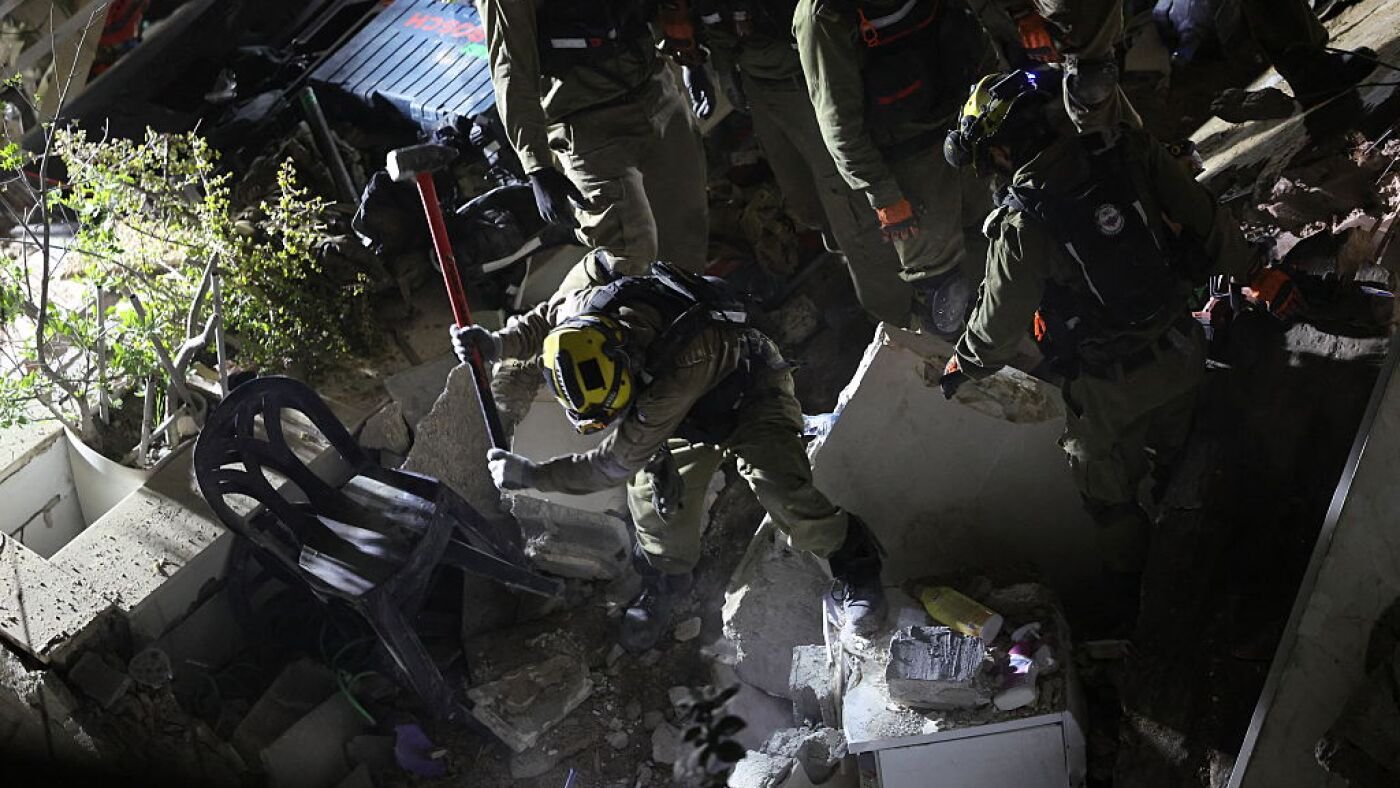
Israeli search and rescue personnel work at the site of a residential building destroyed in an Iranian strike in the northern city of Haifa on Sunday.
Ilia Yefimovich/AFP via Getty Images
hide caption
toggle caption
Ilia Yefimovich/AFP via Getty Images
President Trump, the head of the CIA and senior defense officials are giving a news conference about the military mission to rescue an Air Force colonel whose plane was downed in Iran.

Meanwhile, Iran pushed back Monday against a U.S. ceasefire proposal and Trump’s deadline to open the Strait of Hormuz, as the warring sides traded missile attacks.
Iranian state broadcaster IRNA said the country’s government rejected the temporary ceasefire plan and countered with its own proposal for a permanent end to the war.

On Sunday, Trump repeated his ultimatum, in a profanity-laden social media post, for Iran to reopen the Strait of Hormuz or the U.S. would destroy Iranian power plants and bridges. He later specified the deadline would be Tuesday at 8 p.m. ET.
Attacking civilian infrastructure that doesn’t contribute to military action would be a war crime under international and U.S. laws, according to legal experts.
Asked about the threat in Monday’s press conference, Trump said he believed the Iranian public is willing to suffer more U.S. bombing to gain freedom from an oppressive regime.
Asked by another reporter if he was concerned it would constitute a war crime, Trump said, “No. I hope I don’t have to do it.”
Iranian officials reacted to Trump’s threats.
A spokesman for Iran’s president, Seyyed Mehdi Tabatabai, called Trump’s statement a reaction of “sheer desperation and anger.”
“The Strait of Hormuz will open when all the damage caused by the imposed war is compensated through a new legal regime, using a portion of the revenue from transit fees,” Tabatabai said in a social media post on Sunday.
“We are determined to defend our national security and sovereignty with all might,” Iranian Foreign Ministry spokesperson Esmail Baghaei told Iran’s Wana news agency.
Iran’s Mission to the U.N. said on Sunday “Trump seeks to drag the region into an endless war.”
“This is direct and public incitement to terrorise civilians and clear evidence of intent to commit war crimes,” it said in a post on X. “The international community and all States have legal obligations to prevent such atrocious acts of war crimes.”
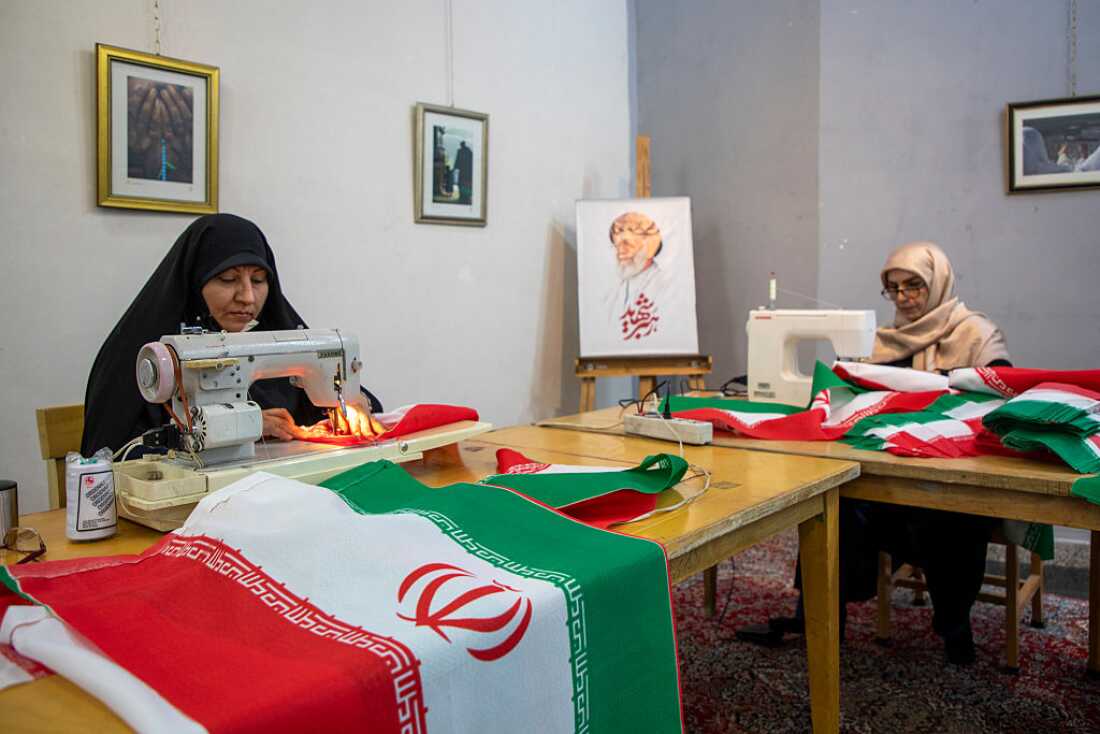
Volunteers sew Iranian flags to distribute across the city for free in Tehran, Iran, on Sunday. According to the team’s manager, up to 5,000 flags are distributed daily.
Majid Saeedi/Getty Images
hide caption
toggle caption
Majid Saeedi/Getty Images
Here are more updates on the war in Iran today:
Diplomatic initiatives | Israel kills intel chief | Strikes in Iran, Israel and Gulf | Bab al-Mandeb Strait | Iran internet outage
Diplomatic initiatives are underway
Egyptian, Pakistani and Turkish envoys are said to have submitted to the U.S. and Iran a proposal for a 45-day ceasefire and the reopening of the Strait of Hormuz, according to The Associated Press.
The proposal was submitted on Sunday to Iran Foreign Minister Abbas Araghchi and U.S. envoy Steve Witkoff, AP reported.
Speaking early Monday on the White House South Lawn, President Trump told reporters the 45-day plan is “not good enough, but it’s a very significant step.”
António Costa, president of the European Council, said he had a phone call with Iranian President Masoud Pezeshkian and urged Iran to stop attacks against countries in the region. Costa also hailed negotiations led by regional partners to bring about peace.
Qatar’s prime minister, Mohammed bin Abdulrahman bin Jassim Al-Thani, had a series of phone calls over the weekend with officials from India, Spain and Norway, and “emphasized the need to strengthen coordination, intensify joint efforts, return to the negotiating table, and prioritize reason and wisdom to contain the crisis, thereby ensuring global energy security, freedom of navigation, environmental safety, and preserving regional stability,” according to the Qatari Foreign Ministry.
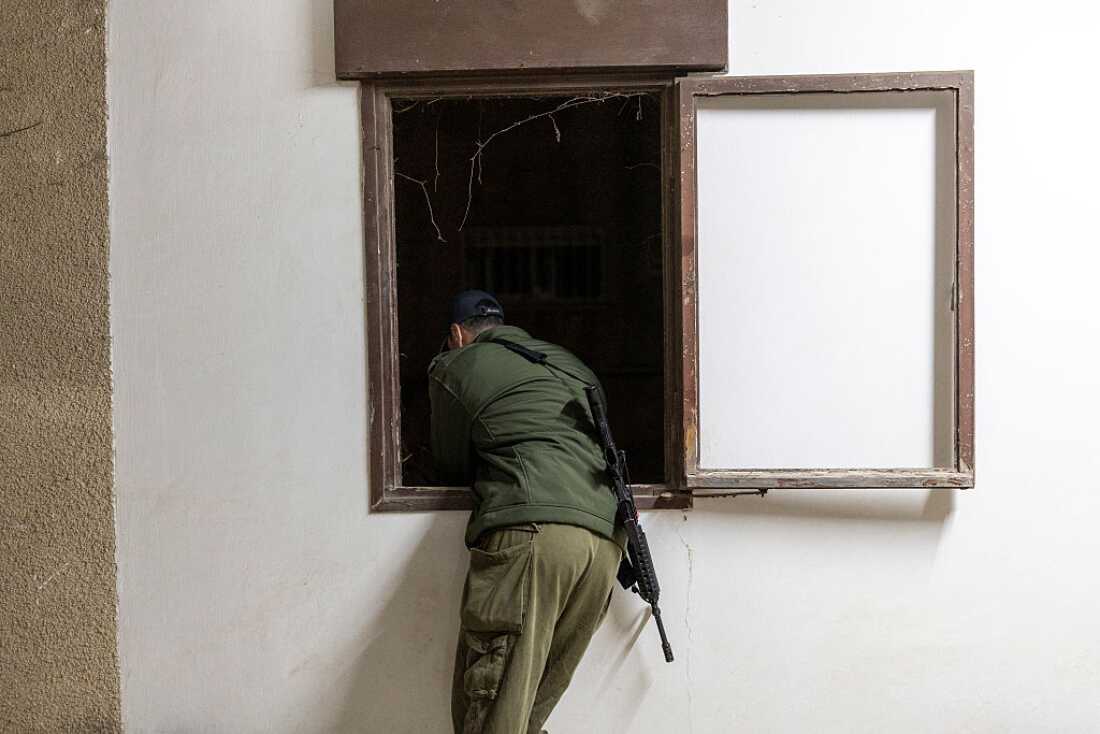
An Israeli soldier overlooks the scene as search and rescue personnel work at the site of a residential building destroyed in an Iranian strike in the northern city of Haifa on Sunday.
Ilia Yefimovich/AFP via Getty Images
hide caption
toggle caption
Ilia Yefimovich/AFP via Getty Images
The Foreign Ministry of Oman said its representatives engaged with Iranian diplomats in a meeting “where possible options were discussed regarding ensuring the smooth flow of passage through the Strait of Hormuz during these circumstances witnessed in the region.”
In a post on X on Sunday, the ministry said that “experts from both sides presented a number of visions and proposals that will be studied.”
Israel killed the intelligence chief of Iran’s Revolutionary Guard
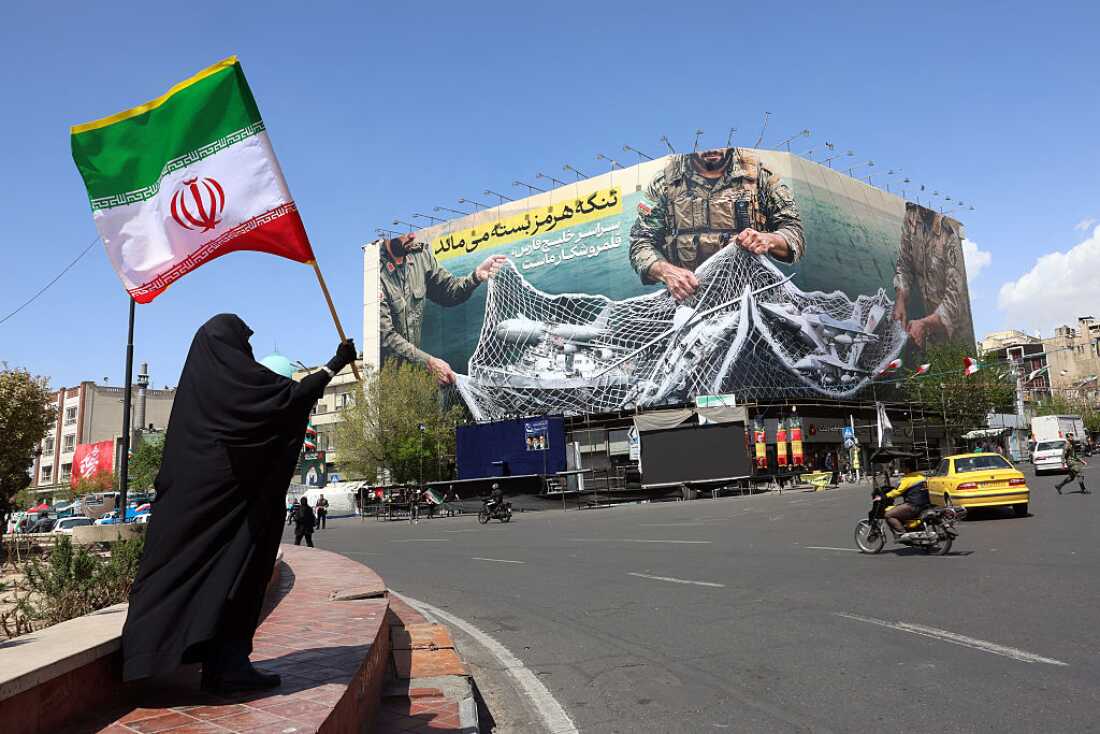
A woman holds Iran’s national flag while standing near a billboard with a sentence reading “The Strait of Hormuz remains closed” at the Enqelab Square in Tehran, on Sunday.
AFP via Getty Images
hide caption
toggle caption
AFP via Getty Images
Iran has confirmed the killing of Maj. Gen. Majid Khademi, intelligence chief of the country’s paramilitary Revolutionary Guard. Israel claimed responsibility for the killing.
Israel’s defense minister, Israel Katz, said the country’s forces would continue to “hunt down” Iran’s leaders one by one and threatened to destroy Iran’s national infrastructure if it continues firing at civilians in Israel.
As Israel burns through its stockpile of interceptors that shoot down missiles, it has announced a plan to speed up production.
U.S. and Israel strike Iran’s oil and steel plants as Iran targets the region’s refineries and telecoms
Israeli officials said on Monday that U.S. and Israeli jets struck Iran’s petrochemical industry, steel plans and other infrastructure and disabled their operations. Defense Minister Israel Katz said the targeted sites supported Iran’s missile production industry.
Iran launched missiles and drones in Israel and across the Persian Gulf at oil refineries overnight, which it said produce fuel and products used by the U.S. military.
Iranian missiles hit Tel Aviv, other towns in central Israel and the northern port city of Haifa on Monday. Iran said it targeted the oil refinery, which it said supplies fuel to Israeli jets. The Magen David Adom rescue teams in Haifa said their paramedics were treating four people for mild injuries and the organization’s footage from the scene showed smoke and fire in a residential area.
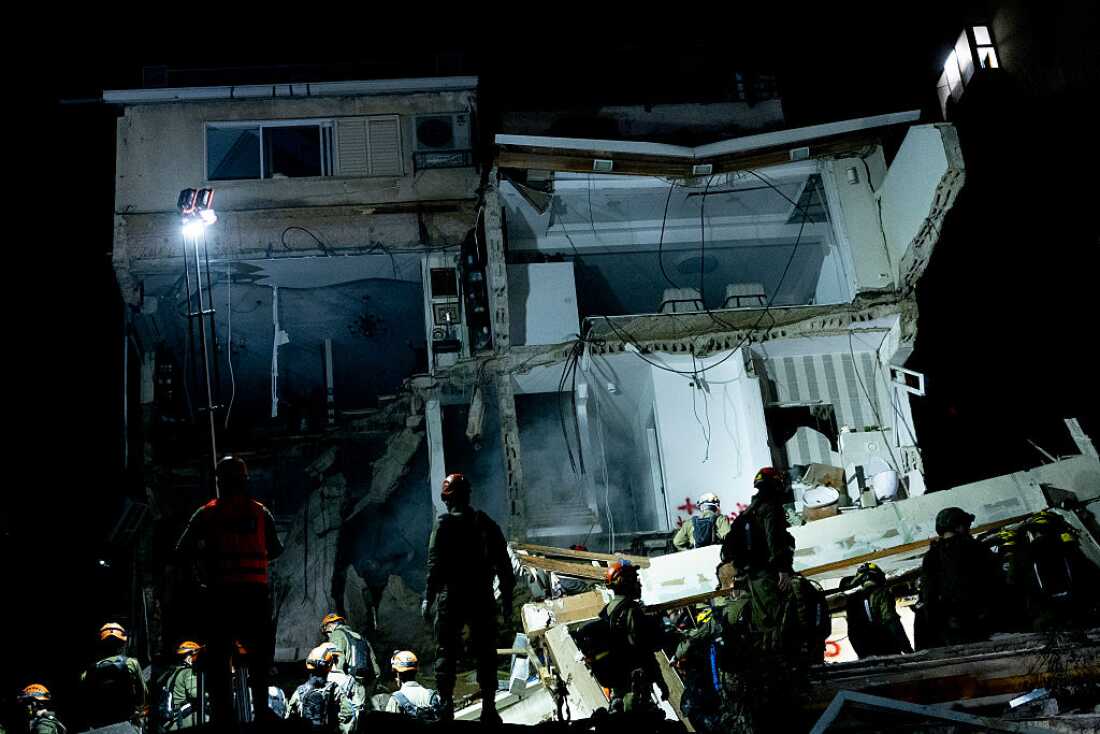
Israeli emergency responders search for missing people at the site of an apparent Iranian ballistic missile strike in Haifa, Israel, Sunday.
Amir Levy/Getty Images
hide caption
toggle caption
Amir Levy/Getty Images
Four people were killed in Haifa on Sunday after an Iranian missile struck a six-floor residential building, which was engulfed in flames.
Iranian drones also struck the oil sector complex in Shuwaikh on Sunday, where Kuwait Petroleum Corporation headquarters and the country’s ministry of oil are located. A statement by KPC said the strikes caused a fire at the complex, causing “substantial material damage.”
It also said that “a number” of operational facilities managed by Kuwait National Petroleum Company and the Petrochemical Industries were hit by drones, with fire erupting in several facilities. (Despite similar names, the petroleum company and corporation are distinct Kuwaiti state entities that handle different functions with oil products.)
Authorities said emergency teams were on site to contain the fires. Over the weekend, Iran also hit two power and water desalination plants in Kuwait, knocking out power generation units.
Meanwhile, a telecom building and a port were targeted in the UAE on Monday. That port is vital for food imports as its main port in Dubai remains inaccessible. Officials in the United Arab Emirates reported to have intercepted nine ballistic missiles, 50 drones and a cruise missile fired by Iran on Sunday. UAE’s ministry of defense said the country’s air defenses were engaged through Monday to intercept Iranian missiles and drones.
Bab al-Mandeb Strait as a target
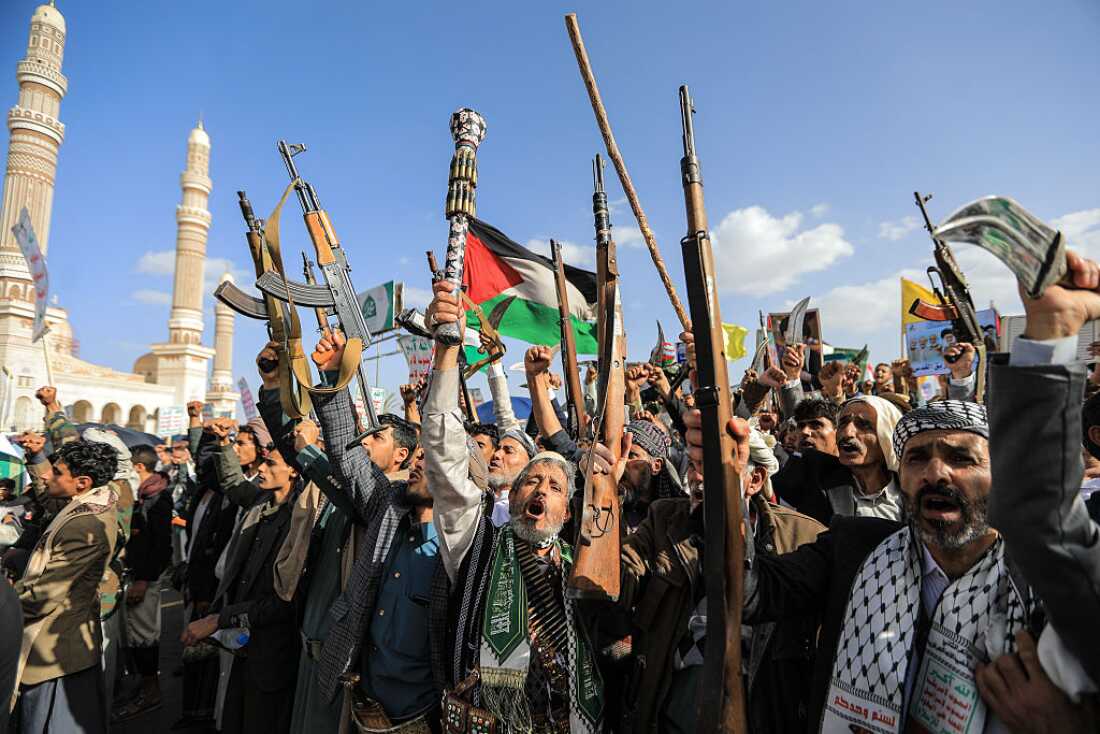
Supporters of the Iran-backed Houthi movement brandish their weapons as they rally in solidarity with Iran and Lebanon amid the U.S.-Israeli war with Iran, in Yemen’s capital of Sanaa on Friday.
Mohammed Huwais/AFP via Getty Images
hide caption
toggle caption
Mohammed Huwais/AFP via Getty Images
Aliakbar Velayati, an adviser to the newly appointed supreme leader Mojtaba Khamenei, warned that Iran may target another key location in the Middle East for the passage of vessels, Bab al-Mandeb Strait. Tucked between Yemen and the Horn of Africa, connecting the Red Sea, the Gulf of Aden and Arabian Sea to the Suez Canal, Bab al-Mandeb Strait could become a target of the Iran-backed Houthi militants, who entered the Iran war last week by attacking Israel, and operate out of Yemen.
An estimated 10 % of the global trade moves through the Red Sea, a key route for transporting oil from the Arabian Gulf to Mediterranean and connecting Europe to Asia.
Velayati said Iran’s regime “views Bab al-Mandab with the same intensity as Hormuz.”
“And if the White House contemplates repeating its foolish mistakes, it will quickly realize that the flow of energy and global trade can be disrupted with a single signal,” Velayati wrote on X. America, he added, “has yet to learn the geography of power.”
Iran sees the longest national internet outage
Iranians continue to go without internet access since the government imposed a near total shutdown when the war began on Feb. 28.
It is the longest nationwide internet shutdown on record, according to NetBlocks, an internet freedom organization that tracks these shutdowns.
Without internet access, most Iranians can’t receive warnings about where U.S. and Israeli airstrikes will hit. Many are cut off from the global economy and from family living abroad.
Iran has kept some loyal, pro-government voices and information sources online.
But civil society groups say the shutdown has complicated efforts to document human rights abuses. Although some people can get online with satellite-based Starlink connections, the Iranian government has arrested people for using them.
A 37-day internet blackout occurred during Sudan’s protests in 2019. Longer regional blackouts have been recorded in Tigray and Kashmir.
But NetBlocks, which on Monday clocked the 38th day in Iran without internet, said Iran’s is the longest outage on a national scale.
Carrie Kahn and Daniel Estrin contributed to this report from Tel Aviv, Israel, Aya Batrawy from Dubai, United Arab Emirates, Durrie Bouscaren from Istanbul, and Tina Kraja and Alex Leff from Washington, D.C.



