
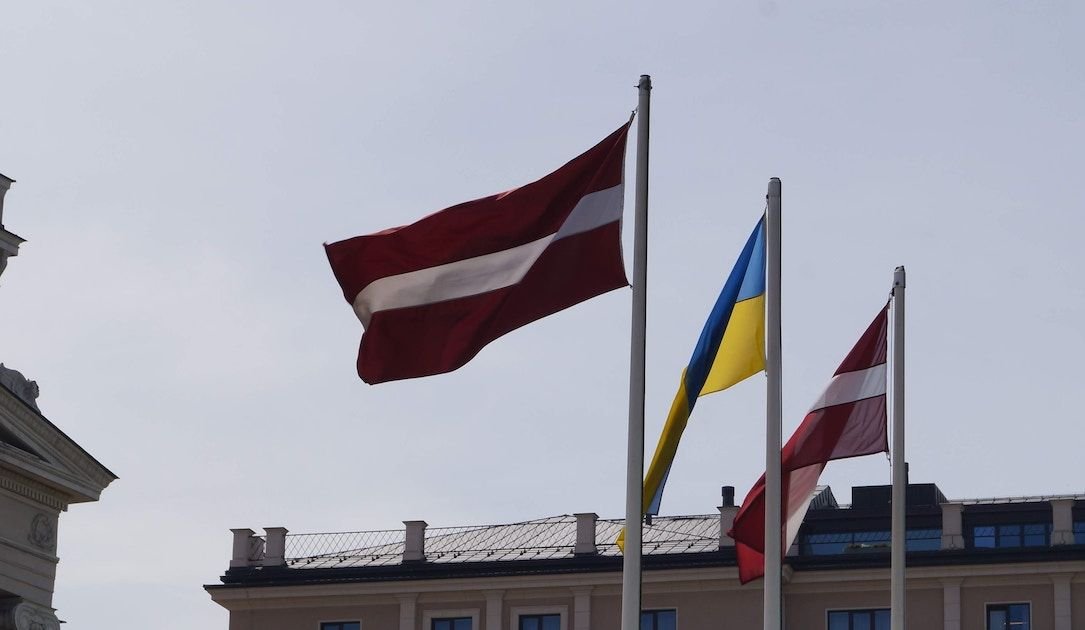
Latvia’s Defense Ministry said Friday that Russia is carrying out a coordinated disinformation campaign against Latvia, Lithuania and Estonia, falsely claiming that the Baltic states are allowing their territories to be used for Ukrainian attacks on Russia.
According to the ministry, Russian media outlets and Telegram channels have circulated allegations that the Baltic states opened their airspace to Ukrainian drones targeting Russian territory — a claim Riga strongly denied.
Latvia, Lithuania and Estonia are not involved in planning or carrying out Ukraine’s attacks on Russia, the ministry said, adding that the three NATO members support Kyiv through military aid, humanitarian assistance and financial support.
“Through such statements, Russia demonstrates its weakness and attempts to divert attention from the fact that it is unable to defend itself against successful Ukrainian counterattacks targeting Russian infrastructure along the Baltic Sea coast,” the ministry said in a statement.
The objective of the Russian campaign is to discredit NATO, undermine public trust in state institutions and weaken support for Ukraine, including by spreading disinformation through social media bots targeting Russian-speaking audiences and younger users.
The allegations appeared to follow reports earlier this week that several Ukrainian drones strayed into Baltic territory during one of Kyiv’s largest long-range drone attacks on Russia. Two drones entered Latvian and Estonian territory, while another fell on a frozen lake in Lithuania. Authorities reported no casualties or significant damage.
Both Ukraine and Russia deploy electronic warfare systems — including jamming and navigation spoofing devices — to defend against drone and missile attacks. These measures can sometimes cause drones to veer off course. Russian drones have previously been found in Moldova and Romania during the war.
The Baltic states, which border Russia and Belarus, have repeatedly warned about Russian hybrid activities. In January, Latvia’s security services said cyberattacks and sabotage operations linked to Russia remained a significant threat.
Officials also warned that Moscow’s perception of Latvia is increasingly resembling how Russia viewed Ukraine before its full-scale invasion in 2022 — a shift they say could signal a more confrontational posture in the future, even if no immediate military threat is detected.
Recorded Future
Intelligence Cloud.



