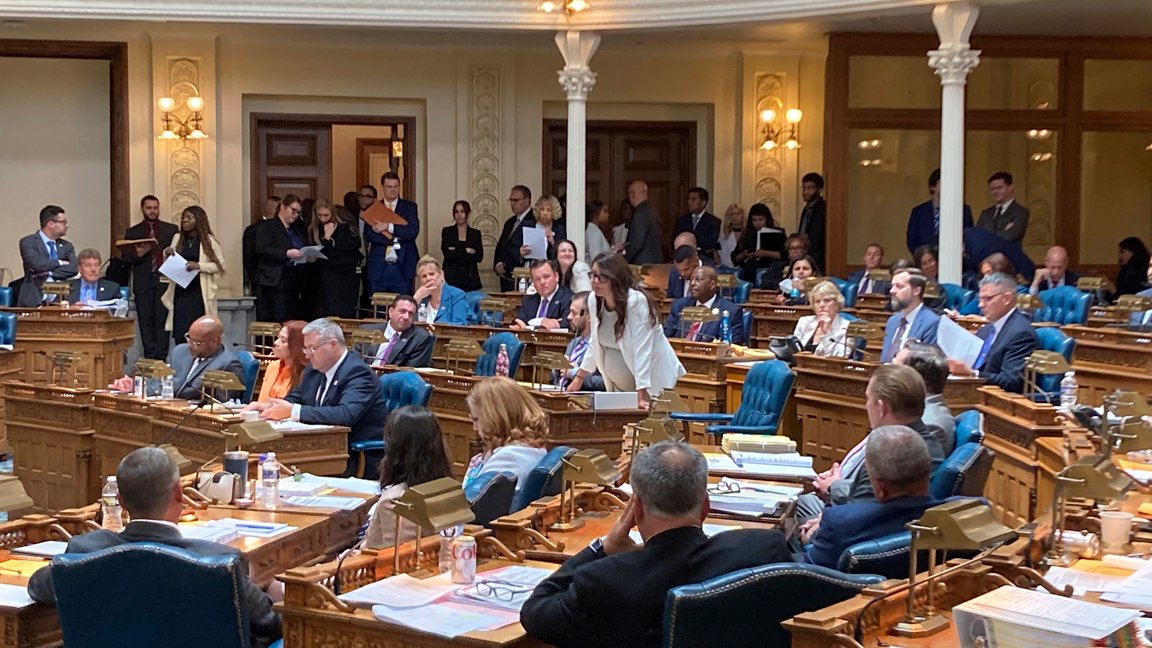
As lawmakers await next week’s budget address from Gov. Mikie Sherrill, some are already looking ahead to June when a final spending bill must be sent to the governor for approval.
In recent weeks, lawmakers from both major political parties have drafted legislation to make changes in a budget-approval process that often plays out at a breakneck speed in the final days, and even hours, preceding the July 1 start of a new fiscal year.
Taken together, the changes would establish more deliberation and transparency, according to a close review of the proposals by NJ Spotlight News.
Some sponsors also argue enacting budget reforms could incentivize more fiscal restraint at a time when overall spending by state government is outpacing annual tax collections by a wide margin.

One proposal calls for setting a firm date for filing and making public last-minute legislative spending additions that often inflate the size of the annual budget.
In recent years, legislative leaders, citing the vague rules currently in place, have waited until well after the spending bill itself has been signed into law to disclose which individual lawmakers sponsored last-minute budget changes.
These changes include the spending add-ons often referred to as Christmas tree items inside the State House since they largely fund projects located in districts represented by the majority party.
Last year, it was one of those last-minute budget changes inserted into the final spending bill by lawmakers at the very end of June that emerged as a major controversy, even drawing criticism from the state’s then-sitting attorney general.
That budget change diverted $45 million in legal settlement funding earmarked for supporting addiction treatment services. And the legislative sponsor – or sponsors – backing it remain hidden from public view.
Under legislation cosponsored by Assemblywoman Aura Dunn (R-Morris) and Assemblyman Gerry Scharfenberger (R-Monmouth), lawmakers would have to submit written resolutions documenting each proposed budget change each year by June 1 — a full month before the start of the state’s fiscal year.
The written budget resolutions, which would have to include the identity of each sponsor, would also have to be disclosed publicly by lawmakers by June 1, according to the bill.
“I think, if people had time to really analyze what’s being proposed, we as legislators, collectively, may be more cautious about what we’re putting in,” Scharfenberger said during an interview with NJ Spotlight News.
“Rather than figuring, well, it will go in at the 11th hour, nobody will really notice or question it,” he said.
For her part, Dunn has also proposed an amendment to the state Constitution that would prohibit lawmakers from awarding such funding to non-state agencies outside of any competitive criteria or process spelled out in law.
In recent years, there’s no evidence the Legislature’s current Democratic majority is requiring lawmakers to subject their proposed add-ons to any formal, merit-based evaluations, such as those used by the executive branch to ensure fair distribution of state grants.
“Honestly, I feel the process has gotten shameless,” Dunn said during an interview with NJ Spotlight News.
It was Dunn who raised concerns last year about state funding being awarded to youth sports programs in only a handful of communities, despite a desire for such subsidies in communities throughout the state.
“I’m a baseball mom, by the way, and I’m all for investing in youth sports,” she said. “But, I thought, why this little league over the . . . others?”
While Dunn and Scharfenberger are veteran lawmakers, two newcomers to the Assembly have also proposed ways to further tighten up the budget process.
A measure sponsored by Assemblywoman Katie Brennan and Assemblyman Ravi Bhalla, both (D-Hudson), would require formal introduction of the annual spending bill to occur on or before June 1 each year.
Among other changes, the same legislation also calls for establishing a two-week delay between when the final draft of the spending bill is made public and when it can be put up for final adoption by the Legislature.
In recent years, as legislative leaders have waited until the very end of June to both introduce and approve the final spending bill, complaints about a lack of transparency and public oversight have come from across the partisan divide.
“People want receipts. They want good government and transparency,” Brennan told Politico NJ in a story published last month.
Late last year, as former Gov. Phil Murphy, a Democrat, prepared to leave office, he also raised concerns about the final stages of a legislative budget process that has been controlled by Murphy’s own party for more than two decades.
“I’d love the end of the budget process to have a longer open window, if you will,” Murphy said at the time during a lengthy interview with NJ Spotlight News.
“The budget is almost $60 billion. About 98% of it is part of the budget presentation that the governor makes in late February or early March. It’s out there for months,” Murphy said.
“It’s the last sliver of it, and I’d love to see that changed,” he said.
This year, Sherrill, a Democrat who championed increased transparency and accountability during her campaign last year, will be proposing her first state budget plan to lawmakers in a March 10 public address.
Under the state Constitution, the governor drafts an annual budget, but lawmakers have the authority to write and pass the spending bill that ultimately dictates annual appropriations.
However, a governor can also play a big role in the final stages of the budget-making process, if they choose to.
Under the Constitution, the governor can endorse the legislative spending bill unchanged; veto the spending bill in its entirety; or use line-item veto powers that allow for the elimination of individual line items or budget language, without requiring those changes to go back to the Legislature for final concurrence.
When asked what approach she will adopt at the end of June this year, Sherrill told reporters during a news conference last week that she would have more to say on March 10.
But Sherrill went on to say that in her experience, as a former member of Congress, it’s “usually the hard deadlines that force the hard choices.”