
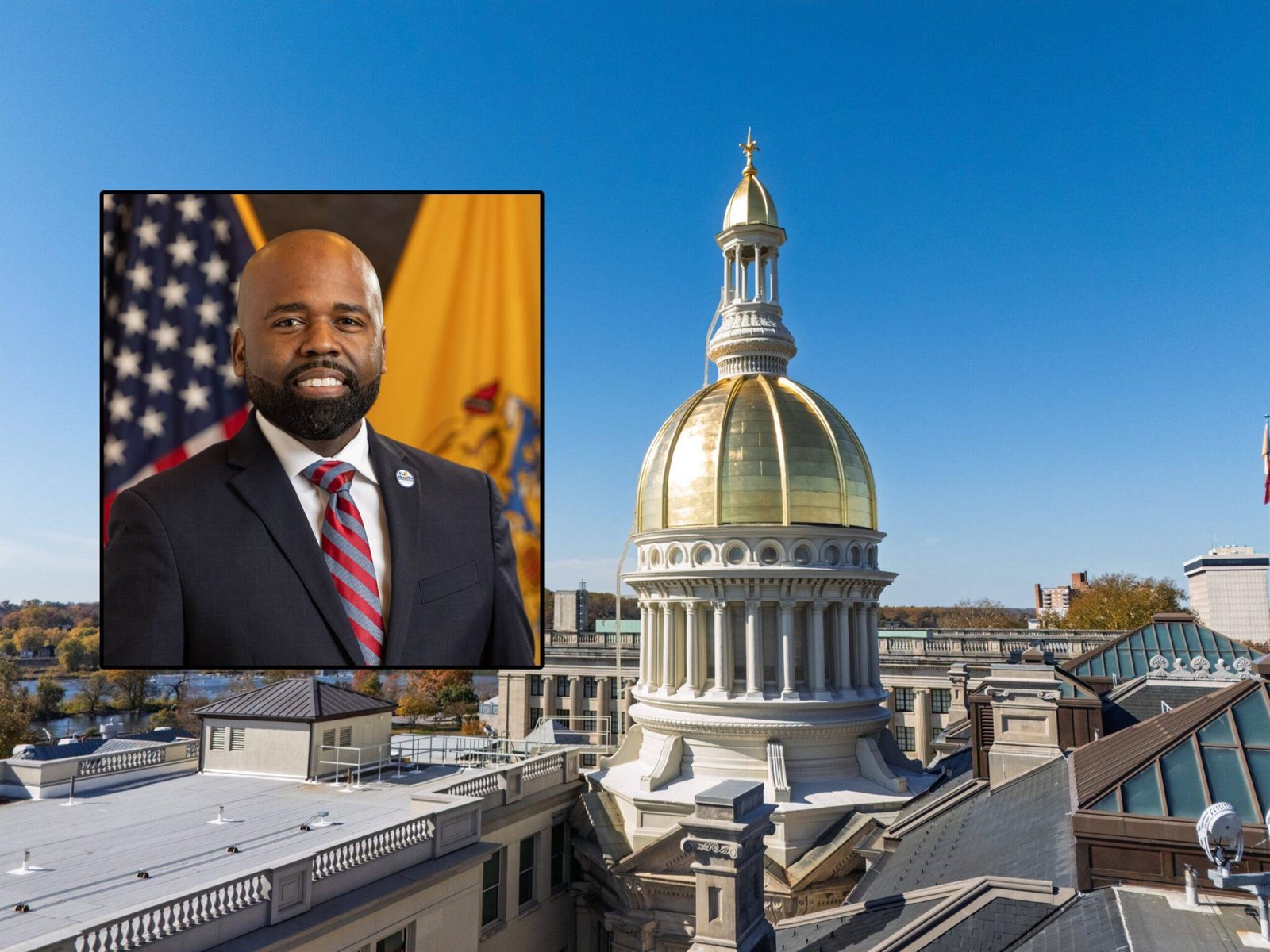
A Senate panel voted unanimously on Thursday to advance Gov. Mikie Sherrill’s pick to lead New Jersey’s Department of Health after questioning him on a range of topics including hospital funding, the cost of health care, and the state’s vaccine policy.
The nomination of Raynard Washington, an epidemiologist and public health expert from Charlotte, North Carolina, now goes to the full Senate for its approval.
In his testimony and in response to lawmakers’ questions, Washington highlighted the challenges New Jersey will face under federal funding cuts and policy changes championed by the Trump administration.
Gov. Sherrill plan seeks to fine big companies with workers on Medicaid
“The work of public health has never been more urgent. We are navigating unprecedented uncertainty from our federal partners,” Washington told the Senate Judiciary Committee.
Washington said he plans to continue programs that save lives and pull back on those that data shows are not worth the investment. He pledged to continue using the best scientific evidence available when making decisions.
“In this moment, we must continue to stand firmly with established medical evidence — especially as political ideology threatens our nation’s immunization system, one of the most successful public health achievements in modern history,” he said.
Sen. Paul Sarlo (D-Bergen) asked about the impact these changes will have on hospital funding, a topic he said he will focus on in his role as chair of the Senate Budget Committee, which is tasked with drafting an annual spending plan based on the $60.7 billion budget proposal Sherrill laid out Tuesday. Other Democrats on the panel asked about the cost of care in general and pending hospital closures.
“It will take a whole-of-government approach to prepare for the impacts of HR1,” Washington said, using the federal bill number for the legislation President Donald Trump signed in July that triggered the Medicaid cuts.
Sen. Kristin Corrado (R-Passaic) asked Washington about recent changes to the state’s vaccine reporting system that she said could conflict with people’s right to privacy. In a rare move, a member of the public also testified: Maria Quigly, an advocate for vaccine choice who echoed many of Corrado’s concerns.
Washington promised to follow state law and said the department is committed to protecting the “safety and security” of all the health data it collects.
Sen. Michael Testa (R-Cumberland) questioned the department’s shift from relying primarily on the federal Centers for Disease Control and Prevention for scientific guidance. The department now cites recommendations from national professional medical associations and a regional public health collaborative that New Jersey joined last fall. Testa also asked how the state can better reduce confusion around vaccine efficacy and ensure public trust in its guidance.
Washington said guidance issued recently by the CDC could make it harder, or more expensive, for people to be immunized. Trust comes through honesty and open dialogue, he said.
“The reality is, our goal is to protect access to vaccines for children in New Jersey,” he said.
A Virginia native, Washington worked as chief epidemiologist in Philadelphia before joining the public health department in Mecklenburg County, just as COVID-19 was descending on North Carolina. He said his career path was largely shaped by his experience caring for family members, several of whom died young in part because they lacked access to care, and a summer he spent at a rural hospital in Tanzania watching too many children die from malaria because they didn’t have mosquito nets or low-cost preventative medication.
“At its core, public health is public safety. When we fail, people suffer. And when we succeed, entire communities have an opportunity to live longer, healthier lives,” he said.
GET THE MORNING HEADLINES.



