
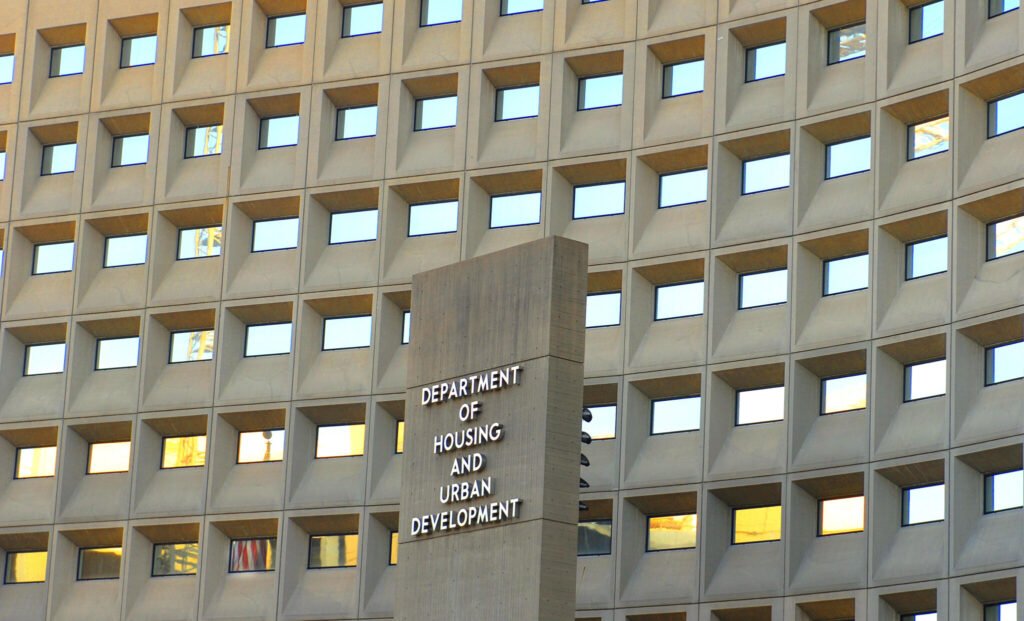
Sixteen states and the District of Columbia are challenging guidance from the U.S. Department of Housing and Urban Development that plaintiffs allege imposes new rules and funding conditions they say could weaken state protections against housing discrimination — and their ability to investigate them.
The lawsuit focuses on two HUD memos in September detailing how it will prioritize resources for cases with clear evidence of intentional discrimination.
HUD withdrew several fair housing documents including guidance policies on disparate impact — a theory of discrimination where neutral-seeming policies disproportionately exclude or harm certain groups — along with procedures for referring discrimination cases to the Department of Justice, and credit programs aimed at expanding access to housing.
On April 11, it will be 58 years since President Lyndon B. Johnson signed the Fair Housing Act into law in an effort to combat housing discrimination and partner HUD with state and local agencies to enforce those laws. Through the Fair Housing Assistance Program, HUD refers complaints to state agencies, which use HUD funding to investigate cases, train staff and conduct outreach.
The September memos stipulated that state agencies receiving HUD dollars to enforce fair housing laws won’t be reimbursed for cases regarding discrimination based on sexual orientation, gender identity, criminal record, source of income or English-language proficiency.
Attorneys general filing the lawsuit say HUD has significantly reduced staffing and the number of discrimination cases it pursues, while dismissing whistleblowers who raised concerns about the agency’s ability to enforce fair housing laws or look into acts of housing discrimination.
If the HUD changes go through, many state laws could be in conflict with this guidance.
Several states, including some represented in the lawsuit, have fair housing laws that extend protections beyond those covered by federal law and could be impacted by HUD’s guidance.
Included in the lawsuit alongside are attorneys general from Arizona, California, Colorado, Connecticut, Delaware, Hawaii, Illinois, Maine, Maryland, Massachusetts, Michigan, New Jersey, Rhode Island, Vermont, Washington and the District of Columbia. It was filed in the U.S. District Court for the Northern District of California.
Among state laws that offer protections cited in the HUD memos, California state law protects tenants based on sexual orientation, gender identity and lawful source of income, including housing vouchers.
Other states such as Illinois and Washington extend protections based on immigration status. Colorado, Massachusetts and Rhode Island also provide protection against discrimination on the basis of identities such as gender identity, sexual orientation and source of income.
Stateline reporter Robbie Sequeira can be reached at [email protected].
This story was originally produced by Stateline, which is part of States Newsroom, a nonprofit news network which includes New Jersey Monitor, and is supported by grants and a coalition of donors as a 501c(3) public charity.



