
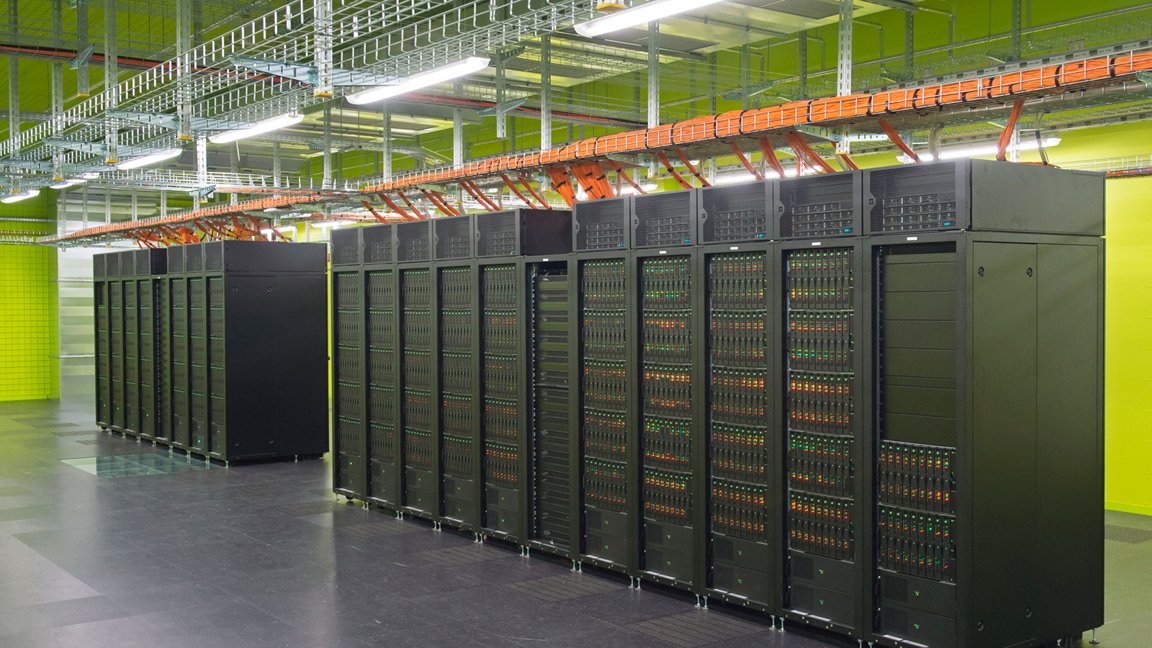
Vineland residents have taken to social media in recent weeks to oppose a massive data center being built in the city, about 40 miles south of Philadelphia.
The 2.6 million-square-foot data center — roughly equivalent to 45 football fields — is part of a $17 billion deal between developer DataOne and Microsoft Corp. DataOne says the facility will generate 85% of its energy through natural gas, and will operate as a “closed-loop” system that won’t require water. The 300 megawatts of electricity it’s expected to need is enough to power at least 65,000 residences for a year.
Residents are demanding to know more and calling for transparency. NJ Spotlight News spoke with Matt Williams, a Vineland resident and organizer of Sustain SJ, a group that advocates for clean air and responsible government. This interview has been lightly edited.
Joanna Gagis, anchor: What are your chief concerns about this data center?
Matt Williams: The list is kind of the same what you hear everywhere; the water usage, the power and really just the noise is really start to come to light for people.
JG: Explain that noise for folks who haven’t seen the videos or who aren’t living there.
MW: People that live closer to the site — me, personally, I’m about four miles — but from what I understand within like half a mile or a mile or so, there’s a loud, constant hum going on like, later hours of the night. And it’s disturbing residents.
JG: There’s also concerns about water. What we’re hearing from some environmentalists is that really, even when there are these closed loop systems, that there’s still the risk for a lot of use of water and then water pollution. What can you tell us about that?
MW: What we’re told is that they would use an initial allocation to prime the system, and then any additional use would be to top off the system. It’s tough to think that there wouldn’t be any issues. Our area has been in significant drought conditions for almost two years now, so it’s it’s really hard to understand that.
JG: What we’re hearing from some environmentalists is that even in a closed loop system, contaminated water still escapes and it can run into wells that might be in the area and it can run into water systems that aren’t equipped to properly strain out any contaminants. Tell us about the region surrounding Vineland and what impact it could have, if any contaminated water did escape from this center.

MW: This is on a wellhead protected area regulated by the state Department of Environmental Protection. That specific site is more susceptible to groundwater contamination. That immediately affects our water supply.
JG: And certainly agriculture nearby, too. Yes?
MW: Yeah, absolutely. Obviously, Vineland is known as a farming community.
JG: The DataOne chief executive officer said that this could be much worse. He says if this were an Amazon warehouse being built, that you’d have significantly more noise pollution and that there would be trucks moving through the area that would create air pollution. What did you hear from him so far, and what’s your response to those comments?
MW: From what I understand of their revised site plan, there’s a liquid natural gas storage tank on site. I don’t think that’s connected to a direct pipeline. So trucks have to bring that gas on site one way or another.
JG: Energy is one of the hot topics here in New Jersey. Energy costs have risen significantly in the last year. They say 85% of their own electricity will be generated by this liquid natural gas that you’re talking about. What could potentially be the impact for the remainder of that energy and how does that impact electricity bills in the area?
MW: Vineland is still an independent utility. I think the way that it was described to me, we are a “peaker system.” But that still implies that they’re going to have to take an electric pool off of somewhere, whether it’s our substation or Atlantic City Electric’s substation nearby.
How it affects our rates, I’m not sure. I don’t think we would see that until maybe our next auction.
JG: AI is not going anywhere. We’re just at the beginning of what will probably be the the next phase of technology in our country, in our world, and this data center is already being built. What are you asking for? What’s the recourse here?
MW: So you mentioned the town hall. There were very specific claims made at that town hall. And honestly, I would love to see those claims held onto paper. If it’s here to benefit our community, I think that that should be laid out and expressed for the community and held accountable for it.
JG: When you say those claims laid out onto paper, what do you mean by that?
MW: It was expressed that this closed loop system would reclaim and capture some water use that would be redistributed to the city. I’m skeptical. There is also claims of a “digital citizens cart,” that would provide fruits and vegetables from some of the heat capture, or something, to lower-income residents of Vineland. But we’ve kind of been left in the dark since the CEO made that claim in January.
JG: Matt, what’s your advice for other communities that are facing similar data centers coming into their their region?
MW: Really get involved with your local government to make sure that they have data centers defined in their city codes and ordinances. Unfortunately in Vineland, the rules weren’t made, so it caught a lot of people by surprise.



