
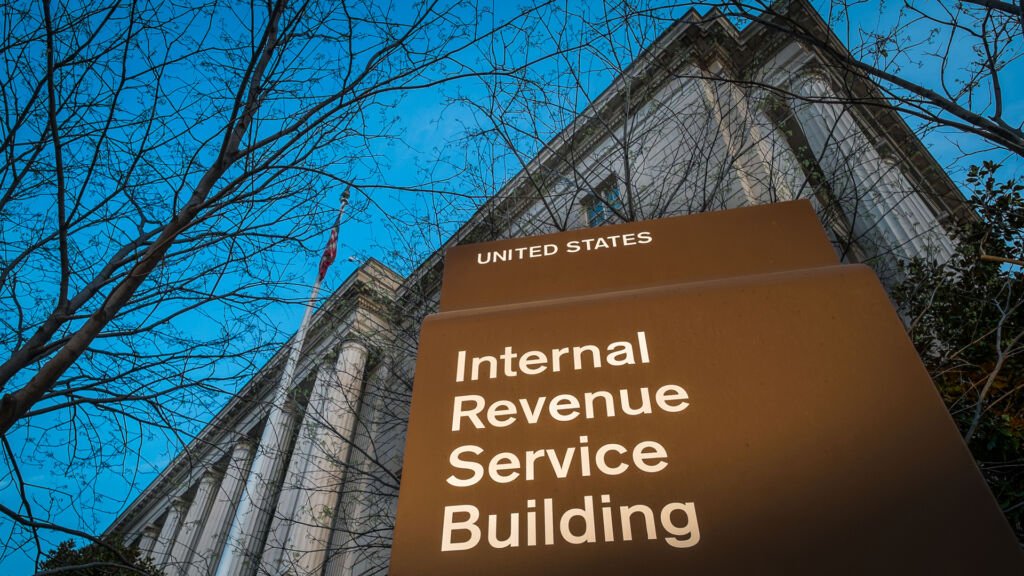
 WASHINGTON — At a time when Americans are filing their tax returns, the nation’s tax agency is in a tumultuous retreat Congress helped create.
In 2025, the IRS had its largest workforce in years and no significant new tax changes to learn and then carry out. A year later, the IRS has lost more than one-quarter of its staff, its enforcement budget has been slashed and it faces scores of code changes to implement from the Trump administration’s signature legislation — a budget law that cut both taxes and social services, like health and food programs.
“Entering 2026, the landscape is markedly different,” Erin Collins, the national taxpayer advocate, a nonpartisan post in the U.S. government, said in her annual report.

With support from Republican allies in Congress, the Trump administration is pursuing a wave of financial deregulation at agencies including the IRS, the Securities and Exchange Commission and the Consumer Financial Protection Bureau, which was created in the wake of the 2008 financial crisis.
The Trump administration is actively trying to rescind or alter 15 financial regulations, or to write regulations it favors, according to a tally maintained by the Brookings Center on Regulation and Markets.
Those financial deregulatory moves comprise one of more than a dozen categories tracked by Brookings.
Across government, the administration has halted or dropped 176 enforcement actions that had been pending against corporations, according to Public Citizen, a watchdog group.
“The SEC has dismantled several of the teams that are responsible for managing the incidence of scams and frauds,” Stephen Lynch, a Democratic congressman from Massachusetts on the House committee that oversees banking, said at a recent hearing.
And at the CFPB, for years an irritant to the banking industry, the bureau has shifted back sharply on its enforcement efforts. The administration targeted 88% of the staff for layoffs.
“Trying to fire almost 90% of the workforce while taking away options to help consumers has cost New Jersey families their money and trust in our banks – we need to reinstate the CFPB and restore the protections that President Trump has dismantled,” Sen. Andy Kim (D-NJ) said in a statement to NJ Spotlight News.
A law that Congress passed during the Biden presidency injected $45.6 billion for enforcement at the IRS.
Trump’s signature law pulled that money back from the agency. In 2025 its workforce declined to 74,465 in December from 102,101 in January, or roughly 27%.
The IRS chief is Frank Bisignano, a former financial executive from New Jersey and 2025 inductee into the New Jersey Hall of Fame, which described him as “Wall Street’s Mr. Fix-It.” He and his wife, Tracy Bisignano, during the 2024 election gave more than $900,000 to a pro-Trump super PAC, a political committee that can donate unlimited sums of money to influence U.S. politics.
In its budget proposal for the next fiscal year, the White House on Friday proposed a $1.4 billion cut to the IRS, which is operating on $11.2 billion. “The bureaucratic morass at this bloated agency has been weaponized against the American people, small businesses and nonprofit organizations,” the administration said.
The IRS already is conducting fewer audits. In the 2023 and 2024 budget years, the agency finished with 323,401 and 335,157 open audits, according to the Taxpayer Advocate Service.
That number plummeted in fiscal year 2025, the most recent year available, to 205,364 — a fall of about 39%.

Despite the smaller budget and staff cuts, most people who file their returns online should not have problems, Collins said.
“For the significant majority of taxpayers who file their returns electronically, who include their direct deposit information, and whose returns are not stopped by IRS processing filters, the process will be seamless,” she said.
For those who file on paper or whose finances have changed due to the new Republican law, such as tipped workers or employees with overtime pay, taxes may be tricker, experts said. Refunds could be slower, too.
“Taxpayers who use paper may see longer waits,” Vanessa Williamson and Ellis Chen, tax researchers at Brookings, wrote in March. The IRS has also pulled back on its fraud and scams crackdown.
These may be minor issues, though, in contrast to a weakened IRS that deploys a lighter enforcement touch, the pair said, noting the agency’s criminal division dropped its investigations of “abusive tax schemes” by 63% last year, a 10-year low.
“We can expect to see a decline in tax enforcement, particularly when it comes to the wealthy,” they said.
Separately, the administration ended a free online filing program. New Jersey operates a state-run replacement service.
Trump and elected Republicans have talked up tax provisions within their new law for individual workers, such as deductions for seniors and those with car loan payments, and steps to exclude taxes on overtime or tips.

“That is money they earned. It does not belong to the government,” Speaker Mike Johnson said last year, right after the House passed the tax law. “It belongs to them, and they deserve to keep it.”
Those provisions will also be included in the 2025 tax year. But they are temporary measures, while many tax provisions of the law are permanent for companies.
The IRS received 78.9 million returns as of March 20, according to agency data. That’s down about 1% from the same period in 2025, when it received 79.6 million returns.
— John Reitmeyer contributed reporting. Graphics by Renee Maskin.



