
In 2018, producer Yuki Sugitani approached the production company Sunrise with an intriguing proposal to create a new “Gundam” series under the direction of Kazuya Tsurumaki. From the outset, Sugitani envisioned giving audiences the opportunity to experience this historic franchise through a completely fresh approach. To accomplish this goal, he aimed to combine three key elements that would shape the project’s identity.
First, there is the idea of bringing together some of the most accomplished professionals from the technical teams behind both “Evangelion” and “Gundam”. In addition, the project is driven by a deep sense of gratitude shared between Hideaki Anno and Tsurumaki, while Tsurumaki himself also maintains a relationship of mutual admiration with Sugitani. These personal connections naturally evolved into a prolific artistic collaboration defined by originality. Finally, the involvement of Studio Khara, along with the co-production with the current Bandai Namco Filmworks, plays a crucial role in bringing the series to life.
Buy This Title
by clicking on the image below
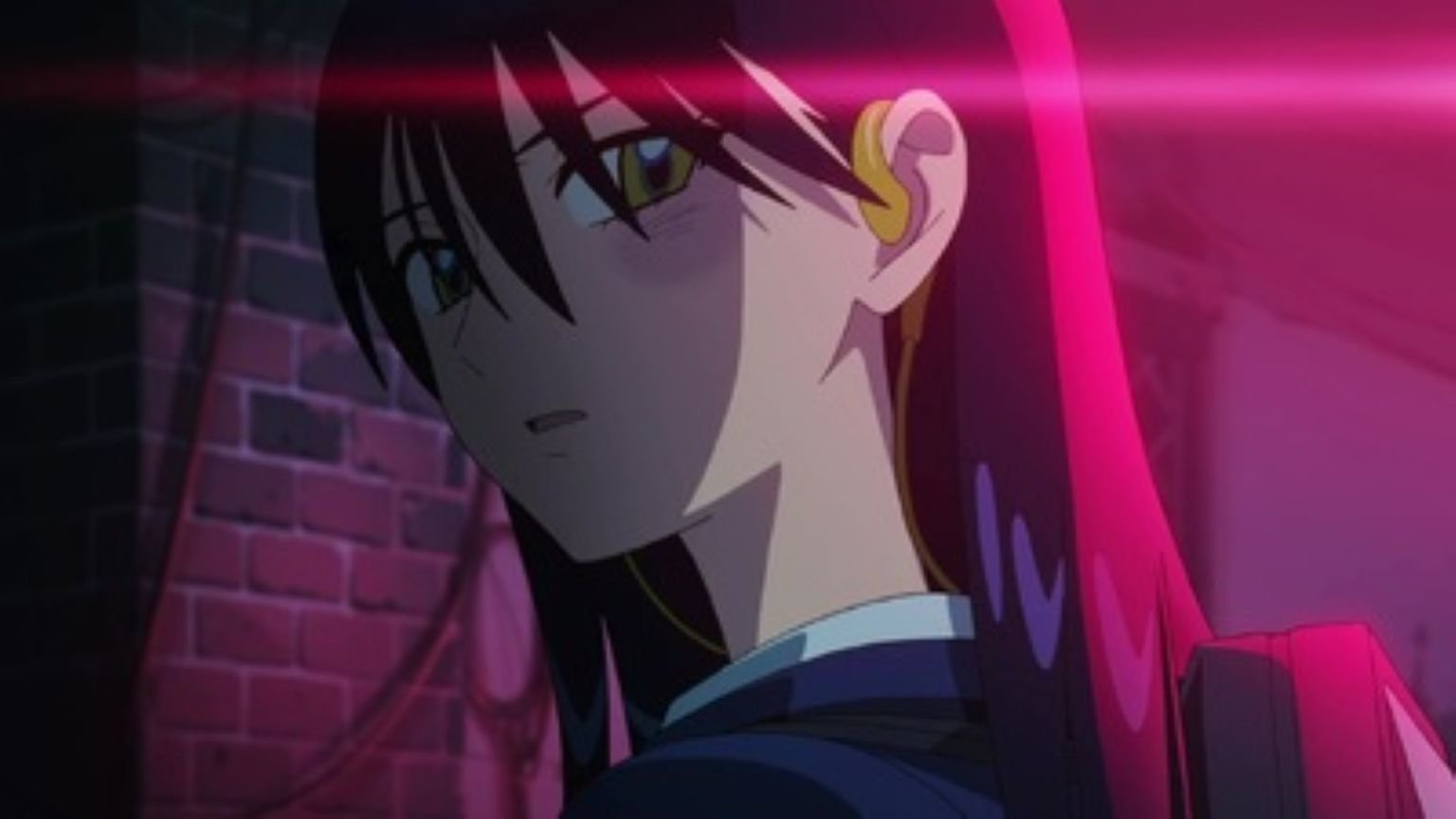
Universal Century 0085: The Principality of Zeon remains victorious after the One Year War. At Camden Station, Nyaan, a shy refugee who smuggles illegal goods to survive, attempts to escape the police and accidentally collides with Amate Yuzuriha, a high school girl from the artificial city of Side 6 on the Izuma Colony. During the clash, the student’s cell phone is damaged, while Nyaan loses an installer key meant for a mobile suit’s combat computer. In an effort to recover the key, Nyaan soon finds herself pursued by Amate, who demands compensation for her broken phone.
The two girls eventually make their way to the refugee district, intending to deliver the key to the Pomeranians, a clan involved in clandestine mobile suit battles. At the same time, the Red Gundam and the Gundam QuuuuuuX, previously locked in a fierce confrontation in the space surrounding the Izuma Colony, crash spectacularly into the very same district. Soon after, military police mobile suits arrive on the scene and immediately begin recklessly dismantling and destroying buildings within the refugee settlements as they search for the Gundams. As everyone hides in fear, Amate runs to arm the Pomeranian Zaku using Nyaan’s key .
The director transports viewers into a Cold War–like scenario, vividly conveying the tense atmosphere of the colony, which constantly teeters on the brink of conflict. Against this backdrop, the protagonist embodies a profound yearning for the freedom to pursue something authentic—the freedom to push beyond boundaries and uncover what is real.
Above all, within an authoritarian surveillance state that falsely equates immigration with terrorism and fuels fear of the “other,” Amate chooses not to report Nyaan to the police. In response to a society that refuses to welcome refugees, the protagonist extends solidarity to those fleeing war and persecution. Against the walls erected by a system that denies the free movement of people, the young and courageous student prioritizes freedom through integration and inclusion. Amate sees Nyaan as an equal, and this represents the highest civil lesson we can learn from her and other characters throughout the series.
The animation adopts a hybrid approach, blending 3D and hand-drawn techniques. The result is a fusion of styles that feels both natural and striking. Hiroshi Kato enhances the background art with bold color gradients, giving the modern cityscapes a sense of beauty and nostalgia. Meanwhile, Yamashita Ikuto delivers captivating mecha designs, and Takashi Suzuki masterfully incorporates CG. Take’s modern character design enriches the characters’ profile shots with depth, expressiveness, and emotion. The characters are further sculpted through Yoji Enokido’s dialogues: essential, mysterious, and filled with catchphrases that will linger in the audience’s memory.
Those who enjoy fast-paced stories with unexpected twists will appreciate the climactic framing and dynamic camera angles that powerfully capture the battles between mobile suits, all set against the dizzying sounds of space.
The cast brings a lot to life. For instance, Nyaan appears shy and not used to letting people in. But Yui Ishikawa’s lines—particularly in scenes where Nyaan often feels out of sync with those around her—convey a specific sense of loneliness, that kind of isolation that spreads through a society where suspicion toward strangers erects barriers to mutual understanding.
“Mobile Suit Gundam GQuuuuuuX” is a historical What-If series that stands out for three key reasons: its high level of visual fidelity during battles, its emphasis on empathy over ideology, and its ability to evoke a paradoxical nostalgia for the future.



