
Helium is essential to running an MRI machine. While the inert gas has always been subject to a somewhat volatile market, prices have been upended in recent weeks as the war in Iran spreads across the Middle East and cuts off key supply routes and production facilities.
When cooled to its liquid state, the rare element helps control the temperature of the scanners’ superconducting magnets, allowing them to generate fields powerful enough to clearly peek into the human body. Not just for party balloons, medical imaging accounts for about a third of the world’s consumption of the gas, and helium is prized in multiple industries, including high-temp computer chip fabrication.
A typical MRI machine may burn through more than 1,000 liters of helium during a decade-plus lifespan, costing tens of thousands of dollars; however, recent advancements have been made in the development of sealed magnets that only require a relatively paltry amount of the coolant during their initial manufacture, with no future refills necessary.
Produced by slow radioactive decay over eons, helium is mined as a byproduct of tapping underground veins of natural gas, largely tying its ups and downs to the global energy market. Spot prices for the lighter-than-air commodity have soared this month, following the U.S. and Israel’s joint strikes on Iran and the country’s retaliation against sites across the region.
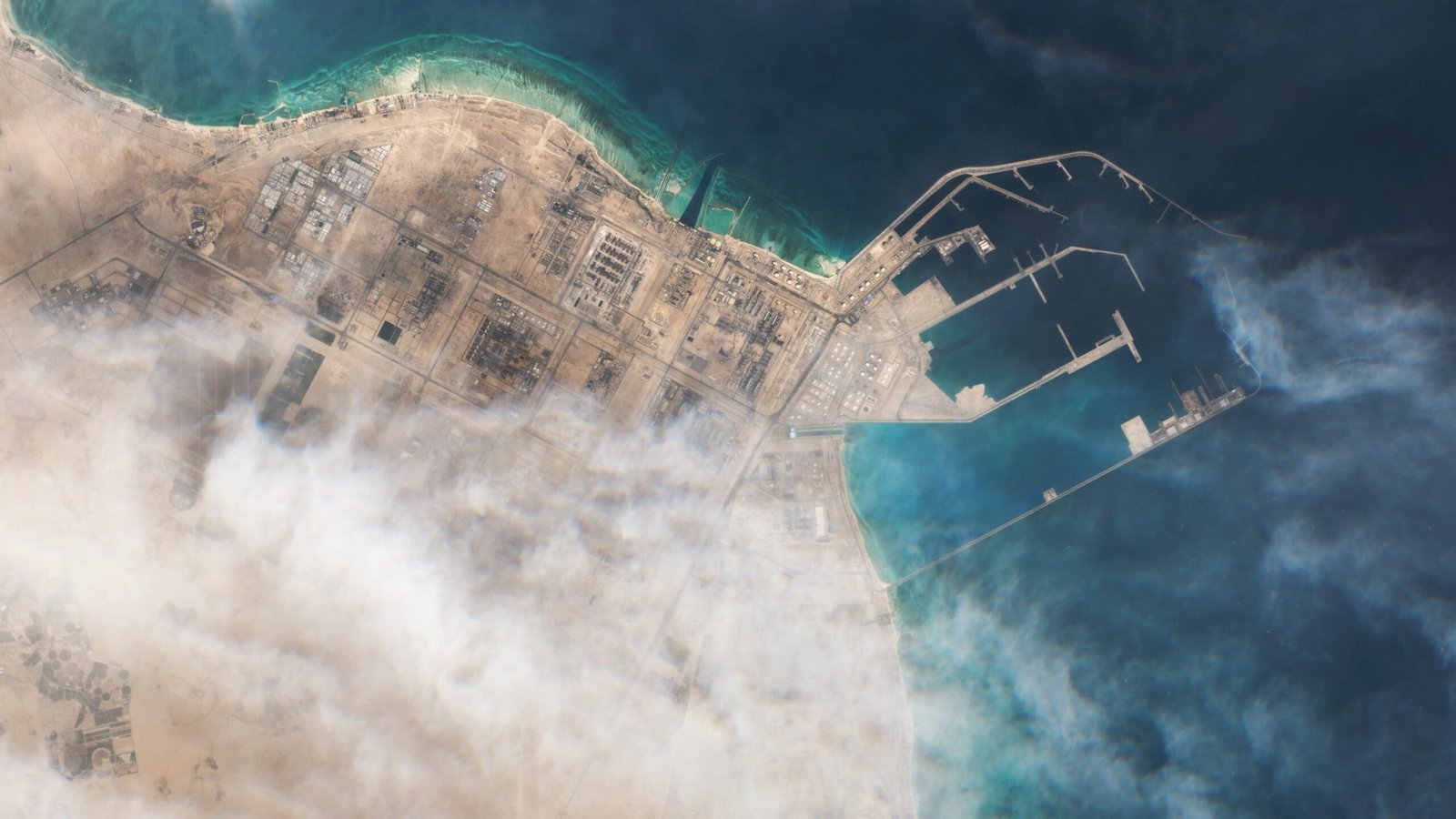
Qatar’s exports of natural gas and helium—the latter accounting for about 30% of the noble gas’s international supply—were effectively halted earlier this month following Iran’s closure of the Strait of Hormuz and a drone attack at one of the world’s largest export facilities. QatarEnergy’s Ras Laffan Industrial City, located on the coast north of Doha, also came under new Iranian missile strikes last week that damaged production lines.
QatarEnergy CEO Saad al-Kaabi told Reuters in an interview that repairs could take as long as three to five years—cutting liquid natural gas exports to Europe and Asia by 12.8 million tons annually, or about 17% of the country’s total—and that the company may not be able to meet some of its contractual supply obligations.
The hub’s helium shipments, meanwhile, are expected to fall by about 14%, amounting to a loss of more than 300,000 cubic feet. Helium from Qatar and the Gulf region largely supports some of the world’s largest semiconductor producers in South Korea and Taiwan.
However, the U.S. is also a dominant producer of helium, and, because of this, MRI manufacturers and providers are not panicking just yet.
The head of Siemens Healthineers’ North American magnetic resonance business, Katie Grant, Ph.D., said that while the company’s magnets and scanners are largely produced in the U.K. and Germany before being shipped to the U.S., the vast majority of the supply chain’s helium comes from North America itself.
“We work with several different companies and suppliers, and we also have several different storage setups and facilities,” Grant said in an interview with Fierce Medtech. “Since helium is such a vital part of our business, as well as our customers’ business, having a ready and reliable helium supply is critical to our success.”
“And, over the course of the last few years, we have continued our development to move away from helium dependency within MRI,” she added, pointing to Siemens Healthineers’ DryCool sealed-magnet approach.
The company’s Magnetom Flow.Ace collected a clearance from the FDA last year as a 1.5 Tesla scanner featuring a closed helium circuit and no exhaust pipe and requiring only 0.7 liters of liquid helium to run. The agency also cleared a larger system with a 70-centimeter bore in January, with the first of those being installed this month.
“We are building a whole new factory to support DryCool magnet technology, but that plant is not at full production yet,” Grant said. Located outside Oxford in the U.K., the facility is slated to come online in the next six to nine months. “We’ve already shipped over 500 DryCool technology systems globally, and we’re really looking forward to that continuing into the future.”
Fellow Big Iron companies like GE HealthCare and Philips have been marketing their own sealed-magnet MRI scanners as well—with tech dubbed Freelium and BlueSeal, respectively.
In a statement to Fierce, Philips said that at this stage, the company is “not seeing any material impact on our ability to supply MRI systems or support customers” related to the rise in helium prices, adding that it has business continuity measures in place and is monitoring the situation. GE HealthCare did not comment.
Another line of defense for helium supplies is that the market is largely tied up in long-term contracts, which could help providers weather short-term spikes in spot prices—depending on how long the conflict runs.
According to Premier, a group purchasing organization that works to supply thousands of hospitals and health systems with helium and other medical-grade gases, even a large hit to Qatar’s helium exports may not fully ripple into U.S. radiology departments.
“We’re not seeing signs of a blackout,” said Kyle MacKinnon, a senior director within Premier’s supply chain services business. “I think it’s important to differentiate and have the distinction for industrial markets globally, and then more specifically the U.S.-based medical markets.”
“The markets right now are fairly healthy,” MacKinnon told Fierce Medtech. “I think several of our suppliers have communicated that they do rely on domestic production and diversified sourcing, and these companies also prioritize medical devices or medical gas over industrial use.”
Premier will typically help write a 36-month contract for medical devices or supplies, often providing hospitals with fixed commodity pricing. “But there are also other dynamics within the industry—depending on how the contracts are written—where there might be opportunities for, at a local level, medical device manufacturers or helium suppliers to add surcharges to their deliveries,” added MacKinnon. “So that’s one thing that we’re looking out for.”
Still, helium is not the only crucial component of an MRI machine.
In the past few years, the industry has seen volatility in the international trade of the rare earth elements and metals necessary for the magnets themselves, following the back-and-forth tariffs between the U.S. and China as well as pandemic-era shortages of semiconductor chips and, more recently, an explosion in the price of computer memory.
“We’ve seen, for the last five or six years, that the scrutiny on where things come from has really grown,” said Premier’s Mark Hendrickson, director of supply chain policy. “Providers want to know where their products are coming from, manufacturers need to know where their components are coming from. Kyle and I spend a lot of time talking about resilient supply chains, and right now, it’s a global healthcare supply chain.”
Hendrickson said healthcare companies will also need to factor in the effects of tariffs alongside other cost pressures, including inflation.
“Then you throw in a conflict in the Middle East, and some of the challenges with shipping and the Strait of Hormuz, and that adds another wrinkle that folks have to deal with—but it’s a resilient supply chain that is constantly evolving,” he said. “Our providers and hospitals need to be flexible and make sure to plan and prepare as much as they can.”
When asked whether there’s any part of the scanner she’s not worried about, Siemens Healthineers’ Grant joked, “The screws?”
“MRI has never been a cheap thing to begin with,” she added. “It’s always been a very complex technology, and it’s something that Siemens has worked at over the course of four decades.
“We’ve been very thoughtful in how we’ve constructed our supply chain… so we don’t have very many external suppliers. Looking at our entire chain, be it MR or CT, we try to do our own; we make our own X-ray tubes, we make our own magnets. We don’t source those from third parties, and that helps us control our prices a little bit,” said Grant. “But we live in a global economy, and I think we’re always going to be at the mercy of what’s happening on a global scale.”



