
A raw and observational narrative that bravely dives into its protagonists’ past in order to change the future. That is how Anocha Suwichakornpong’s short documentary “Narrative” can be described. Known for her courageous and convincing way of challenging the establishment through her work, the director once again returns to a theme not far from her previous interests. After premiering at the 13th Seoul Mediacity Biennale in South Korea, the Thai-Korean-Japanese production arrived in Europe to screen in the Forum Expanded section at the Berlin International Film Festival 2026.
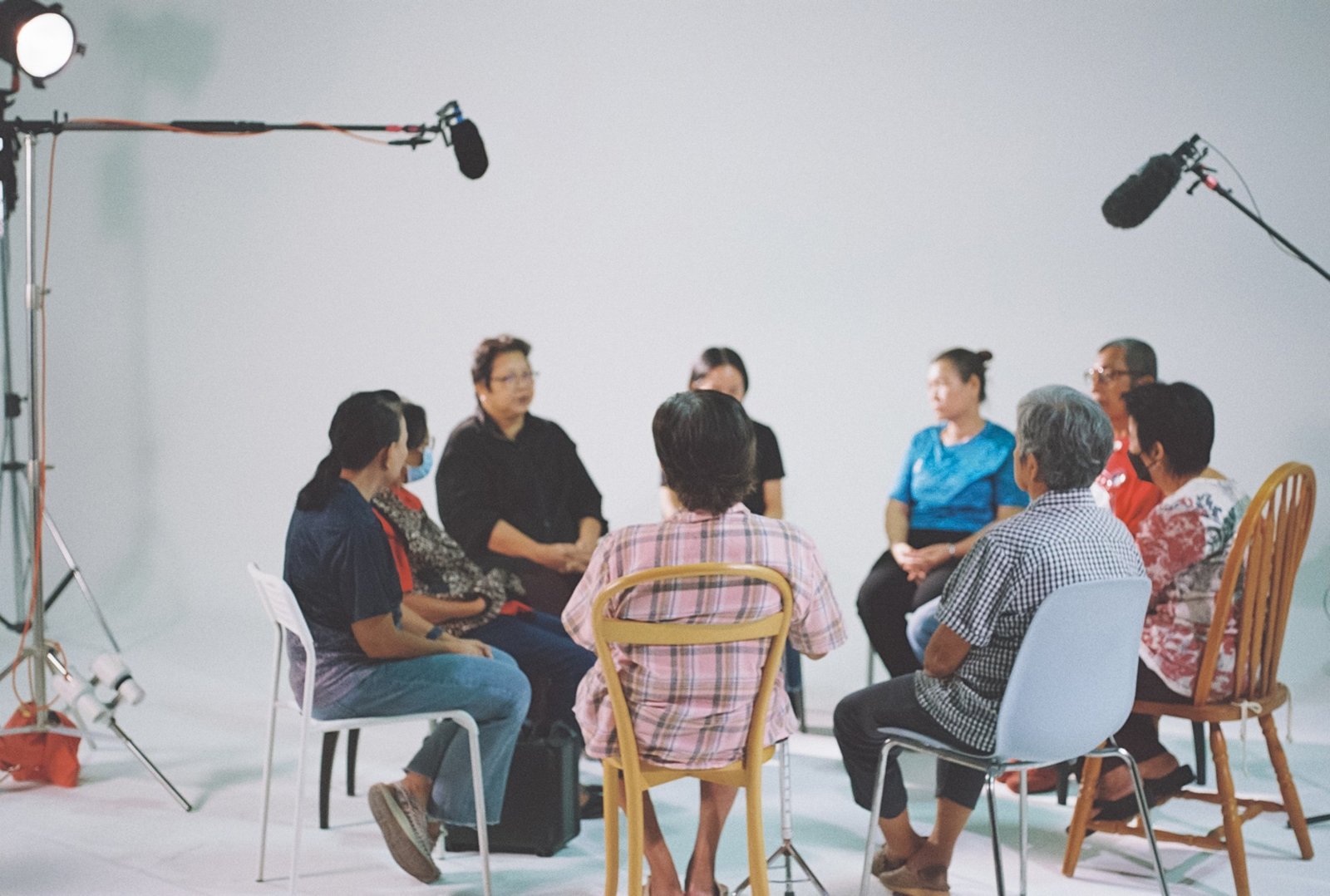
April 2025 marked the 15th anniversary of the Bangkok massacre, during which hundreds of democratic protesters opposing the government – also known as the Red Shirts – were injured and killed by the security forces. Now, many years later, the victims’ families are still fighting for justice and compensation they had never received. The camera becomes a witness to their testimonies and perspectives, and while recording them sitting together in a circle against the white backdrop on a film set, it gives them a space to finally be heard.
The film can be divided into five segments, each focusing on the emotions and present-day reality of the family members. The first one captures them discussing their feelings; another, filmed as a single talking-head shot, allows viewers to better understand the repercussions of the event. The third takes the form of a staged fictional trial, in which a subpoena is explained to a mother who struggles to understand the legal jargon. The fourth one shows the diary entries of one of the victims, while the final part shifts toward the present, ending the film, despite the heavy topic, on a more hopeful note.
What Suwichakornpong achieves is a film that goes beyond storytelling, extending into political reflection and legal inquiry. In doing so, she fills the gaps in the existing narrative that, rather than centering victims, often attempts to conceal its own mistakes and governmental incompetence. At the same time, instead of describing what had happened in the past and sharing all the details of the massacre, she highlights the consequences that gradually unfold in a form of fear, struggle, and the desperate need to keep going.
Despite its literal title, “Narrative” stands far from conventional documentary narration, instead adopting a self-aware, almost making-of-like form. Sudden camera movements are announced loudly, the arrangement of chairs changes without cutting the recording, and the presence of the film crew within the frame never prompts a retake. The result is an intimate and natural atmosphere in which the participants – mostly older family members of the victims – feel comfortable sharing their struggles with one another. Their stories are rarely addressed directly to the camera (apart from the second installment). Instead, they are captured from a distance, allowing them to open up more freely, almost as if they were participating in group therapy.
In the end, “Narrative” does not attempt to reconstruct history as much as it creates a space in which it can finally be talked about. Its strength lies in the simplicity, rawness, and the multi-layered narration, all of which, taken together, constitutes the basis to challenge reality. Suwichakornpong plans to further expand her research and the collected testimonies in her forthcoming feature “Fiction”, continuing to explore what cinema can achieve where the traditional paths of justice have failed, and in doing so, she gradually moves closer to an answer.



