
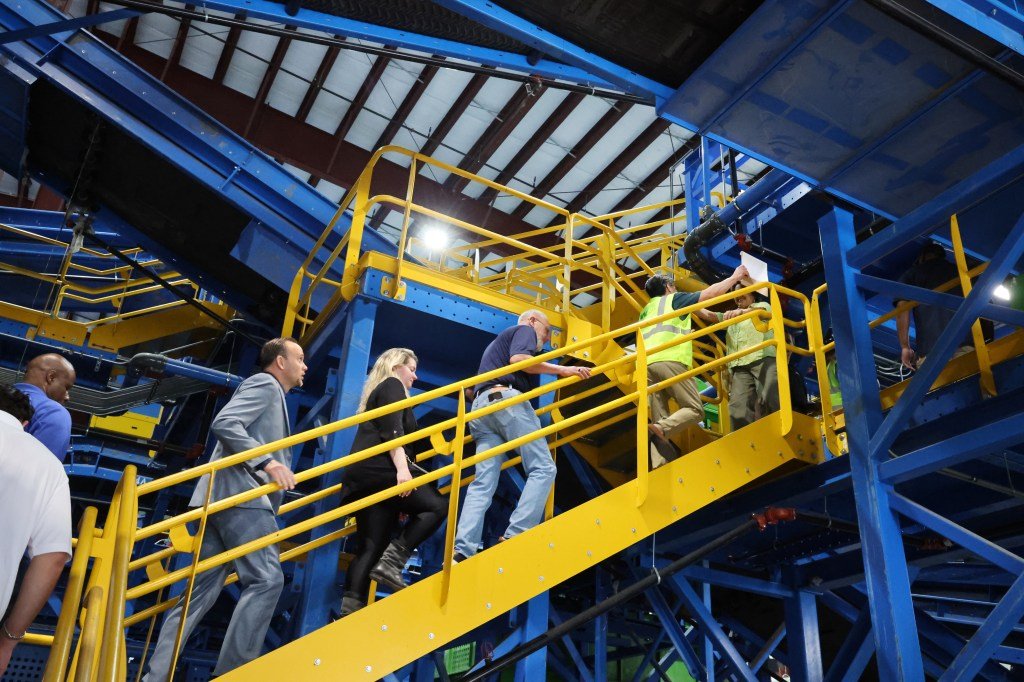
Tucked behind U.S. 27, gears are turning at South Florida’s newest recycling facility — which is now one of the largest in the United States.
WM’s $90 million Pembroke Pines recycling plant recently opened its doors to the public, taking visitors on a tour of its high-tech processing machinery and education room. At the 127,000-square-foot facility, upward of 275,000 tons of material are expected to be recycled per year. That’s about 60 tons per hour.
Local officials and WM representatives hope that community tours and school trips to the facility inspire more South Floridians to recycle.
Currently, only about 32% of Broward residents recycle, according to the county, far short of a statewide goal of 75%.
“The children are going to teach the parents,” Broward County Commissioner Nan Rich said. “I understand that people wonder, ‘Where is it going? Is it really going where it’s supposed to go and being recycled?’ And here is a way we can educate people and move from that 30%, which is pathetic, to the 75%, which is where we need to be.”
Inside the second-floor education room, visitors can see the recycling process from behind a glass panel before walking through parts of the plant. After trucks dump materials onto the tip floor, two conveyors transport items through a sorting process where nonrecyclable materials are removed from the line.
Magnets, optical screens powered by AI, and other machinery sort aluminum, tin, fibers, cardboard, plastics, and other recyclables before balers pack together each class of items.
Bales of items like laundry detergent containers, milk jugs, soda cans, and other processed items sit in the center of the floor. They’ll be picked up and sold to companies that give them a new life as recycled products.
“We want to show you that recycling is real, and that everyone should be recycling always,” said Tara Hemmer, WM’s senior vice president and chief sustainability officer, at a news conference.
The new WM facility recycles waste from Broward, Miami-Dade, Monroe and Collier counties.
Broward County Commissioner Beam Furr pointed to the facility’s opening as part of a greater sustainability push in the county, which includes a new county-led yard waste recycling program, a food waste recycling initiative in school cafeterias, and a long-term Solid Waste Authority master plan being considered by Broward cities.
“We need facilities like this to be able to do that,” Furr said.



