
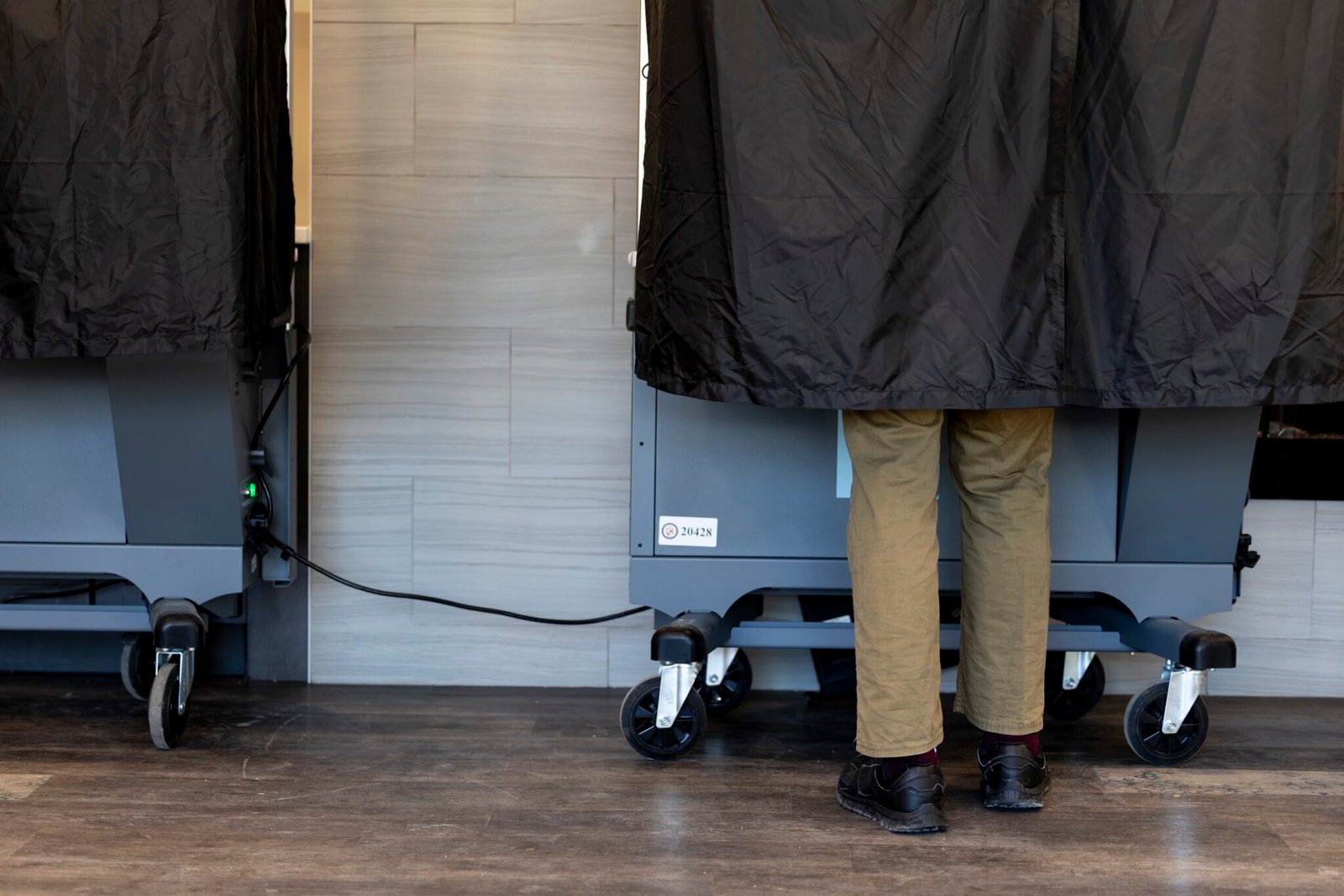
A New Jersey Assembly panel approved a state-level voting rights act that would reinstate some provisions courts have stripped from the federal law in a party-line vote Thursday.
The bill, called the John R. Lewis Voter Empowerment Act of New Jersey after the late congressman and civil rights figure, would give state courts broad powers to rewrite discriminatory election rules, redraw voting districts, expand governing bodies, and reschedule elections if the original date would have disproportionately prevented members of a protected class from voting.
“Our vote is how we advocate for ourselves, our communities, and our country. Protecting that right is not a partisan issue. It is a shared belief to ensuring that every eligible New Jerseyan can participate in the civic process that shapes our daily lives,” said bill sponsor Assemblywoman Verlina Reynolds-Jackson (D-Mercer).
NJ panel advances bills to strengthen immigrant protections, target ICE
The measure, which failed to get a full vote by the Legislature in the previous legislative session, would require New Jersey localities with a history of voter suppression or intimidation to seek approval from state election officials before changing election rules, mirroring provisions in the federal Voting Rights Act that have been inoperative since the U.S. Supreme Court struck them down in 2013.
And it would expand language access provisions to require election materials and assistance be offered in other languages in municipalities where at least 2% of residents or 4,000 people speak a language other than English and have limited English proficiency. The federal Voting Rights Act sets those bars at 10% or 10,000 residents.
The bill has yet to advance in the state Senate. The prior version of the bill did not get a committee hearing in the upper chamber.
“It’s no secret that the federal Voting Rights Act is under attack. This is legislation passed in 1965 that finally delivered on the promise of the 15th Amendment to root out racial discrimination in voting. For decades, it was stunningly effective,” said Liza Weisberg, a supervising attorney for the American Civil Liberties Union of New Jersey.
The U.S. Supreme Court is weighing a case challenging a section of the federal law that bars racial discrimination and has been used to redraw congressional gerrymanders that dilute the voting power of minority groups, and its conservative majority could strike that portion of the law.
President Donald Trump has also sought to “nationalize” elections, claiming he wants to see “elections be honest.” The U.S. Constitution’s elections clause vests in states the power to determine the time, manner, and place of their congressional elections, though it permits Congress to preempt those decisions in most cases.
The New Jersey bill would create a new division within the state Treasury to oversee voting matters. The state’s voting rights division would be endowed with subpoena and investigative powers as well as rulemaking authority over voting and the ability to join or launch lawsuits on behalf of the public.
Republican members of the Assembly State and Local Government Committee and witnesses questioned the need for new protections. Assemblyman Alex Sauickie (R-Ocean) praised Lewis for “historic contributions … that changed the country, definitely for the better,” but said the bill has little to do with that legacy.
“This legislation is not about honoring his life. It’s about dramatically restructuring New Jersey’s election laws based on assumptions that simply don’t exist in the reality of our state,” Sauickie said.
New Jersey has a history of voter intimidation. The Republican National Committee and its state counterpart were party to a consent decree barring intimidation tactics after they stationed armed off-duty police officers outside polling stations in New Jersey cities in a bid to depress turnout among heavily Democratic non-white voters in 1981. That consent decree expired in 2017.
GET THE MORNING HEADLINES.



