
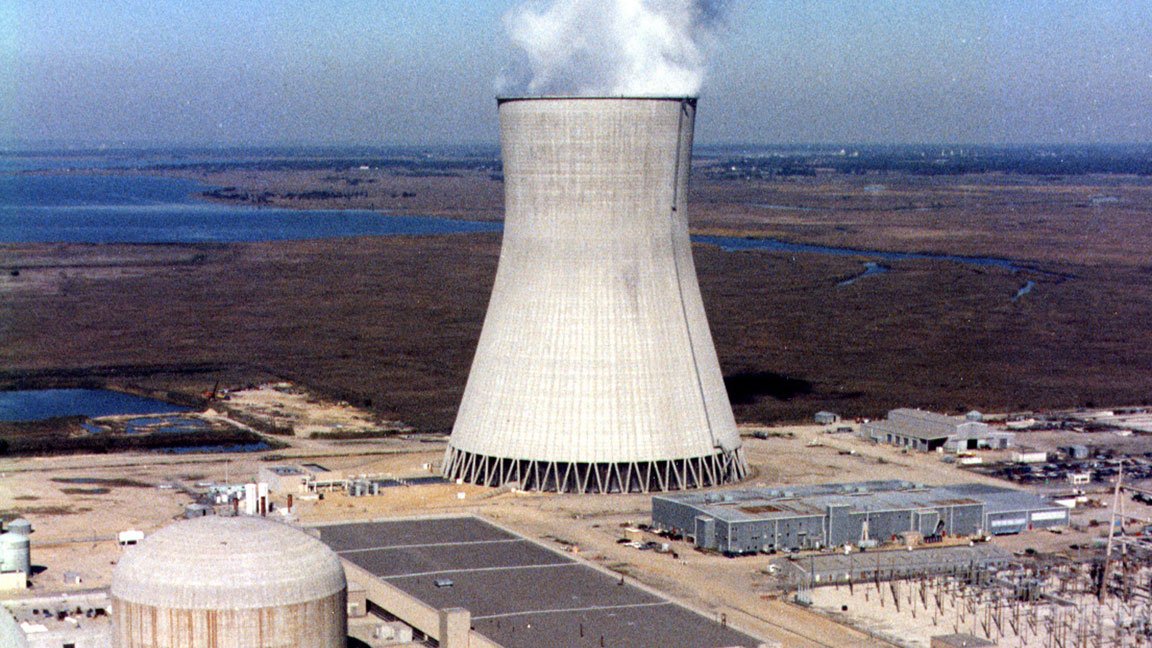
 New Jersey stepped closer to allowing more in-state nuclear power as Gov. Mikie Sherrill on Wednesday signed legislation to lift restrictions on handling radioactive waste.
The bill signing, at Salem Nuclear Power Plant in Lower Alloways Creek, was praised by Democratic lawmakers, utilities, labor unions and business groups. It comes 10 months after New Jersey electricity bills jumped by about 20%, the result of an annual regional energy wholesale auction that is challenged by the rise of power-sucking artificial intelligence data centers and a dearth of new generating infrastructure.
Proponents say nuclear power — along with wind, solar and other renewables — is key to a steady and abundant power supply. New Jersey had blocked the construction of nuclear plants because its Coastal Area Facility Review Act, signed in 1973, required a Nuclear Regulatory Commission-approved system to dispose of spent fuel rods, which contain radioactive isotopes. That was an “outdated standard that cannot be met,” the Governor’s Office said in a news release Wednesday.

“By lifting outdated barriers and bringing together leaders across government, industry and labor, we’re setting the stage for our state to pursue new advanced nuclear power,” Sherrill, who campaigned on expanding New Jersey energy sources, said in a statement. “This will help New Jersey secure a stronger, cleaner, more affordable, and reliable energy future – while keeping the state at the forefront of innovation, job creation and economic growth.”
The U.S. lacks a permanent storage site for radioactive waste. The bill signed by Sherrill empowers the state Department of Environmental Protection commissioner to approve permits for waste storage practices that are compliant with Nuclear Regulatory Commission rules.
The legislation also was necessary for a 14-member panel, assembled by Sherrill, to begin a review of financing, supply chains, regulatory framework and other topics prior to any plant construction.
New Jersey’s two nuclear plant sites, Salem and Hope Creek, together supply more than 40% of the state’s energy, according to the Governor’s Office. PJM Interconnection, which manages a 13-state power grid that includes New Jersey, has said the region’s supply will become increasingly scarce, unreliable and expensive in the absence of new power plants to replace aging and inefficient infrastructure and to meet escalating demand.
Sherrill’s signing of S3870 had backers including Senate President Nick Scutari, PSEG President Ralph LaRossa, PSEG Nuclear President Charles McFeaters, Democratic U.S. Sens. Cory Booker and Andy Kim, the labor unions LIUNA and IBEW Local 94, the New Jersey Business & Industry Association and the New Jersey Chamber of Commerce.
“This bill removes the red tape and says New Jersey is open for business for nuclear energy, and IBEW applauds the governor’s continued leadership because we know more power means lower bills for New Jersey residents,” said Joseph Egan, president of New Jersey State Electrical Workers Construction Division.
This story is made possible in part by the Corporation for Public Broadcasting, a private corporation funded by the American people.



