
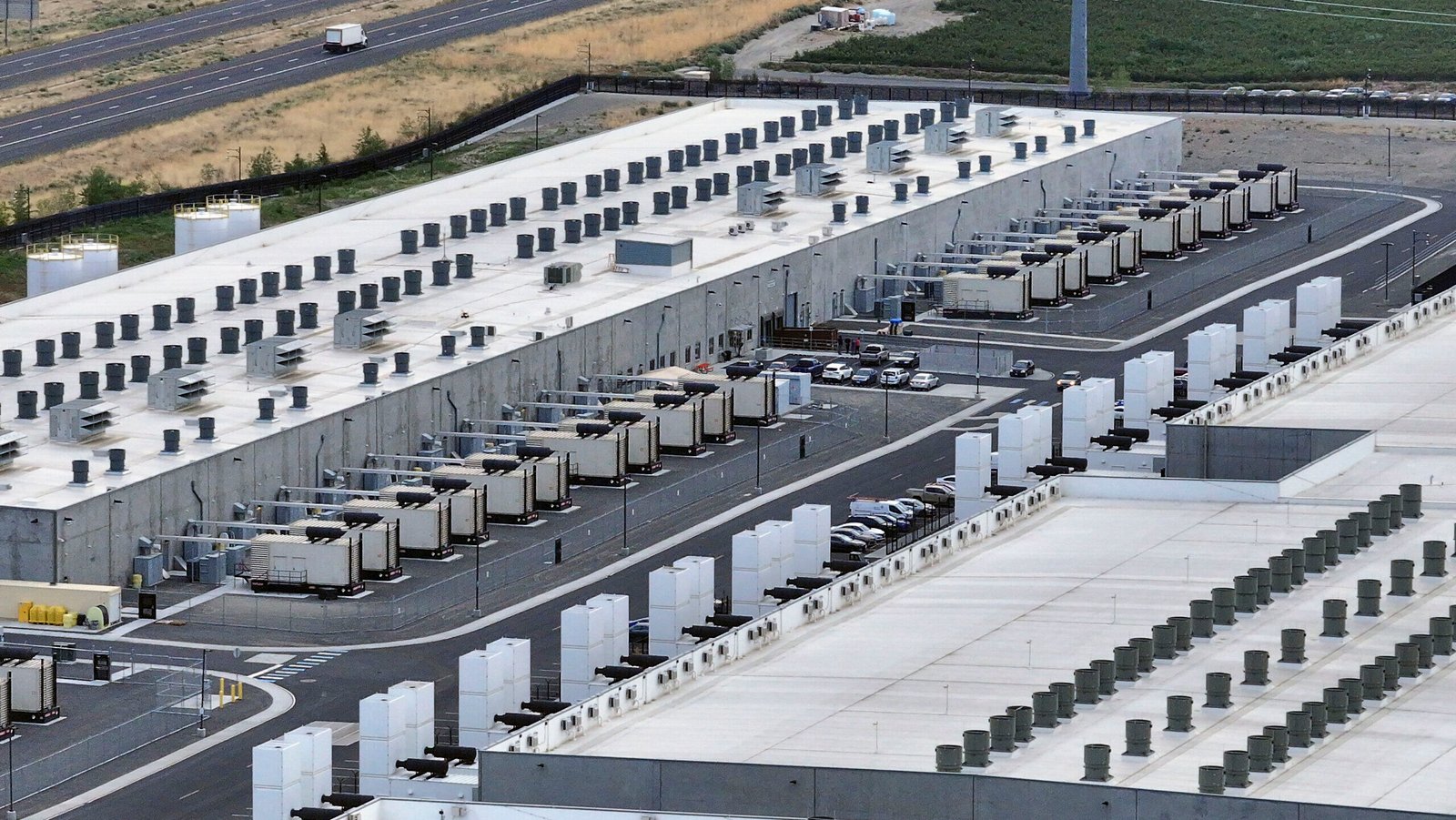
 Data centers built in New Jersey would be mandated to use only renewable or nuclear energy to power their operations under a potential law pushed by several Democratic state senators.
A Senate committee passed a bill creating such an energy requirement, though it would take effect only if a majority of 12 other states in the region adopt similar measures.
Monday’s vote on S-680 was the Legislature’s latest attempt to stop energy bills from spiking due to a proliferation of power-guzzling data centers. Two months ago, the Legislature passed a bill that would have made data centers and other businesses pay higher fees for using significant amounts of electricity but then-Gov. Phil Murphy didn’t sign it.
New Jersey utility customers last year were socked with an average 20% increase in electricity costs, and Gov. Mikie Sherrill by executive order compelled the state Board of Public Utilities to issue credits to offset a rate increase this year.

In its most recent auction in December, PJM Interconnection, which operates the power grid serving New Jersey and a dozen other states, did not procure enough energy supply to meet expected demand. “Data centers’ demand for electricity continues to far outstrip new supply,” said Stu Bresler, the PJM executive vice president of market services and strategy.
The bill that passed along party lines by the Senate Environment and Energy Committee, with Democrats in favor, is similar to one that advanced early in the last legislative session and didn’t gain traction.
Sponsored by Sen. Bob Smith (D-Middlesex), the current bill would require that new data centers powering artificial intelligence or cryptocurrency mining get their power from renewables such as solar, wind hydropower or geothermal technologies; from new nuclear sources; or a combination. The bill also would require centers to submit energy sourcing plans to the BPU for approval.
“There’s a huge discussion nationally about who should be paying for the improvements to the grid in order to get the additional electricity into the grid for AI,” said Smith, who chairs the committee. “The ratepayers should not be footing the bill for this. It should be the AI data centers. We’re not opposed to AI data centers — you’re welcome, but bring your own electricity with you, and preferably renewable electricity. So that’s what this bill does.”
Ray Cantor of the NJ Business and Industry Association said the organization supports the bill’s concept, but asked the committee that it only apply to the largest data centers, such as those using 100 megawatts or more monthly. He also said that the type of energy to be used by expanded to include natural gas or other types because requiring only renewable energy at this time “cannot be done as a practical matter.”
Ben Dziobek, executive director of the Climate Revolution Action Network, disagreed, saying the technology exist sto require data centers use 100% clean energy.
“We need to reduce the amount of dependency that these data centers have on our grid system and make sure that the companies, these biggest companies in the world, the largest companies in the world, are paying for their own infrastructure,” Dziobek said. “New Jerseyans are fed up. Working families are fed up. It’s time we stop paying for the largest companies in the world to make sure that they can run their servers, that they can mine for cryptocurrency on our dime.”
Even if the Legislature passes the bill and Sherrill signs it, it’s unclear when the rules would take effect. The bill is written to prevent the state from losing economic development opportunities should centers decide to locate in nearby states with laxer rules and to ensure that any regional demand decrease doesn’t drive up energy costs, according to Democratic Senate staff.
New Jersey has as many as 116 data centers, according to DataCenters.com. South Jersey Climate News lists eight data centers planned or under construction.
Vineland residents are fighting a center under construction over potential pollution, water use and noise. The 2.4 million-square-foot DataOne center is expected to use 300 megawatts of energy, enough to power 65,000 homes for a year. It would be one of the largest Northeast data centers, according to the New Jersey Chapter of the Sierra Club.
The committee also passed a resolution, SR-18, urging other states within the PJM region to adopt legislation similar to the companion bill that it approved Monday.
Both measures await Senate action.
This story is made possible in part by the Corporation for Public Broadcasting, a private corporation funded by the American people.



