
There will be no budget negotiations in Tallahassee next week.
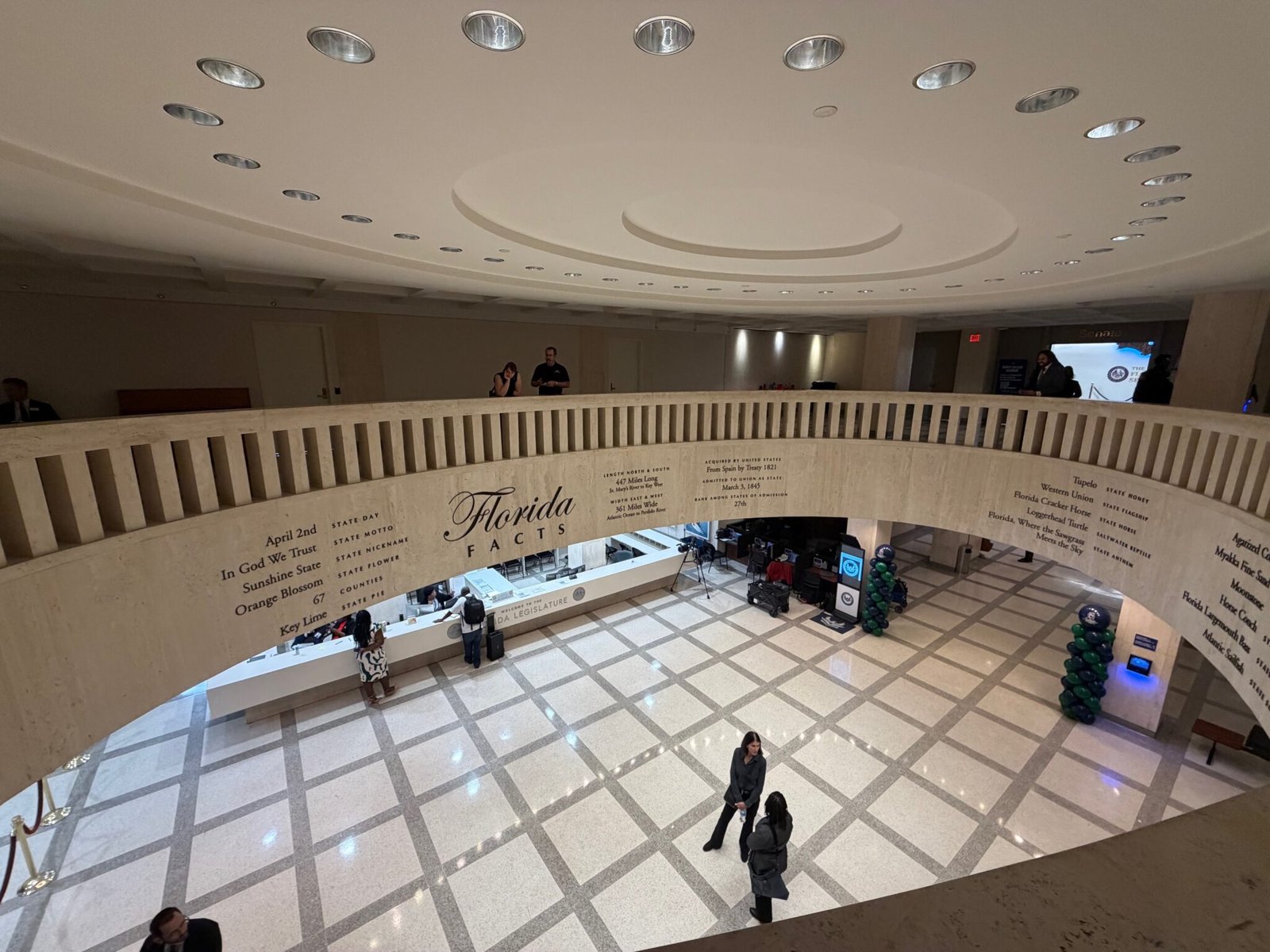
Senate President Ben Albritton and House Speaker Daniel Perez issued separate statements advising their respective members Wednesday they won’t need to travel to Tallahassee next week for a special session on the budget.
There had been speculation that the Legislature would meet April 13-17 in advance of the special session for April 20-24 called by Gov. Ron DeSantis to redraw the state’s congressional maps.
Wauchula Republican Albritton said in his memo that he and Senate Appropriations Committee Chair Sen. Ed Hooper have had “productive discussions” with the House and that he believes the chambers were “making great progress” on budget allocations.
Perez, though, made no such assertions.
“We continue to work with our partners in the Florida Senate to build an allocation framework for the 2026-2027 State Budget. There has been some external speculation suggesting that we will be convening next week (April 13-17) to begin work on the budget. This is not accurate,” he wrote.
Perez said he’d notify his members when there is a budget update and will provide House members with a schedule thereafter.
GET THE MORNING HEADLINES.
Lawmakers consider hundreds of bills every regular legislative session but are constitutionally required to pass just one, the General Appropriations Act, or state budget.
The House proposed a $113.6 billion spending plan for state fiscal year 2026-27 and the Senate proposed spending $115 billion. While the $1.4 billion gap was small given the size of the budget, it proved impossible to bridge in what many considered to a dysfunctional session.
Once the top spending number is agreed to, the chambers have follow-up conversations about how much money should be allocated in various spending areas — education, health care, transportation, running government, providing state employees with health insurance, and more.
Perez told reporters during the waning days of the session that he was concerned about the future of Florida.
“The three-year outlook is important to me,” Perez said, referencing economic projections compiled by top economists who work for the Legislature, the governor’s office, and the state Office of Economic and Demographic Research.
Three-year outlooks don’t predict the overall funding levels of future state budgets. They provide a baseline to help the Legislature properly plan for the state’s coming financial needs.
The most recent outlook, issued in September, projected a $3.7 billion surplus for the current fiscal year but deficits of more than $1.5 billion for FY 2026-27 and nearly $6.6 billion in FY 27-28.
Albritton and Perez are coming to the end of their two-year terms as leaders of their chambers. And in that time, they were not able to put their differences aside and reach, during the regular 60-day legislative session, an agreement on taxes and spending.
The Legislature had to extend the 2025 session from the scheduled May 2 adjournment to June 16. The extension cost taxpayers an additional $259,000, according to figures compiled by the Office of Legislative Services and obtained by the Phoenix.
2025 extended session cost Florida taxpayers more than $259K
That’s the second highest total associated with a special or extended session since 2018. A special session in May 2021 to ratify a gambling deal with the Seminole Tribe cost more than $131,000.
Meanwhile, Perez said he’d be in touch with members “next week with further details” regarding the congressional redistricting session scheduled to start April 20.
Albritton, too, told senators that he’d share a schedule for the congressional redistricting special session “as soon as possible.”
Traditionally, states redistrict every decade following U.S. Census population updates. President Donald Trump told Texas Republicans last July to redraw their maps, which caused a domino effect as multiple red and blue states undertook redistricting efforts.
DeSantis scheduled the session for April anticipating that the U.S. Supreme Court would have issued a ruling in voting rights case out of Louisiana. The case, Louisiana v. Callais, is considered a decisive test for the remaining power of the 1965 Voting Rights Act.
Polls show that Floridians oppose DeSantis’ mid-decade push for congressional redistricting. More than 56% of 1,125 likely Florida voters think it’s a “bad idea,” according to an Emerson College poll released last week. That includes 64% of independents and 65% of Democrats, while 57% of Republicans support the idea.
Nevertheless, DeSantis on Monday stood by the weeklong special session.
There’s no paywall here.
Do you feel more informed? Donate today to help keep our news free and accessible for all Floridians.



