
Oil prices fell Monday as President Donald Trump ramps up pressure on allies to help safeguard tanker traffic in the Strait of Hormuz.
International benchmark Brent crude futures lost 2.84% to close at $100.21 per barrel, while U.S. West Texas Intermediate futures fell 5.28% to settle at $93.50. U.S. crude had surpassed $100 earlier in the session.
Prices have surged about 40% during the U.S.-Iran war, reaching their highest levels since 2022, as shipping through the Strait has been severely disrupted. Brent closed above $100 for the first time in four years last week.
Trump said Monday that the White House will soon announce which countries have agreed to participate in a coalition to protect tankers in the Strait. But the president expressed frustration with countries who are not willing to join a coalition.
“Some are very enthusiastic, and some are less than enthusiastic,” Trump told reporters. “And I assume some will not do it. I think we have one or two that will not do it that we’ve been protecting for about 40 years at tens of billions of dollars.”
Meanwhile, Treasury Secretary Scott Bessent said the U.S. is allowing Iranian oil tankers to transit the Strait of Hormuz. The narrow waterway is a critical energy choke point that typically carries roughly 20% of the world’s oil.

“The Iranian ships have been getting out already, and we’ve let that happen to supply the rest of the world,” Bessent told CNBC’s Brian Sullivan.
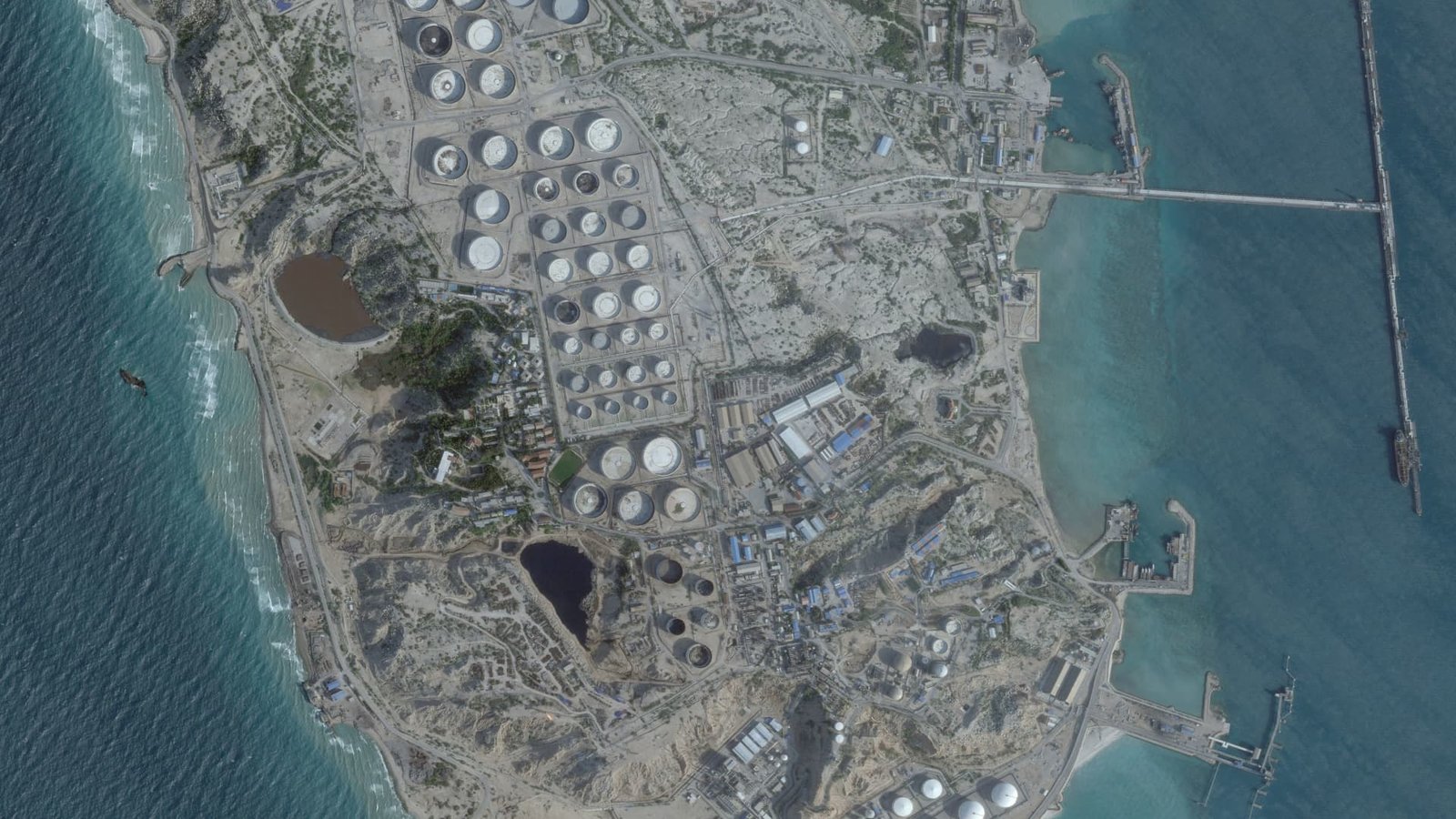
Trump also told NBC News in an interview published Saturday that U.S. strikes on Iran’s Kharg Island “totally demolished” most of the island but that “we may hit it a few more times just for fun.”
The U.S. president ordered strikes Friday against Iranian military assets on Kharg Island. Trump said the strikes had left oil infrastructure unscathed. But he warned that the U.S. would consider hitting crude facilities on the island if Iran continued to attack tankers in the critical Strait of Hormuz.
Iran’s strategic oil hub
The White House plans to announce as soon as this week that multiple countries have agreed to help escort oil tankers through the strait, U.S. officials told The Wall Street Journal. But they are still discussing whether such an operation would start before or after the war ends, the officials told the Journal.
The U.S. ambassador to the United Nations, Mike Waltz, reiterated Trump’s threat to strike oil infrastructure on the island. About 90% of Iran’s oil exports are shipped from there, according to JPMorgan. Iran produced about 3.2 million barrels per day in February, according to OPEC data.
“He deliberately hit the military infrastructure only, for now,” Waltz told CNN in an interview Sunday. “And I would certainly think he would maintain that optionality if he wants to take down their energy infrastructure.”
The U.S. strikes on Kharg Island and Trump’s threat to hit Iran’s oil infrastructure mark a major escalation in the war, said Natasha Kaneva, head of global commodity strategy at JPMorgan, in a Friday note to clients.
A direct strike on Iran’s export terminal on the island would immediately halt the bulk of its crude exports of 1.5 million bpd, Kaneva said. This would likely trigger “severe retaliation” by Iran “in the Strait of Hormuz or against regional energy infrastructure,” she said.
The closure of the strait, which connects the Persian Gulf to the world market, has triggered the biggest oil supply disruption in history.
Prices are rising despite the decision by more than 30 countries to release 400 million barrels of stockpiled oil to address the supply disruption. It is the largest such action in history. The U.S. will release 172 million barrels from its Strategic Petroleum Reserve as part of the effort.
The Paris-based International Energy Agency, which is coordinating the effort, said Sunday that Asian nations will start releasing emergency oil supplies immediately. Countries in the Americas and Europe will begin releasing their stockpiles by the end of March.
U.S. Energy Secretary Chris Wright said Sunday there isn’t any certainty that oil prices will fall in the coming weeks.
“There’s no guarantees in wars at all,” Wright told ABC News in an interview. “I can guarantee the situation would be dramatically worse without this military operation to defang the Iranian regime.”



