
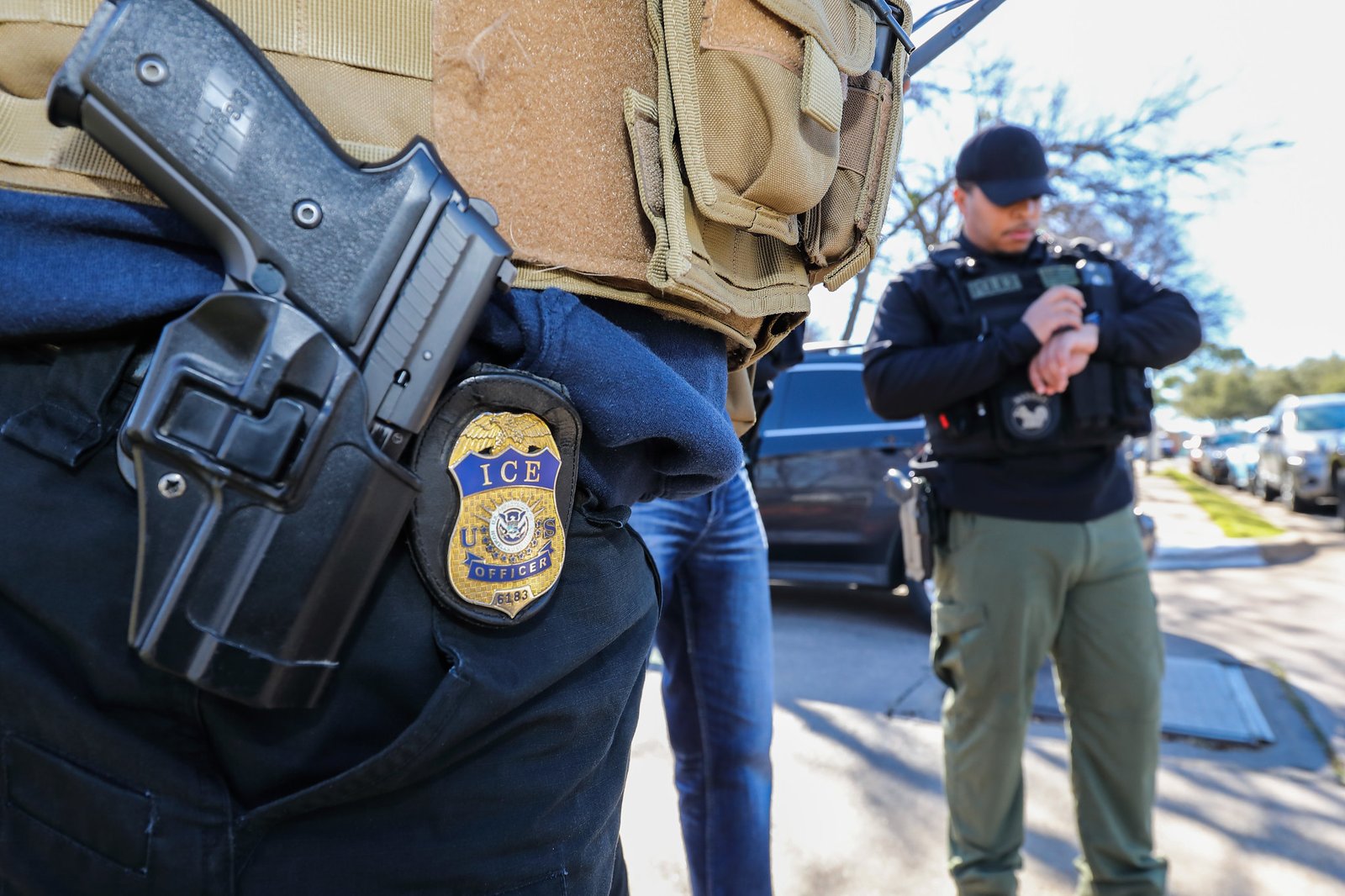
Gov. Mikie Sherrill’s desk now holds three bills meant to stifle the Trump administration’s aggressive immigration operations after both chambers of the state Legislature passed the package over the raucous objections of legislative Republicans.
One bill would bar law enforcement officers, including federal officers, from wearing face coverings while interacting with the public in an official capacity (the bill includes exceptions for undercover officers and those facing threats of retaliation, among other carveouts). While applying to all officers, the legislation is meant to address federal agents who have worn face coverings during civil immigration enforcement, a practice that has drawn criticism from across the country.
A federal judge struck down a California law barring ICE agents from wearing masks, but New Jersey legislators say that since this bill applies to all law enforcement officials, it won’t face the same obstacles faced by the California bill. Still, Republicans like Assemblywoman Dawn Fantasia (R-Franklin Borough) say the legislation illegally regulates federal officials, which they argue violates the Constitution.
“I’m not even hoping to win the ideological [argument],” Fantasia said on the Assembly floor. “I’m hoping to win the logical argument to say, ‘Why do we keep passing laws that are going to end up in court, we lose, and the taxpayer gets shafted over and over and over?’”
Assemblyman Vincent Kearney (D-Garwood), a freshman legislator and detective at the Union County Sheriff’s Office, said his office rarely uses masks, even with violent offenders, and that allowing people to see authorities with whom they’re interacting is valuable.
“When an individual is stopped, detained, or arrested, there should be no question about who is exercising that authority,” Kearney said.
Republicans offered loud objections to the series of bills. Assemblyman Paul Kanitra (R-Point Pleasant Beach) held a protest in front of the statehouse on Monday morning. A slew of Republican speakers attracted close to 100 spectators, many of whom watched proceedings from the Assembly gallery and, at times, offered vocal cheers or displeasure, leading Assembly Speaker Craig Coughlin to ask for quiet from the gallery.
And though most Republicans spoke against the bills, one Republican senator voted for one: Jon Bramnick (R-Westfield). The moderate and former gubernatorial candidate had previously signaled his intention to support such legislation, and he did on Monday.
“Many people in the public sector face risks. … Law enforcement faces risks, but they do not hide behind a mask,” Bramnick said.
Legislators also passed a bill that would generally bar government entities and health care facilities from requesting information related to a person’s immigration status, citizenship status, place of birth, and Social Security number. Democrats say the provision will allow people worried about their privacy to access healthcare or government services without fear that their information could be used against them. The privacy bill passed the Senate 23-14 and the Assembly 52-21.
And the day’s third bill would, if signed, codify the Immigrant Trust Directive, a policy that bars New Jersey police from cooperating with federal agents on civil immigration enforcement. Former Gov. Phil Murphy pocket-vetoed a similar bill on the last day of his term, and the legislation has major backers in Congress and the Legislature. The Senate passed the legislation 22-13, and the Assembly approved it 50-21.
Democrats say the directive and legislation help law enforcement officials handle crime because people will be more willing to trust officers if they feel they can go to the police without fearing deportation.
State Sen. Michael Testa (R-Vineland) attempted to place an amendment on the bill that would have required local law enforcement officials to notify immigration officers when undocumented people convicted of violent crimes are set to be released from custody, an amendment he deemed common-sense. Democrats tabled the amendment in a 21-15 party-line vote.
“Rejecting that reasonable safeguard made this bill impossible to support,” Senate Minority Leader Anthony Bucco said in a release.



