
University of Colorado grad Drew Goddard has thrived in Hollywood by keeping in touch with his inner muse — and collaborating with sci-fi writer Andy Weir. Goddard grew up in Los Alamos, New Mexico, the home of rocket scientists who gave us the atomic bomb, and still boasts the highest IQ per capita in America. Weir captured the humor of scientists, said Goddard, who made “The Martian” work with a 20-minute section with Matt Damon alone — and earned an Oscar nomination for it.
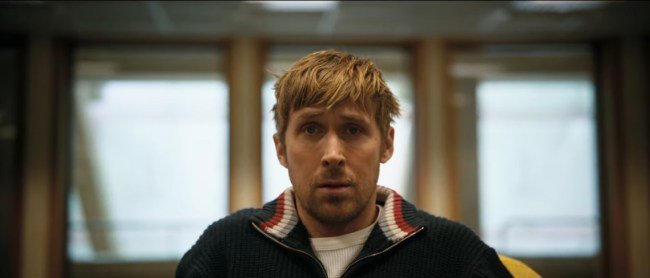
Now, he’s in space again, adapting Weir’s bestseller “Project Hail Mary,” this time with solo scientist Ryland Grace (Ryan Gosling) — not a trained astronaut — who is in way over his head but uses science to figure out the many problems that come his way. (Like how to pilot a spaceship.) The stakes on his mission couldn’t be higher: Save the Earth by saving the dying sun. En route, Grace meets another solo space traveler, a crab-like alien he names Rocky. Somehow, they figure out how to inhabit the same space without breathing the same atmosphere — and how to communicate.

When Goddard was a hot TV writer after working with Joss Whedon on “Buffy the Vampire Slayer,” Goddard signed up with J.J. Abrams on “Alias,” which led to “Cloverfield” and “Lost,” rewriting the end of “World War Z” and the hilariously scary “The Cabin in the Woods,” which he directed. A bevy of writing assignments created such a crunch that Goddard had to let go of the directing reins on “The Martian” to concentrate on writing Marvel series “Daredevil” and “Spider-Man” spinoff “Sinister Six” (which was later derailed by the Sony hack). That’s when Ridley Scott took over. Goddard also directed the ensemble comedy “Bad Times at the El Royale.”

In short, Goddard is very much in demand. With “Project Hail Mary,” again, he had to wrestle with the science without dumbing it down too much. The movie is much funnier than the book, due not only to Goddard but also to the Oscar-winning directors Phil Lord and Chris Miller (“Spider-Man: Across the Spider-Verse”) as well as the producer/star who developed the project, Gosling.
Weir was on board the whole time. “When Chris and Phil and I signed up,” Goddard told me at The Four Seasons Hotel in Los Angeles, “‘Oh yeah, it’s going to be really hard to figure this out.’ Andy is so good at the science that I don’t have to be. I can approach it from what I like to do, which is write about emotions. It’s how I structure everything I do; no matter the genre, it’s an emotional journey. So when you take those two things that are diametrically opposed, in some ways, it makes for good collaboration, because I can trust that the science is accurate and it’s going to work. What I care about is the love of science and the purpose of science — not the science itself.”
The two writers agreed to let the audience figure things out. “It’s OK if they don’t understand,” said Goddard. “As long as the emotional intent is pure, audiences will go with it. If they don’t fully understand, they can watch it again, they can look it up, make them an active participant, because as long as the emotions are clear, the rest will take care of itself.”
What “The Martian” and “Project Hail Mary” have in common is the idea that human beings who are fallible and don’t know everything can be ingenious and figure out problems. “I love watching competent people do their jobs,” said Goddard, whose mother is a schoolteacher. “We’re not doing a story about the world’s greatest astronaut. We’re going to start with a schoolteacher’s point of view. On a core level, ‘the school teacher saves the universe’ sounds preposterous, and yet felt so right to me.”

That was the initial hook. “And then you get to some of the big reveals towards the end that made me sit up when I was reading the book and go, ‘Oh my god, I did not see it coming,’” said Goddard. “I do this for a living, so it’s my job to see things coming. Let’s dive in and try to understand that, because it’s not just a surprise — things that we don’t know in the soul of the movie become a little more clear.”
Again, adapting a bestseller made it possible for Lord and Miller and Amazon/MGM uber-producer Amy Pascal to have more license to take chances, even on a $200-million tentpole. “When it works, you don’t realize the chances we were taking,” said Goddard. “Five years from now, we’re not going to think we took a lot of chances with ‘Project Hail Mary.’ But right now, I still remember, things were scary.”
Without naming any spoilers, keeping Weir’s ending was always going to be an issue. “Whenever you’re doing anything that feels bold or different,” said Goddard, “I’ve learned, people are going to push back against it. There’s a human quality in what we do that you feel comforted if it’s been done already. So anytime something’s different, and you take a chance on something, there’s an initial reaction to say, ‘No, no, no, no, don’t do this, it feels weird. This is too new. I don’t understand this.’”
The filmmaking team worked on “Project Hail Mary” for six years. “A lot of the big, bold choices were things that at various times, somebody pushed back on,” said Goddard. “And it wasn’t always a studio; we become complicit, too, in wanting to second-guess things and pressure-test all of these ideas. And we kept coming back to know that first feeling when you read the book.”
The changes from the book involve simplifying the science and making Sandra Hüller’s earthbound mission chief a tad more humane. The Oscar-nominated German actress (“Anatomy of a Fall”) even agreed to do karaoke, at Gosling’s behest, only if she could sing Harry Styles’ “Sign of the Times.” “I was terrified before we cast that role,” said Goddard. “Who are we going to find that the whole world unanimously goes, ‘Oh, let’s put her in charge without even questioning?’ When Sandra said yes, ‘Oh, we have a movie, because their energies are so different.’ You can feel these two heavyweights bouncing off each other.”

Having Lord and Miller was a blessing because they knew how to make characters and environments work in the animation universe. Creating a believable but relatable Rocky was the greatest challenge. “You don’t have your usual crutches, right?” said Goddard. “He can’t talk. He speaks in whale sounds. They don’t even have the same atmosphere. That’s preposterous, because you’ve got a boy in a bubble scenario without a face.”
Goddard’s son was growing up during the long writing period. “Some of this movie is me communicating with my son,” he said. “It just filters through what you’re going through, and it comes out on screen. At its core, it’s a love story, and it’s also a tribute to the importance of empathy, right? The importance of saying, ‘We’re from other sides of the galaxy. Not only do we not have the same language, we don’t have the same biomechanics. The only way we’re going to get through this is to struggle to see from the other point of view, or the universe dies on a core level.’”
At the start, Grace is bumbling around the messy spaceship and figuring things out. Once Rocky arrives, though, Grace starts to document what’s happening in a video journal. “That is the character’s journey,” said Goddard. “He’s learning empathy. We don’t jump to empathy. He has to learn empathy.”

The tension between Goddard’s structured script and Lord and Miller and Gosling’s penchant for improvisational and physical comedy played out on set. For example, the writer gave them a joke structure for choosing the computer voice for Rocky. “If I could get the structure of this movie right, it would give them the opportunity to play within scenes,” said Goddard, “so that we could let them have fun. I’ll write four or five that I think are funny, but they’re going to transcend with 45 minutes of that joke, trying to find the funniest combinations. God bless them. They do not relent. They’re always trying to make that movie better.”
When the studio previewed “Project Hail Mary” at three hours-plus, it gave the filmmakers confidence, as it had with “The Martian,” when Scott and Goddard were terrified they’d have to dumb it down for mainstream audiences. “The thing they loved the most is that we didn’t talk down to them, that we were talking up,” said Goddard. “It gives you a freedom to say, ‘Great, the audience is with us.’”
The studio gave “gentle pushback” on the eventual 156-minute running time, said Goddard. “There was some fear about ‘have you guys lost your minds?’ But we were trying to do something ambitious that would go beyond the usual disaster/save-the-world type of movie, and explore other things. Nobody has to watch this movie more than us, right? So if we’ve now watched it 30 times, and we see a way to improve a scene, even if no one will notice it until the 10th time they watch it, it delights us. It’s like a living document until they pry it out of our hands.”
Finally, the movie works because the filmmakers were willing to display emotion. Grace and Rocky actually hug at one point. And moviegoers are brought to tears. “We’re not afraid to wear our hearts on our sleeve,” said Goddard. “Just put it on there. And Ryan is not afraid — he can’t not do it, quite frankly, it just oozes out of him. So it was a good aligning of the stars for this project.”
Next up: ABC is shooting creator Goddard’s “High Potential” Season 3, starring Kaitlin Olson.



