
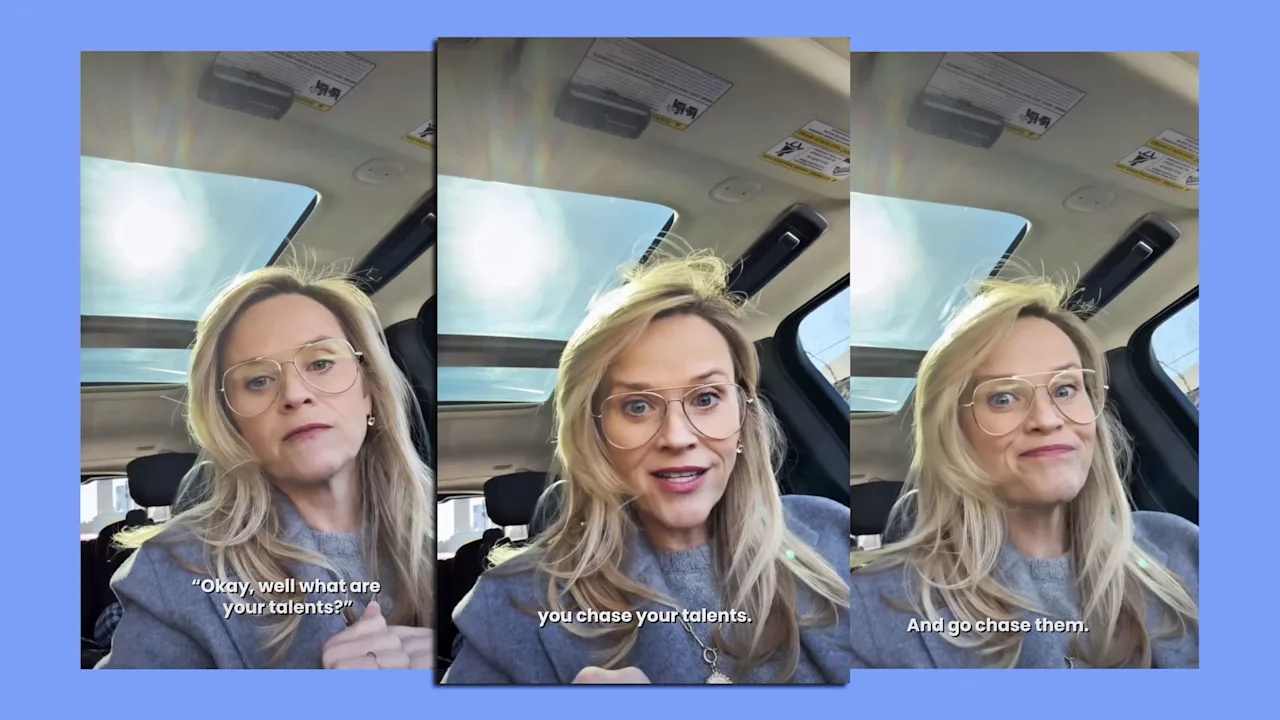
We’re told from a young age to follow our dreams. But for Oscar-winning actress Reese Witherspoon, chasing your dreams is overrated. Instead, she recommends a different approach, especially for young people: “Chase your talents, not your dreams.”
The 49-year-old, who has a $400 million-plus net worth, shared the advice in an Instagram reel this week: “I just got off the phone with a young woman who is looking for career advice,” she says in the clip, which has since racked up over 482,000 likes and thousands of comments. “She wants to switch from one job to another,” Witherspoon says, adding that the woman is currently unhappy at work.
This is a predicament many will relate to. LinkedIn data consistently finds that the average worker will change roles every three to four years.
But when Witherspoon questioned her about what she was actually good at, the woman drew a blank. “She had a hard time telling me what her specific talents were.” This, to Witherspoon, is the key.
Gallup data shows that roughly 60% of employees feel emotionally detached at work, while fewer than one in four strongly believe their job aligns with their strengths.
“You don’t chase your dreams—you chase your talents,” Witherspoon explains. “Everybody has dreams. It doesn’t mean you’re gonna be that thing. You are supposed to do what you’re talented at.”
This advice should speak to a generation increasingly moving away from the idea of a dream job altogether, and instead prioritizing work-life balance over climbing the career ladder.
According to Gallup research, those who use their talents are six times as likely as other employees to be engaged at work, and are three times more likely to report a high quality of life than those who do not.
“It’s your job in life to figure out what your specific unique talents are, and go chase them,” says Witherspoon.
So, the next time you feel lost or stuck at a crossroads in your career, take Witherspoon’s advice and:
- Get clear on your dreams.
- Be honest about where your talent truly lies.
- Find the roles where the two intersect.
That path that is meant for you—the one you’re looking for? Likely, it will show up when you follow what you’re naturally good at.



