
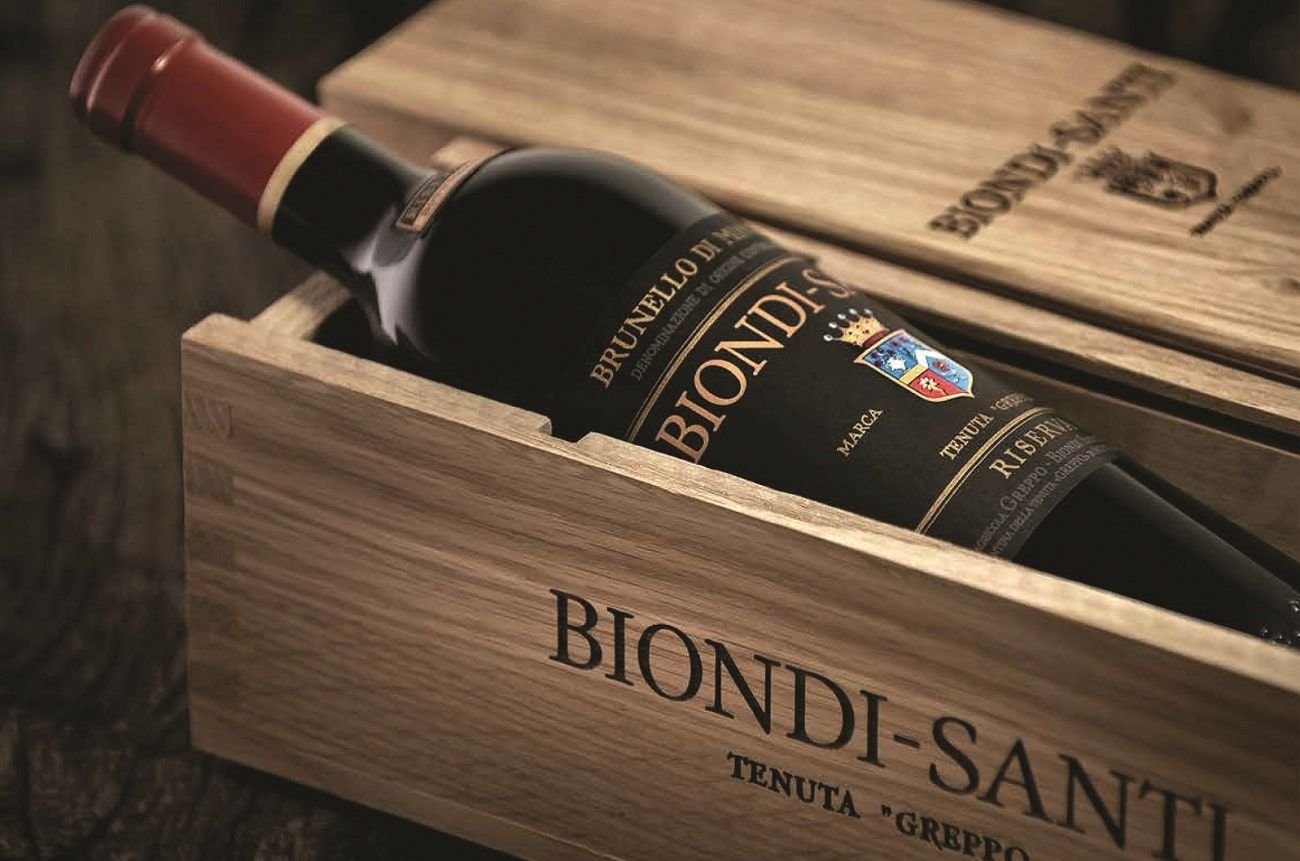
As notoriously difficult as Italian wine is to decipher, the term ‘Riserva’ seems straightforward – it’s widely, and simply, interpreted as ‘better’.
Intrinsic to the history of Italian wine, Riserva is deeply entrenched in the country’s psyche.
As Andrea Farinetti (pictured, below), owner of Borgogno in Barolo, says: ‘It means something rare, limited and set-aside because it’s unique.’
Equally, cautions Brunello di Montalcino producer Biondi-Santi CEO Giampiero Bertolini: ‘Whether this is the case or not is another question.’
Mixed messages
Andrea Farinetti, Borgogno
(Image credit: Borgogno)
The rationale behind the Riserva classification is sound – that the best wines should endure and benefit from extended refinement.
By tradition, rather than ordinance, Riservas have typically corresponded to a special selection, whether it be from old vines, choice vineyard plots or superior barrels singled out during ageing for their greater concentration and structure.
Among Italy’s iconic examples, Giacomo Conterno’s Monfortino Barolo Riserva, Bruno Giacosa’s ‘red label’ Barolo and Barbaresco Riservas, and Biondi-Santi’s Brunello di Montalcino Riserva were historically made only in vintages deemed of the highest quality by the respective estates.
And they still are today. ‘It is very important that the difference between an annata wine and the Riserva is clearly perceivable in sensorial terms as well as in the cultivation and making of the wine,’ Bertolini explains. ‘It can’t just be a wine with longer maturation.’
But theory and practice aren’t always aligned.
At its best, Riserva encompasses some of Italy’s greatest wines, yet the category equally includes its share of disappointing, lacklustre examples.
‘Wines that weren’t selling, that were also not particularly fine, became Riserva just because of the fact they remained in storage,’ says Marchesi Frescobaldi’s president Lamberto Frescobaldi.
Superstar Piedmont consultant Gian Luca Colombo bemoans the tendency of some producers to release a Riserva every year. ‘It misses the meaning of the very concept of Riserva,’ he states.
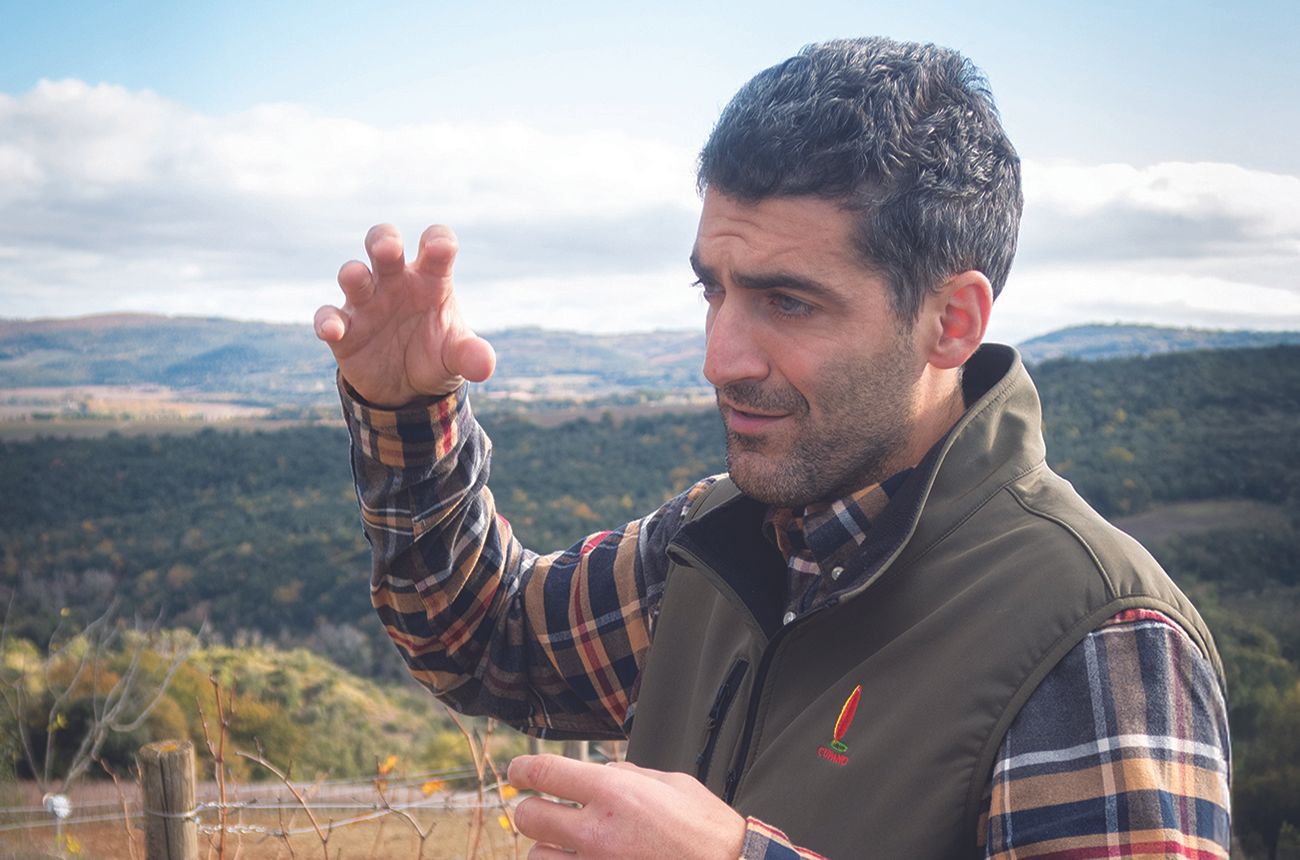
At Cupano in Montalcino, Tuscany, Andrea Polidoro is even more disillusioned: ‘It is the only option for producers to double the price for the same wine.’
Quality sweet spot

Laura Bianchi, Castello di Monsanto
(Image credit: Castello di Monsanto)
Coming under such criticism, Riserva is faced with an inevitable reckoning.
Eroding its once-exalted status, the denominations of Chianti Classico and Vino Nobile di Montepulciano in Tuscany have both introduced a higher tier: respectively, Gran Selezione and Pieve, relegating Riserva to the middle rung of the quality pyramid (above annata) of these DOCGs.
In Chianti Classico, many wineries argue, conversely, that Gran Selezione has given Riserva a new lease of life.
‘Our historic clientele, as well as new enthusiasts, continue to seek out the Riserva,’ asserts Castello di Monsanto’s Laura Bianchi (pictured, above), who identifies the desirable combination of immediate accessibility with cellaring capacity, as well as an excellent price-quality ratio.
Indeed, Chianti Classico’s Riservas offer a sweet spot for savvy, budget-conscious cellaring.
Nevertheless, the category is somewhat blurred as several of the denomination’s most prominent wineries, including Castell’in Villa and San Giusto a Rentennano, continue to bottle their top Chianti Classico as Riserva rather than Gran Selezione.
‘Our historic clientele and new enthusiasts continue to seek out the Riserva’
Laura Bianchi, Castello di Monsanto
Place and time
(Image credit: Michaela Morris/Future)
New categories are indicative of a general evolution in Italian wine labelling.
Most prominent in this regard is the rise of UGAs – geographical subdivisions within an existing denomination.
The trend underscores a shift of emphasis towards identifying a more specific place of origin. In Piedmont, both Barolo and Barbaresco have well-entrenched systems of this type.
Sixth-generation Davide Abbona at Marchesi di Barolo distinguishes these bottlings with respect to Riserva. ‘They are two different yet complementary interpretations within the same denomination,’ he says.
The idea behind UGAs is to highlight diversity of territory at the regional level, whereas Riserva is typically an individual estate’s stylistic expression linked to time. ‘It requires patience and attention to reach its maximum expression,’ Abbona says of the latter.
Crucially, UGAs aren’t an indication of a higher level of quality, although some estates do choose to bottle their top site’s wine as a Riserva; essentially one denomination or categorisation reinforcing the other.
Expanded offerings

Lamberto Frescobaldi, Marchesi Frescobaldi
(Image credit: Marchesi Frescobaldi)
In Tuscany, Montalcino has resisted carving up its territory into smaller official sub-zones.
Nevertheless, it has seen a boom in site-specific Brunello, such as Cortonesi’s La Mannella and Poggiarelli bottlings, or San Polo’s Podernovi.
This route offers an opportunity for wineries to expand their offerings beyond Riserva, as well as another channel for those who have misgivings about it.
‘It makes sense for historical wineries to make a Riserva, but for a young winery it is hard to speak about tradition,’ says up-and-comer Tommaso Squarcia at Castello Tricerchi.
He favours the single-vineyard approach ‘because you can justify making the wine every year’.
The two aren’t necessarily mutually exclusive.
Frescobaldi-owned estate CastelGiocondo’s Ripe al Convento is among the Brunello Riserva that come from a single site. ‘Abroad, the indication of the vineyard is more important than the term Riserva,’ asserts Lamberto Frescobaldi.
In Italy, however, he notes that having both elements in the name reinforces the prestige of a wine such as Brunello.
Giles Burke-Gaffney, fine wine director at London-based merchant Justerini & Brooks, echoes Frescobaldi’s sentiments: ‘The term Riserva resonates very little with our customers.’
He points instead to region, commune, producer and vintage all having more significant influences on purchasing decisions.
For Winetraders UK owner Michael Palij MW, the allure depends on the specific denomination. ‘I have never seen any demand for Riserva outside Chianti Classico, Brunello and Barolo,’ he asserts. ‘Taurasi? Even Amarone? Not a chance!’
Level of achievement
But it isn’t all bad news for Riserva. At Berry Bros & Rudd, Barbara Drew MW identifies the sway of brand loyalty.
‘Passionate fans of a particular producer will generally buy that producer’s Riserva wines along with the rest of their range,’ she says, adding that they’ll happily pay the premium to do so.
Herein lies the crux of the matter.
A Riserva is only as reliable as the producer that makes it. Above all, for a Riserva to be truly relevant, it must embody the spirit, not just the letter, of the law.
Those that do may find their way to the upper echelons of Italian wine; however, they don’t stand alone at the top.
Rather, they are joined by UGA and single-vineyard bottlings that eschew the designation, as well as the more broadly defined IGT category, the best of Chianti Classico Gran Selezione and the like.
True to Italian form, it’s complex to say the least.



