
The ongoing unrest in Minnesota has brought renewed attention to a rarely invoked law dating back to 1807.
The Insurrection Act allows the President to deploy U.S. armed forces within the country to respond to serious civil unrest, insurrection, or situations where state authorities can’t or won’t protect constitutional rights. Because invoking the Insurrection Act dramatically shifts the balance of power by placing military force directly into civilian life, Americans have historically been wary of its use and presidents have invoked it sparingly.
What Does Invoking the Insurrection Act Do?
Under normal circumstances, the U.S. military is barred from domestic law enforcement by the Posse Comitatus Act, which generally prohibits federal armed forces from carrying out routine law enforcement activities inside the United States, such as policing, arrests, or searches, unless Congress or the Constitution explicitly authorizes it.
The Insurrection Act is a major exception. It allows the president to act when states request help, when federal law cannot be enforced, or when people’s constitutional rights are being denied and state governments cannot or will not protect them. As set forth in 10 U.S.C. §§ 331-335:
Whenever the President considers that unlawful obstructions, combinations, or assemblages, or rebellion against the authority of the United States, make it impracticable to enforce the laws of the United States in any State by the ordinary course of judicial proceedings, he may call into Federal service such of the militia of any State, and use such of the armed forces, as he considers necessary to enforce those laws or to suppress the rebellion.
The Act’s language is broad, giving the president significant discretion and requiring few formal checks before action is taken. In times of political polarization or social unrest, that flexibility becomes controversial. Supporters argue it’s a necessary tool for national stability in emergencies. Meanwhile, critics worry it could be used to suppress dissent or bypass state authority.
When Can Troops Be Deployed?
The Insurrection Act outlines several situations in which the president may deploy troops domestically:
- At the request of a state:A governor can ask the federal government for military assistance to suppress an insurrection or restore order.
- To enforce federal law:If state or local authorities are unable or unwilling to enforce federal laws, the president can intervene.
- To protect constitutional rights:When citizens are being denied constitutional rights and the state fails to protect them, federal troops may be used to ensure those rights are upheld.
When Has the Insurrection Act Been Used?
The Insurrection Act (and its predecessors) have been invoked 30 times over the course of U.S. history. President George Washington relied on an earlier law to quell the Whiskey Rebellion in 1794. Most recently, President George H.W. Bush utilized it to defend Los Angeles during the 1992 riots.
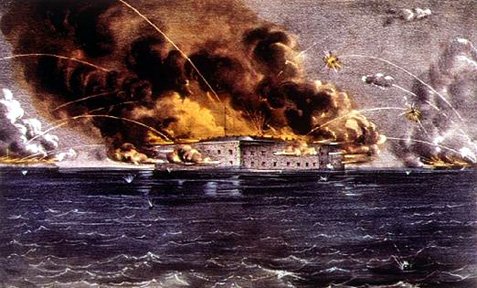
The Insurrection Act has played an important role in several other key moments in history. In 1861, President Abraham Lincoln invoked the Insurrection Act to call up 75,000 militia troops following the secession of 11 Southern states and the Confederate attack on Fort Sumter, leading to the start of the Civil War.
The Insurrection Act was also invoked several times during the Civil Right Era. President Dwight Eisenhower federalized the National Guard, and deployed the 101st Airborne Division of the U.S. Army, to enforce desegregation after Arkansas Gov. Orval Faubus used the National Guard to prevent nine Black students from entering a Little Rock high school. In 1963, President John F. Kennedy invoked the Act to enforce federal desegregation orders after Gov. George Wallace threatened to block the admission of two Black students to the all-white University of Alabama.
Should the Insurrection Act Be Reformed?
The Insurrection dates to 1807, and many of the terms it uses reflect its age. As noted above, the president does not need approval from Congress or state governments in all cases, which gives the executive branch broad discretion in determining when deployment is necessary.
Several reforms have been proposed to address these controversial aspects of the law, while preserving the ability of the president to respond to domestic crises. Proposals like the Insurrection Act of 2025 would require the president to consult with Congress before invoking the Act and would require Congressional approval for deployments longer than a short period.
Legal think tanks like the Brennan Center for Justice have argued that the Act needs to be updated with modern definitions, such as expressly defining when it is truly necessary to use the military and what actions are permissible after deployment.
While reform efforts have not gained momentum in the past, recent political debates and presidential statements have increased interest in reforming the Insurrection Act to ensure strong checks and protections for democratic norms and civil liberties.



