
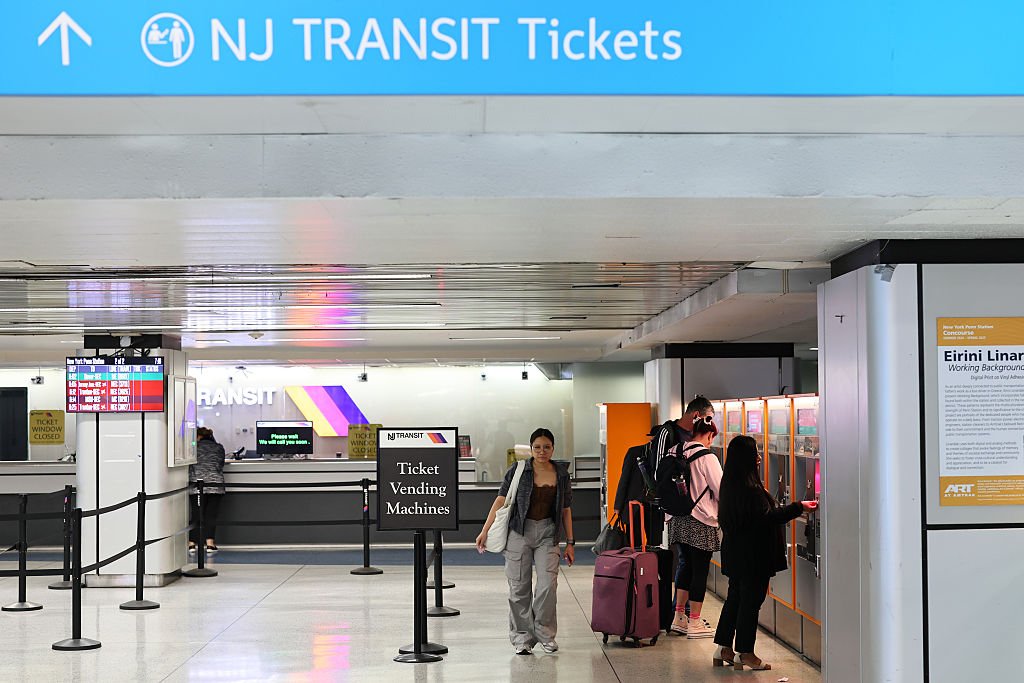
NJ Transit’s CEO defended a plan to shutter parts of New York Penn Station for riders who don’t hold World Cup tickets during match days this summer, telling lawmakers that security for an event expected to draw more than a million tourists demands closures that will cut commuters off from New Jersey-bound trains.
Kris Kolluri, who heads NJ Transit and the New Jersey Turnpike Authority, on Thursday told the Senate Budget Committee that the surge of soccer fans, the presence of foreign officials, and the United States’ war with Iran demanded strict security procedures that include the partial closure of New York Penn Station when the World Cup is playing at MetLife Stadium in East Rutherford.
“The eight FIFA games that we are going to conduct at Metlife Stadium are arguably the most important security event we’re going to see in the nation, not just because the president of the United States is going to be there, but something like 14 dignitaries or heads of states will be there,” Kolluri told the panel.
Earlier this week, NorthJersey.com reported parts of New York Penn Station will be closed for four hours prior to the start of the eight World Cup matches scheduled to be played in New Jersey, except for World Cup ticket holders. That includes four weekday games, one of which will intersect with the afternoon rush, and four weekend games.
The prospect of the World Cup disrupting commutes on NJ Transit trains, which have routinely faced reliability issues during summer months, has caused concern among some lawmakers.
“This is an event that just keeps on giving with surprises in this building,” Sen. John Burzichelli (D-Gloucester) said at the Statehouse in Trenton Thursday. “It seemed like such a good idea originally, and it’s just gotten more and more complicated. This is a great undertaking for New Jersey Transit to move this amount of people to a specific location.”
The agency expects to move 40,000 riders for each game, including roughly 28,000 from New York, almost all of whom will move through Penn Station, Kolluri said. The scale of the event is unprecedented for the agency.
Those riders will face security measures beyond those regularly employed on the northeast corridor, in part to keep fans from bringing flares to the stadium, he said.
Though the tradition does not exist in the United States, soccer fans in England and elsewhere sometimes smuggle flares and other fireworks into stadiums. The pyrotechnics sometimes cause injuries and, in rare cases, death.
“If you look at what happens today, we have an open system. Anybody can get on there and you just walk on a train or bus,” Kolluri said. “That is not going to be the case for this event.”
The events’ security cordon will impact services at Secaucus Junction as well as New York Penn Station.
New Jersey’s commuters will have other transit options during the disruption, Kolluri said.
“The best part of New Jersey and the region is we are not mass transit-poor,” he said. “We have Amtrak. That’s still going to function. We have PATH, which is still going to function. All New Jersey Transit buses leaving New York and going into New York will still function. The ferry system will still function, and our regular trains will still function outside the security perimeter for this temporary diversion.”
Kolluri said more details about the agency’s World Cup transportation plan, including its financing, would be unveiled in the coming weeks.
The agency aims to prevent saddling regular commuters with the events’ costs, he said.
GET THE MORNING HEADLINES.



