
President Donald Trump’s blatant, sometimes open corruption can feel disorienting. While other White Houses have made a point to show their administration is not for sale, this one has seemingly done the opposite — making a big show of their transactional relationship with corporations, Silicon Valley, and other governments, given the right price.
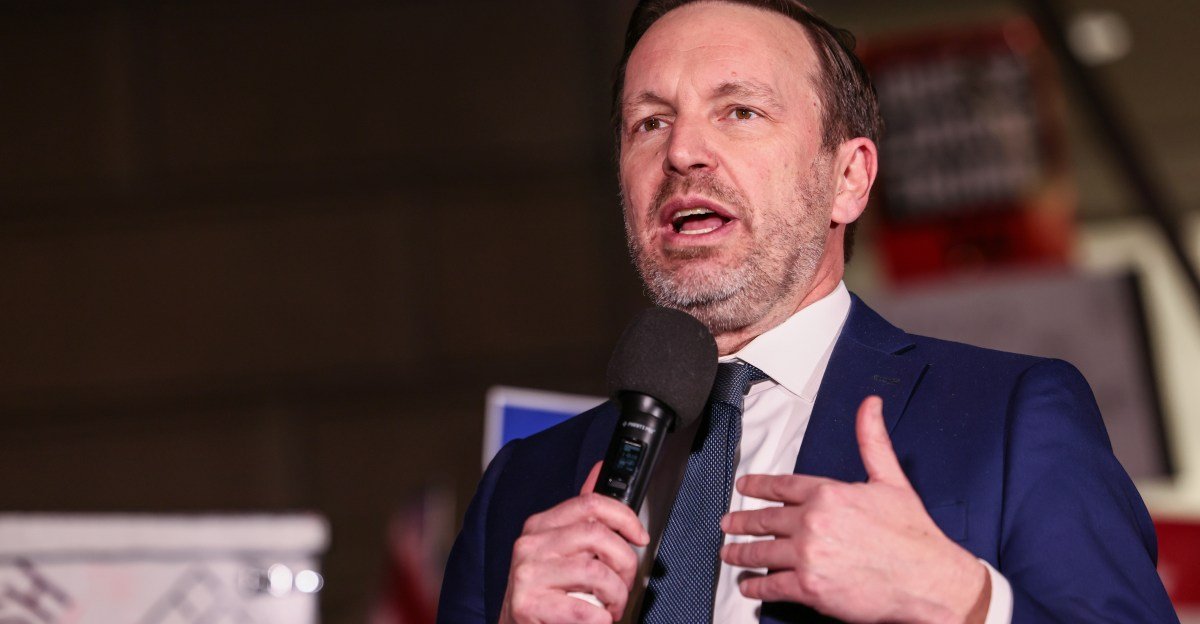
This kind of pay-to-play politics was the focus of a recent forum in Washington, DC, hosted by the American Economic Liberties Project, a think tank focused on corporate consolidation, breaking up monopolies, and accountability for rogue businesses. It’s also the focus of Sen. Chris Murphy (D-CT), who has made this anti-corruption a focus of his message and policy proposals since the 2024 election.
I spoke with Murphy last week as part of the forum; in an extended conversation, I asked about the effectiveness of this message, what role the Democratic Party also plays in Washington’s current culture of open corruption, and if there’s anything the public can do to push back.
Below is an excerpt of our conversation, edited for length and clarity. You can hear the full interview on Today, Explained wherever you get podcasts, and you can also watch this episode on video at YouTube.com/vox.
If you enjoy our reporting and want to hear more from Vox journalists, sign up for our Patreon at patreon.com/vox. Each month, our members get access to exclusive videos, livestreams, and chats with our newsroom.
When I think about corruption, one thing that immediately jumps to mind for me is that when we think about the Trump administration, this isn’t happening in backroom deals. A lot of these things are happening right in front of us. Is corruption the right word to even use when it’s been broadly sanctioned by legal and governmental entities?
I think corruption is still a word that resonates. I think people understand that corruption is a bad thing, that it is something that we have broadly tried to expunge from our politics. And I do think that people generally understand corruption to be something that happens quietly behind closed doors.
Corruption is something you try to hide, and so I do think the most important piece of this moment is trying to understand what to do with the brazen public way that Trump is engaging in corruption, because simply by the very fact that he does it every day, that he does it openly, publicly and proudly, it is causing some people to question, Wait, wait, is this corruption? Because this isn’t what I learned corruption is. There’s no shame in this.
I don’t necessarily know if it means you change the word. He’s trying to change the very notion of corruption by doing it publicly. And so if you call it something different, then I think you’re playing his game.
You know, your Corporate Pardons Report documents over 160 companies that have had federal enforcement actions dropped.
As we know, corporate influence has been in Washington for a long time. How do you think this is a qualitatively different moment than the usual lobbying influence that we’ve seen?
It’s just so nakedly transactional right now. It’s an easy story to explain, whether it’s the donations that Boeing made that got them out of their trouble, whether it’s the Toyota donations, whether it’s the money that Zelle pumped into the administration,
It now doesn’t happen through slowly putting money into the political system, slowly building up connections. It’s literally just a million dollars for a corporate pardon. And that now happens within weeks or months. It’s put Eric Trump on your board, the lawsuit or the enforcement action is dropped, right? It’s so nakedly quick and transactional that it’s hard to hide.
What do you think is the impact of that kind of flagrant degradation of the process? What do you think is the consequence of its being in our face in this way?
Trump takes over at a moment when a lot of Americans were seriously contemplating giving up on democracy, right? And while that conversation may not be on the surface of kitchen table talks in our country, it’s right below the surface. People just don’t think that their voice matters any longer.
They, for a long time, have believed that the elites get whatever they want out of the system and the way in which Trump has chosen to do this so transparently, I think, is an effort to permanently shatter people’s faith in the entire enterprise and to transition the country to a kleptocratic oligarchy.
And so, yes, I think this is a particularly vulnerable moment for the country in which a lot of Americans are unfortunately ready to just say, Fuck it. This thing doesn’t work any longer. It now clearly doesn’t work, because we have an elected president who is just stealing from us. I’m just going to walk away from the whole enterprise.
And when people give up and retreat from public action, that’s the moment that the oligarchs seize power and never give it up. The reason that I have been raising the unacceptability of the corruption — that it is abnormal, that we should not normalize it — is because I think Trump’s core case here is, if he’s successful in normalizing it, it may be the death blow to people’s faith in the entire democratic enterprise.
Is there some form of a conflation between overt corruption and something like corporate consolidation? Or do you see those as one and the same when we’re talking about these monopolistic media companies [like Paramount]?
It’s all part of the same story. The only way that Paramount Skydance gets to be as big and as corrupt and as manipulative as it is is because of corruption, is because of an underlying deal that is done between the Ellison family and the Trump family.
I mean, [Defense Secretary Pete] Hegseth literally says it on stage: I can’t wait until my friends, the Ellisons, get control of CNN because then you’ll stop telling the truth about the war.
And again, back to how you message this: Yes, I understand that it’s a hard thing to break up that corrupt consolidation. Yes, I understand that by the time we get control of things here, the prediction markets will be even more mature, but by stating what you are going to do, you can actually bend reality by being bold in your claims about what you will do with power. People — and not just people out in the public, but members of Congress, right? — start signing up for the project the bolder it is.
The scope of Trump’s corruption can feel disempowering. The administration seems immune to public opinion at many times, undeterred by legal and institutional restraints.
It feels like we’re strapped in at the beginning of a roller coaster and you don’t know where it ends. Is that true? Are constraints coming?
It’s only coming if the Democratic Party, as we head into the 2028 election, makes the un-rigging of our democracy a tent pole for our party’s messaging.
If it’s up to me, our party’s message is unrigging democracy, unrigging the economy.
I’ll end here because you are right that people are feeling super discouraged and super powerless right now. We as a party have to start our analysis of what this moment needs through a diagnosis of the way that people are feeling like they have no agency. Both our economic and political messaging has to be about returning control to human beings and explaining to them, as we’ve talked about a few times, that it goes both ways: The corruption of our economy is downstream of the corruption of our democracy.
But also, the right way to end the corruption of our democracy is also downstream of the corruption of our economy. When our economy is an economy that only cares about profit and efficiency, it becomes this winner-take-all economy in which the folks who do well just grab it all. And we’ve normalized that because we’ve normalized the idea that that shared prosperity is not a value any longer in our economy.
When we normalize zero virtue in our economy, it’s really easy to say, well, maybe virtue shouldn’t matter in our politics either. And so that’s why the project is so big, right? There are cross currents between what has happened in our economy affecting our politics, what’s happened in our politics affecting our economy, which is why your willingness to confront this question of corruption in government and in our economy and recognizing how they flow back and forth is so critical.



