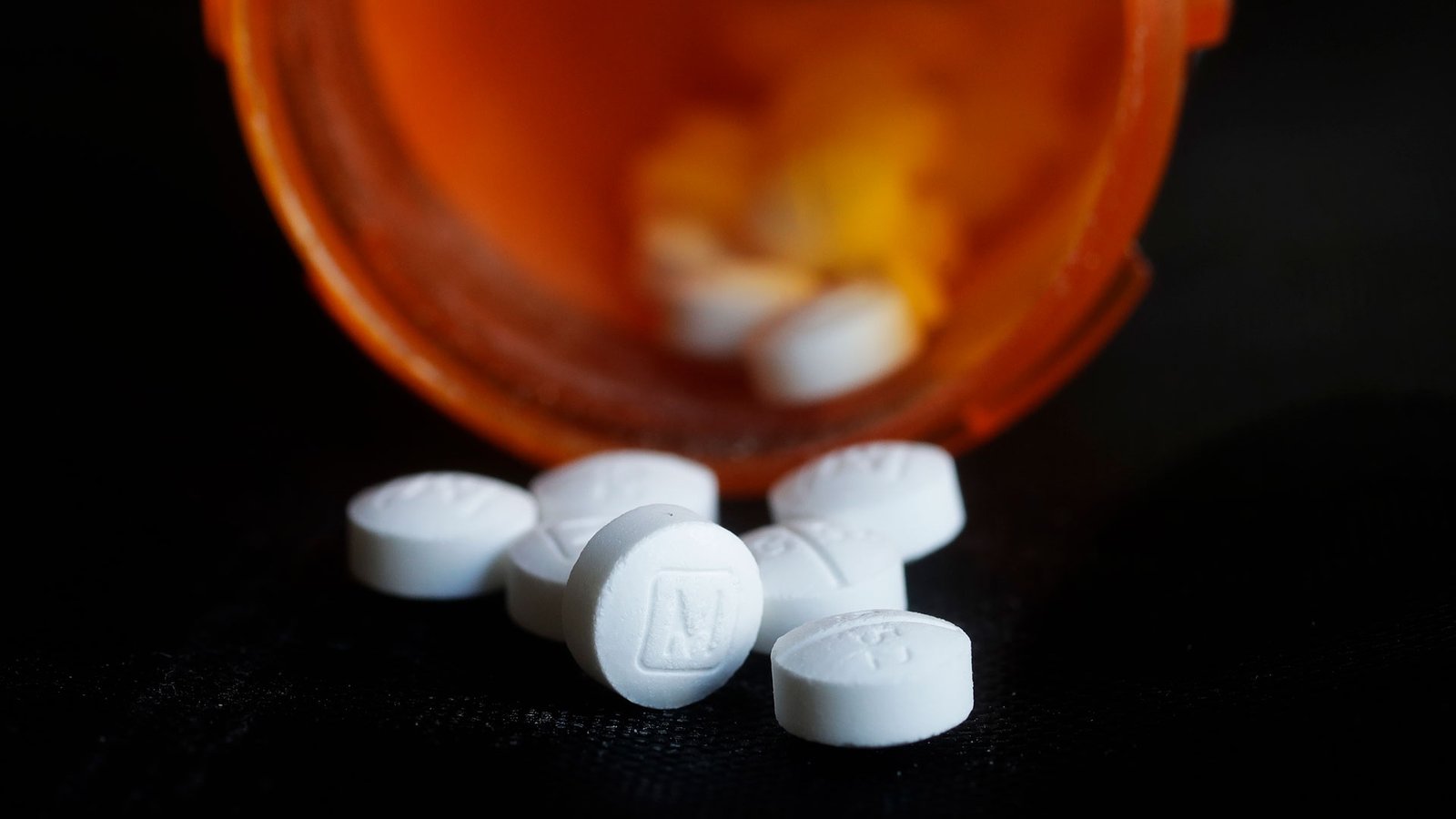
State Sen. Joseph Vitale (D-Middlesex) will press the new administration to support millions of dollars for addiction treatment services after fellow Democrats thwarted bipartisan legislation to allocate some of New Jersey’s $1.3 billion share of the federal opioid settlement.
Legislation he reintroduced last week in the Senate Health, Human Services and Senior Citizens Committee – which Vitale chairs – would restore $45 million to the state Opioid Recovery and Remediation Fund. The money was diverted to four hospital systems for their own addiction treatment programs in a last-minute move before Gov. Phil Murphy signed the $58.8 billion state budget in June.

The Opioid Recovery and Remediation Fund’s nine-member advisory council, in a 108-page plan released in June, recommended that New Jersey spend its share on expanding housing-first initiatives, distributing harm-reduction supplies through community organizations and broadening family support and treatment programs. Democratic leaders didn’t advance a Vitale bill to channel $45 million to those efforts.
“The advisory council has an evidence-based blueprint on the best way in which to deploy these funds,” Vitale said in an interview with NJ Spotlight News. “They are the most competent group of people and organizations that know how to best care for people who are in trouble and deploy the money in a way that makes the most sense and has the most impact.”
He said he’s hoping Gov.-elect Mikie Sherrill, a Democrat, will support the bill.
The council was formed in 2023 to guide the spending of New Jersey’s payout from national opioid lawsuit settlements, a total of $1.3 billion over 15 years to be paid by drugmakers, marketers and distributors that flooded the nation with highly addictive medications. Under the settlement terms, half of that $1.3 billion is for state government while the rest is marked for counties and about 250 municipalities.
Jenna Mellor, an advisory council member and the executive director of the New Jersey Harm Reduction Coalition, said she’ll work with Vitale and fellow lawmakers.
“This represents our lost loved ones and neighbors,” Mellor said of the settlement. “Every dollar invested in harm reduction services and grassroots support has a multiplier effect in terms of the people connected to care and the life-saving resources made available.”
The funding diversion led to outrage from recovery advocates, who staged a “die-in” in a State House hallway, and rare criticism from the state attorney general, Matt Platkin.
“These settlement funds are not general revenues for the State,” Platkin said in a statement. “They are the result of some of the most significant lawsuits ever filed by attorneys general across this country to force companies to pay back the blood money that they stole in fueling the opioid epidemic.”
Sen. Paul Sarlo (D-Bergen), who chairs the Senate Budget and Appropriations Committee, said in late June that the diversion was meant to make up for losses that the four hospitals expect from federal Medicaid cuts.
In a statement to NJ Spotlight News, Elizabeth Burke Beaty, the founder of Sea Change Recovery Community Organization and Harm Reduction Center, said the funds should be spent as intended.
“These dollars were secured to address the overdose crisis – not to backfill gaps left by shrinking federal budgets,” Beaty said. “We are counting on the Sherrill administration and the Legislature to do the right thing and reintroduce the $45 million, move it swiftly and ensure opioid settlement funds are used as intended. Lives depend on getting this right.”
Under Vitale’s reintroduced legislation, $45 million would be restored to the Opioid Recovery and Remediation Fund while the four hospitals would get $45 million from the state’s general fund. Hackensack University Medical Center would receive $10 million; RWJBarnabas Health and Cooper University Hospital, $15 million each; and Atlantic Health System, $5 million. The hospitals would have to provide “necessary care and treatment” for victims of opioid-related health issues.
New Jersey has allocated more than $324 million in state-level opioid settlement resources toward prevention, treatment, recovery and community support, according to a recent news release from the state.
Assemblywoman Aura Dunn (R-Morris), a co-sponsor of the bill in the previous legislative session, questioned the Legislature’s priorities on Jan. 12 when the Senate and Assembly advanced $128 million in supplemental spending with little transparency. Included was funding for World Cup soccer games that will take place this year.
“Today, $128 million suddenly appears and where does it go? Tens of millions for marketing and promotion tied to the World Cup,” Dunn said on the Assembly floor. “Meanwhile, the very programs designed to save lives from opioid addiction remain underfunded.”