
 Gov. Mikie Sherrill’s proposed state budget calls for record annual spending, but that doesn’t mean every line item is set to go up.
Instead, Sherrill, a first-term Democrat, is proposing to trim or eliminate many individual items from the current budget, the nearly $60 billion spending plan inherited from her predecessor, Phil Murphy. By her administration’s estimates, she plans for nearly $2 billion in reductions, cuts to everything from property tax relief for senior homeowners to aid for a Rowan University veterinary school.
These types of targets would help offset increased investments in several key areas that have widespread public benefits, such as mass transit and public education, according to Sherrill, a former congresswoman who is a newcomer to state government.
The budget cuts due to go into effect when a new fiscal year begins on July 1 would also help narrow a wide structural gap between expenditures and revenues. That mismatch threatens the state’s long-term fiscal sustainability, she says.
As lawmakers heard during a series of recent public hearings, though, many of her proposed reductions are also likely to be felt in communities throughout the state. Lawmakers were told to expect less or no funding for numerous programs and services provided by nonprofits and other civic-minded organizations. For Sherrill’s cuts – and her budget as a whole – to become law, lawmakers must approve, or pass a spending bill that she will agree to sign.
One potential hit is to a program that links abused and neglected children with trained volunteers. Sherrill’s $60.7 billion proposed budget would halve the $4 million aid allocation to CASA, or Court Appointed Special Advocates.
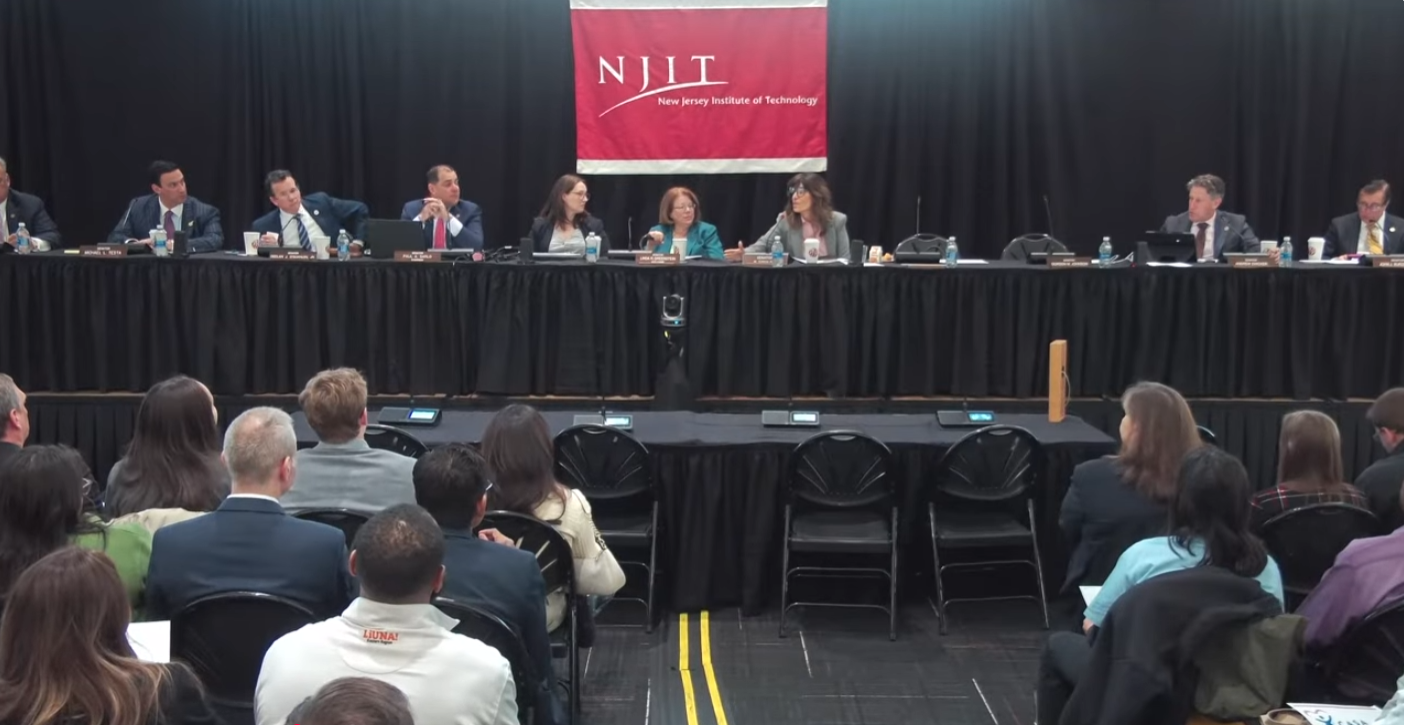
 Credit: (YouTube/NJIT)
“We are well aware of how tough this budget year is going to be,” Liza Kirschenbaum, associate director of the advocates program, said during a budget hearing this week. “But a cut of this magnitude is going to force us to cut our services to the state’s most vulnerable children, and in both the long and short terms, that is going to cost far more money.”
That theme ran through budget committee hearings as the full scope of the proposed cuts came into focus.
“We don’t have options when faced with decreased state funding,” said Phil Barnes from the Rowan University Shreiber School of Veterinary Medicine, New Jersey’s only school of its kind. “Without continued support, our ability to meet accreditation goals and train veterinarians is at risk.”
Sherrill is not the first New Jersey governor to come into office seeking to reset or realign how the state annually appropriates billions of dollars in tax and other revenue. And even if a line item cut is proposed in the spring, that is no guarantee that the funding will not be restored — or even inflated — by lawmakers as the spending bill is drafted in June.

It was just last year that Murphy proposed numerous reductions in the final budget he proposed to fellow Democrats who led the Legislature. That spending plan also sought to enact a series of tax increases, part of a broader effort to narrow the structural imbalance. Legislative leaders persuaded Murphy to scale back his tax changes and to restore some line items.
Democratic leaders, though, also tacked on spending for the current fiscal year, which ends on June 30. That included funds for legislative pet projects and other, more parochial line items, such as parks improvements in Sayreville and youth baseball in Ocean Township. They were following a years-long pattern in which majority Democrats at the end of June added hundreds of millions of dollars in spending.
Their insertions often followed closed-door negotiations, fueling concerns about transparency and political favoritism.
“If you think we’ve made some bad decisions, then tell me where we’ve made the bad decisions, but also tell me how we are going to continue to drive down costs.” — Gov. Mike Sherrill
The added spending has also helped to worsen the imbalance that Sherrill is seeking to address. The gap was created by state government’s habit of spending more than taking in each year from taxes, fees, federal grants and other revenue sources.
Murphy and legislative leaders in recent years spent down surplus to maintain the elevated appropriations, ensuring compliance with the state constitution’s balanced budget requirement. Over the last two years, more than $1 billion was also diverted by Murphy and lawmakers from a debt-relief reserve, meaning those resources were not used for their intended purpose.
With that debt fund depleted, Sherrill has fewer options as she seeks to narrow the imbalance without taking too much from surplus, a step that could trigger a state government credit downgrade. That makes borrowing more costly, with the burden shouldered by taxpayers.
As Sherrill examines line items, lawmakers could soon have to weigh funding their pet projects against maintaining full aid for the many programs and services that were highlighted during the recent budget hearings.
Right now, the size of the projected structural imbalance would be nearly halved if lawmakers were to accept Sherrill’s budget plan and not make changes.
Sherrill suggested during a recent interview with NJ Spotlight News that she is willing to compromise, as long as the bottom line remains a key focus. “If you think we’ve made some bad decisions, then tell me where we’ve made the bad decisions, but also tell me how we are going to continue to drive down costs,’” she said
Assembly Speaker Craig Coughlin (D-Middlesex) noted during his own recent interview with NJ Spotlight News that the state constitution grants lawmakers a key budget role. He also suggested that it’s lawmakers who best know the needs of communities they represent.
“I think people oftentimes underappreciate the role of the Legislature in this process,” Coughlin said.
However, the state constitution gives Sherrill a crucial budget card – if she chooses to play it.
While the governor can endorse a legislative spending bill unchanged, she can also veto any such bill that lawmakers send her in its entirety. She can also use veto powers to eliminate individual line items or budget language, even as she signs the spending bill into law.
This story is made possible in part by the Corporation for Public Broadcasting, a private corporation funded by the American people.



