
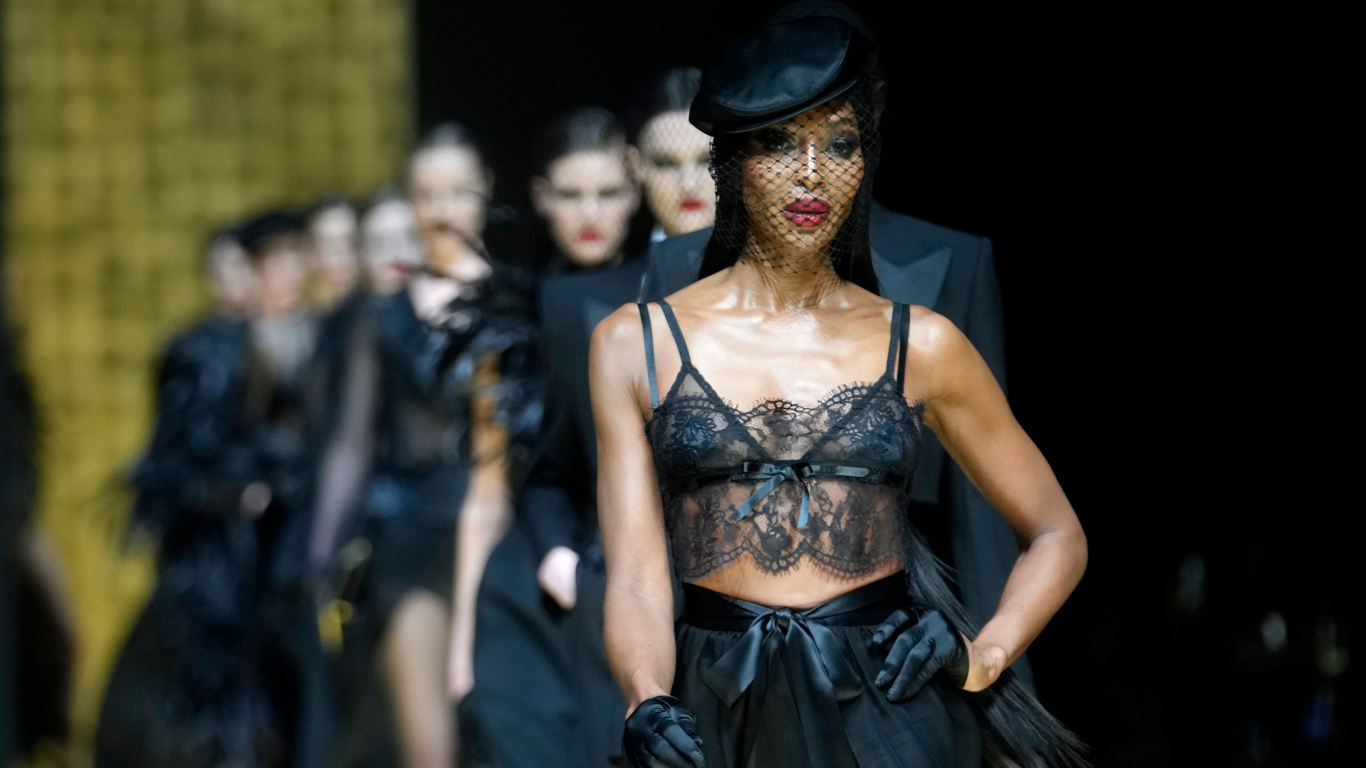
Stefano Gabbana, the co-founder of the Italian luxury fashion house Dolce & Gabbana, stepped down as Chair of the company back in January.
Filings show the designer notified the company of his decision in December, with the change taking effect from 1 January. Chief Executive Alfonso Dolce, brother of co-founder Domenico Dolce, has taken on the role.
The house confirmed that Gabbana’s departure from management positions does not affect his creative work, underlining that he will continue to shape collections alongside Domenico Dolce – a partnership that has defined the brand’s identity for four decades.

This comes shortly after celebrating its 40th anniversary and at a moment of transition for the Milan-based label, which has in recent years expanded its universe beyond the runway into hospitality, interiors and immersive brand experiences, while continuing to stage its elaborate Alta Moda presentations across Italy’s historic locations.

Stefano Gabbana (left) and Domenico Dolce at the end of a runway show (Alamy/PA)
Industry reports have also pointed to ongoing discussions with lenders and the possibility of fresh investment, as the wider luxury sector adjusts to changing global demand. The company has not commented in detail on its financial position.
Gabbana is understood to be considering options regarding his shareholding, though he remains closely involved in the brand’s future.
Founded in Milan in 1985 by Domenico Dolce and Stefano Gabbana, Dolce & Gabbana rose to prominence with a bold and quintessentially Italian vision of glamour.
The duo quickly became known for their celebration of Mediterranean sensuality, defined by corsetry, inky lace and blooming black florals with references to Sicilian culture, Catholic iconography and Italian cinema.
Their aesthetic struck a chord internationally during the late 1980s and 1990s, helping to define an era of maximalist fashion.
A pivotal moment in the brand’s rise came through its association with Madonna, who famously wore Dolce & Gabbana during the 1990s and commissioned the designers to create costumes for her 1993 Girlie Show tour.
The collaboration cemented the label’s reputation for provocative, body-conscious design and aligned it with global pop culture at its most influential.
Over the years, the house has maintained strong ties with celebrity and entertainment, dressing a range of exclusive figures across music, film and pop culture, reinforcing its image as a purveyor of dramatic, statement-making fashion.
Today, Dolce & Gabbana spans ready-to-wear, accessories, beauty and haute couture, with its Alta Moda and Alta Sartoria collections showcasing the highest levels of Italian design.
These presentations, often staged in historic settings from Sicily to Venice, have become a cornerstone of the brand’s storytelling.
Despite changes in its corporate structure, the label remains creatively led by its founders.
Gabbana’s decision to step back from a formal leadership role signals a shift in governance, but not in vision – with the designer continuing to shape the aesthetic motifs that have defined Dolce & Gabbana for 41 years.



