
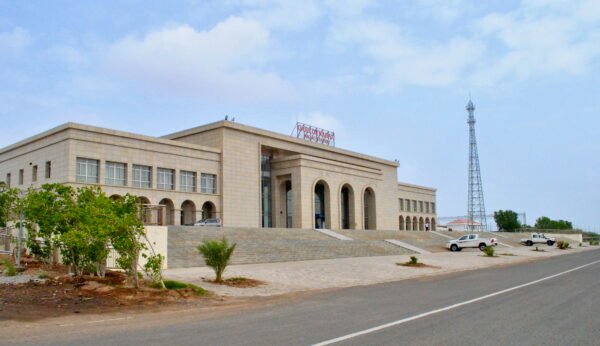
After its inauguration on January 10, 2017, in Djibouti City, the Addis Ababa–Djibouti Railway (AADR) – the African continent’s first standard-gauge, electrified, multi-country railway – started its operation in 2018. Since then, as a result of multiple years of research, we have published series of articles in The Diplomat about the numerous dimensions of this China-built infrastructure. This article is the output of the latest fieldwork from the end of January 2026 when we closely looked at the current state of the AADR, with a focus on maintenance, modernization, and strategic enhancement as well as regional connectivity.
The jointly owned railway – 75 percent belongs to the Ethiopian government, 25 percent to the Djiboutian government – can be considered the backbone of the regional railway network. For landlocked Ethiopia, it’s certainly a lifeline to get better connected to global maritime transportation via the Port of Djibouti. There had been a corridor during colonial times between the two countries, but it had deteriorated. As Morozov explained, “Ethiopia was to be connected by railway to the coast of [then colonial] French Somalia, which would facilitate France’s political and economic expansion in this country.”
At the time operations began, politicians took care to emphasize that the AARD is equally important to revitalize the Ethiopian economy and regional infrastructure at the same time.
In May 2024, six years after the commencement of operations, management duties were transferred from the Chinese Railway Construction Corporation (CRCC) to the Ethiopian and Djiboutian governments. As reported by the Addis Standard, during the management handover ceremony, Abdi Zenebe, then the CEO of the railway, underscored: “This strategic coastal railway has fundamentally altered the transportation dynamics of goods between our two nations, resulting in diminished transit durations and enriched trade prospects.”
Zenebe (who left the company after two years) highlighted in our previous discussions that to make the rail profitable, first and foremost freight transportation has to be further improved, which requires local expertise and human resources development.
At a meeting with Deputy CEO Youssouf Djama Farah and colleagues on January 28, 2026 in Djibouti City, it was emphasized that out of the many hundreds of local staff the best 120 – most of whom received relevant Bachelor’s degrees from the University of Djibouti – were selected to get further training in Ethiopia (30 engineers) and in China (90 technicians). After these workers returned from their training programs, the Djiboutian side of the railway reached a level of readiness that enabled it to independently implement the strategic plan for addressing operation and maintenance challenges.
Following technical studies conducted in China in 2016, Djiboutian staff worked closely with Chinese experts for a period of six years. For the past two years, the Djiboutian side has assumed full operational and maintenance management responsibilities without the involvement of Chinese personnel.
Chief Operations Officer (COO) Khaire Mohamed Ali confidently outlined how the accumulated technical expertise now enables the railway to independently carry out repairs on a significant number of locomotives, as well as to ensure the maintenance of the railway track and associated infrastructure. This capability also extends to the maintenance of electrical systems, which are critical given that the railway operates entirely on electric traction.
With regard to revenue and possible future avenues of progress, while presenting the annual fiscal report in July 2025, Ethiopian Minister of Transport and Logistics Alemu Sime pointed out that “inbound goods dominated cargo transportation, accounting for close to 91 percent of all activity, almost all of which went through Djibouti’s ports.”
The connection of both ports – Doraleh Multi-Purpose Port (DMP) and the Doraleh Container Terminal Management Company (SGTD) – has been a critical factor in strengthening Djibouti’s strategic role within the railway corridor. Both ports have made substantial investments – around $70 million – to support the railway by constructing dedicated rail lines directly entering the port facilities.
These direct rail-port interfaces were developed with the objective of reinforcing the Djibouti-Ethiopia corridor through rail transport, enhancing operational efficiency, reducing handling times, and ensuring seamless integration between maritime and rail logistics.
This approach greatly helped boost the amount of cargo that has been transported on the AADR: from 1.8 tons in 2024 to 3.2 tons in 2025. This underscores the significance of maintenance in any strategic planning, in addition to the obvious requisites of power stability, security, and safety.
Better interconnectedness between the railway and the ports and the improvement of efficiency were also highlighted by Ali Ahmed Aouled, commercial director of the Doraleh Multi-Purpose Port. In a personal discussion, he emphasized that DMP has already identified the need to increase, both in quantity and in quality, the equipment required in order to effectively respond to the growing volumes of cargo handled. Steps are currently being undertaken to acquire this equipment. Furthermore, DMP is fully aware of the importance of preserving its market share, which is based in particular on its excellent connectivity with Ethiopia.
A ship belonging to China’s state-owned enterprise COSCO in Doraleh Multi-Purpose Port. Photo by Istvan Tarrosy.
Yet not all of Ethiopia-Djibouti trade makes use of this railway. When implementing the project, the focus was specifically on the main Addis Ababa-Djibouti line, which we highlighted in previous articles. However, this meant that the AADR was unable to top into the economic potential of the areas along the route. The lack of trunk lines and depots also meant that it was more cost-effective to transport goods by truck even from the railway’s catchment area. To cite one example, take the increasingly significant livestock export to the ports in Djibouti: it is easier to drive them to Djibouti’s ports than to first transport them to Addis Ababa and then put the animals on a train there. The lack of these investments has slowed growth and the economic development of areas not connected to the railroad infrastructure.
However, the past year has brought change in this regard as well, particularly on the Djibouti side. In Djibouti, there are plans to expand two branch lines: one is a 1.5 km spur toward the Awash oil terminal and Horizon Djibouti Terminal Limited (HDTL), and the other would extend the network by 17 km to the Damerjog Industrial Park and Free Zone. The oil terminal project is particularly important because it also creates an opportunity to use oil tanker railroad cars that have been underutilized since the AADR began operating.
Looking ahead, further strategic investments are planned at Nagad Railway Station in Djibouti City through the development of the Nagad Free Trade Zone within the railway station area. This future project is intended to transform Nagad into a fully integrated rail-based logistics and industrial hub, enhancing value-added services, consolidating freight flows, and strengthening Djibouti’s position as a key gateway for Ethiopia’s rail-borne trade.
Development in this direction might also begin on the Ethiopian side. In 2025 they started connecting the AMG Industrial Park to the main line, a length of 3 km. Negotiations also began regarding potential renovations and the implementation of the aforementioned missing infrastructure, which has not yet been built, in the summer of 2025. As a result, the locomotive and rolling stock fleet could be expanded, and the number of route interruptions could be reduced, for example, by constructing animal crossings (the significance of which we will discuss later from a profit perspective).
The plan, as we heard it from the Djiboutian side, is clearly to increase capacity for further growth. The development and operation of port technologies is a particularly important task for this, making Djibouti a prominent player in the region.
To make the railway more profitable, it is of utmost importance that the company reduces extra spending. There has recently been a policy change for cases where local farmers cause delays by driving their livestock intentionally onto the tracks: the rail company now explicitly communicates that it will not pay any compensation in such instances. As we wrote previously, we first heard about such activities in 2019, and – although on the decline – such cases are still present.
Passengers using the train in Djibouti have increased in number. The COO shared the total figures from the last two years: 278,000 people rode on the segment from Nagad Station to Dire Dawa in 2024, which grew to 471,000 in 2025. Many of these passengers disembark at Dire Dawa, which is Ethiopia’s second-largest city with a population of 530,000. Train riders include people going on holiday for a weekend to be spent in cosmopolitan Dire Dawa, or visiting family along the line, or engaging in informal economic activities.
Online ticket reservations were introduced in December 2025 in Djibouti, as part of the company’s digital transformation strategy. As the deputy CEO said in a statement to the press, this new platform can allow travelers to purchase their tickets “in just a few clicks” using their passport.
Among further strategic plans, the Djibouti side several times emphasized the enhancement of interconnectivity and in a pragmatic way, to diversify connections while upgrading and expanding the network. In this effort, the World Bank-financed Addis-Djibouti Regional Economic Corridor gets a larger macro regional context with the Horn of Africa Initiative’s Regional Economic Corridor project (announced as early as July 2023). According to the World Bank’s International Development Association, this aims to improve regional connectivity and Ethiopian logistics efficiency.



