
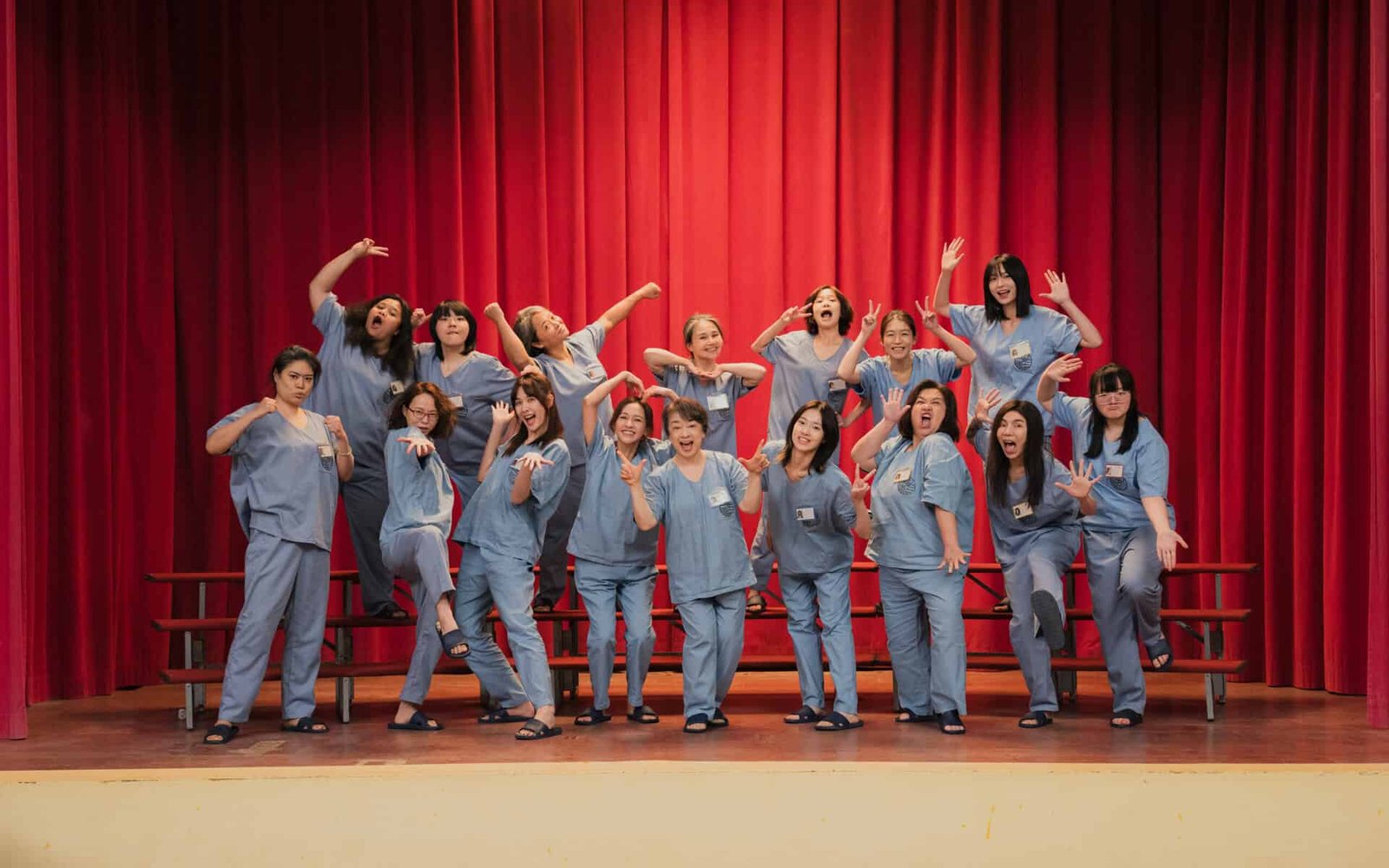
“Sunshine Woman’s Choir” is a Taiwanese Mandarin-language drama directed by Gavin Lin and co-written by Hermes Lu, marking another collaboration between the two following their remake of “More than Blue.” Released on December 31, 2025, the production draws inspiration from real-life stories while also adapting elements from the Korean work “Harmony” (2010) by Kang Dae-kyu. Blending prison drama with musical elements, the narrative focuses on themes of redemption, motherhood, and solidarity within a confined environment. The film features a notable ensemble cast including Ivy Chen, Sun Shu-mei, Amber An, Judy Ongg, and Ho Man-xi, among others, forming a character-driven ensemble within the prison setting.
The film proved to be a remarkable commercial success, becoming the highest-grossing local production in Taiwan’s history, surpassing NT$545 million and overtaking the long-standing record of “Cape No. 7” (2008). It dominated the daily box office, reaching the number one position on January 12 and maintaining strong momentum with consistent daily earnings exceeding NT$10 million.
Sunshine Woman’s Choir is screening in UK&Ireland cinemas 17 April, courtesy of Central City Media
“Sunshine Woman’s Choir” centers on Hui-zhen, an inmate in a women’s prison who gives birth to her daughter Yun-shi while incarcerated. Within the prison, she shares her life with a group of fellow inmates, each carrying their own troubled pasts, including the warm-hearted scam artist Pei-ying, the hot-tempered Xiu-lan, and the older Yu-ying, a former music star. Their daily existence within the confined space gradually evolves into a surrogate family dynamic, particularly as they come together to help raise the newborn child under unusual circumstances allowed by the prison authorities.
The arrival of a rebellious newcomer, You-xin, initially disrupts the fragile balance among the inmates, yet over time she becomes integrated into the group. When it is revealed that Yun-shi suffers from a degenerative eye condition, Hui-zhen seeks a way to create a meaningful memory for her daughter before she is eventually sent for adoption. This leads to the formation of a prison choir, bringing together different factions within the prison despite tensions and rivalries. Under Yu-ying’s guidance, the group prepares for a performance that becomes both a personal and collective expression of hope, connection, and emotional release, while the narrative also follows glimpses of Yun-shi’s future beyond the prison walls.
Gavin Lin tries to combine two of the main mainstream styles here, notably comedy and melodrama, with the prison setting and the musical aspect adding even more to this approach. The way he switches from one to the other is probably the most accomplished aspect of the direction, although at times it feels that certain scenes presented in one tone might have worked better in the other.
Furthermore, there is the concept of the underdog trying to succeed against all odds, beginning with Hui-zhen attempting to raise her baby daughter in prison, extending to her cellmates, and eventually culminating in the choir that consists of inmates from different backgrounds. Expectedly, the way the whole narrative unfolds is not exactly realistic, with the same applying to the depiction of the prison setting. However, the melodramatic aspect keeps this tendency in check, preventing the story from becoming overly light-hearted despite the circumstances.
At the same time, the girl-power element is quite pronounced, with the majority of inmates portrayed as victims of deeply abusive men, depicted in various forms of violence and exploitation. Additionally, the way the female head of the prison gradually reveals her more compassionate side, along with the role a policeman plays toward the end, reinforces this element. Although the approach is somewhat exaggerated, the melodramatic tone, and particularly the ending, maintains a sense of balance.
The selection of the group that ultimately forms the choir is also interesting, following an inclusive approach that incorporates a wide range of personalities. As such, a single mother, an older woman, an overweight inmate, a model-like figure, a tomboy, and a housewife are all included, resulting in a team that both reflects diversity and allows for broader audience identification, thus enhancing its crowd-pleasing appeal.
At the same time, the way they come together, and particularly the formation of the choir while each character retains her individuality, stands out as a key strength, attributable to both the direction and the editing by Cheng-Shin Lin. The pacing allows all arcs to unfold without feeling rushed, while remaining brisk. Eric Chao’s bright and polished cinematography, which becomes darker during the more dramatic moments, especially those involving the past, also enhances the overall atmosphere, with the same applying to the music and choreography.
The acting is also on a high level. Ivy Chen as Hui-zhen carries the central role with conviction, presenting a character who is at once a mother, victim, leader, mentor, and even bully, while maintaining a screen presence that remains consistently engaging. Ho Man-xi as You-xin is equally effective as the troubled teenager who gradually opens up through her interactions with the group, while the way she is portrayed highlights her evident beauty, in a way though, that remains tasteful. Chung Hsin-ling as Mei-li provides one of the main sources of humor in a scene-stealing performance, while Judy Ongg’s calm and composed portrayal of Yu-ying anchors the ensemble.
“Sunshine Woman’s Choir” is not particularly thought-provoking upon close scrutiny, yet it remains easy to watch and consistently engaging, with its blend of comedy and drama and its ensemble-driven approach resulting in a highly effective feelgood experience.



