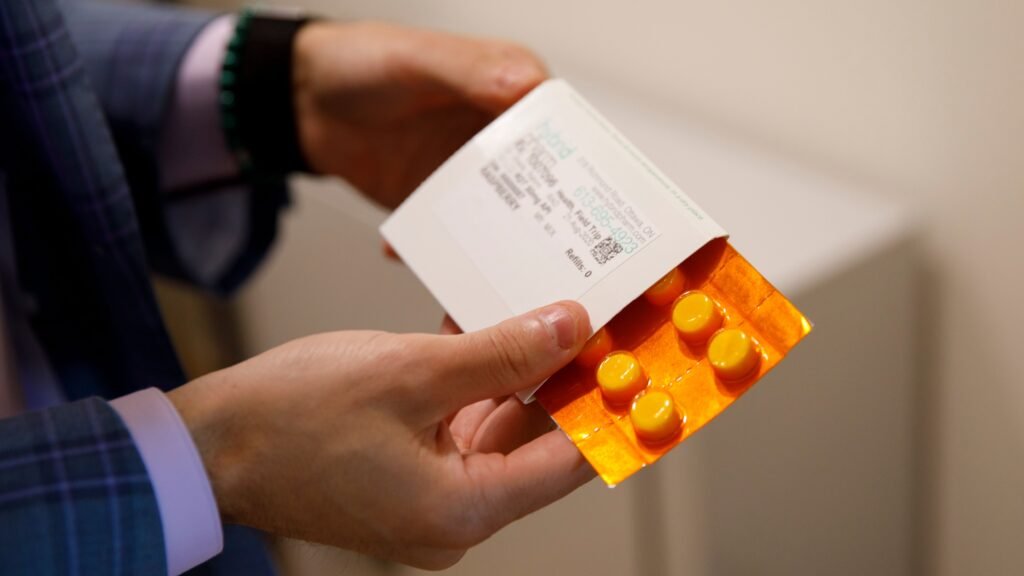
Telehealth companies are mailing a Schedule III narcotic to tens of thousands of depressed patients, hailing it as the democratization of mental health. They call it access. I call it abandonment.
Inside the ketamine box, the most important component is missing: a doctor. Because these platforms provide no real-time monitoring during treatment, they have turned patients into their own safety monitors, forcing them to navigate a medical minefield from their bedrooms.
A year ago, I achieved remission from treatment-resistant depression using Spravato (esketamine) in a medically supervised clinic. When my insurance denied coverage for extended maintenance treatments, I looked for an affordable alternative.
I joined two Reddit ketamine communities expecting to find helpful answers: r/TherapeuticKetamine and r/KetamineTherapy. Instead, I found a digital triage unit run by patients.
I watched as users compared diametrically opposed instructions from their telehealth providers and managed severe side effects using Reddit upvotes. Concerned, I paused my plan to sign up with a telehealth ketamine provider and analyzed six months of Reddit posts and comments from people using at‑home oral ketamine.
That deep dive is part of my work running KetamineTherapyForDepression.org, a noncommercial patient-advocacy site that summarizes ketamine evidence and logistics. I started it after finding success with my own treatment. I don’t provide medical care or sell ketamine, and I have no financial ties to ketamine clinics, pharmaceuticals, or other health care companies.
Now, to be clear, this is not prevalence data. People who are struggling are far more likely to post than people who are doing fine, so this self‑selected sample can’t tell us how common any complication is.
What it can do is reveal patterns: When the same clinically specific questions and complaints — dosing confusion, side effect triage, “is this normal?” — surface again and again, that’s not proof, but it is an early‑warning signal.
And because telehealth ketamine services typically aren’t part of any centralized, mandatory adverse‑event reporting system, these social signals may be one of the few places where emerging risks become visible, even if they still need to be checked against harder sources like claims data, adverse‑event reports, audits, and prescriber surveys.
I reached an unsettling conclusion in my analysis: Telehealth ketamine has crossed the line from innovation to abdication of care.
By stripping away the real-time medical supervision mandated for every other form of ketamine therapy, these services have inadvertently created a system where the burden of safety management falls squarely on the patient.
This is not a fringe phenomenon. We are currently witnessing a massive, decentralized experiment happening in American bedrooms. Joyous, a low-cost telehealth subscription service, recently reported data on over 45,000 patients. Mindbloom says that since 2019 it has facilitated nearly 600,000 at-home ketamine dosing sessions — meaning individual ketamine administrations/experiences, typically lasting about 45–60 minutes — in 38 states. These numbers confirm that tens of thousands of patients are undergoing ketamine therapy without medical supervision.
When I received Spravato, I was monitored every moment — pulse oximeter on my finger, nurse checking vitals, psychiatrist available for consultation. I was never alone with the drug.
In the telehealth model, “supervision” is often automated or outsourced. Most protocols require a video monitor (a “guide”) only for the first session. Subsequent sessions are done solo.
While the industry celebrates “democratizing access,” my analysis reveals something darker — an unsettling picture of inadvertent, provider-sanctioned self-harm.
The warning signs flashing on these Reddit forums are now manifesting in the real world.
The American Journal of Psychiatry recently documented a case where a woman became unresponsive after being instructed (it’s not clear by whom) to swallow her 1,200 milligram dose instead of spitting, requiring emergency transport and treatment for ketamine overdose. Her blood ketamine level reached concentrations equivalent to general anesthesia.
Mindbloom, the biggest telehealth ketamine provider, was hit with a wrongful death suit after one of its patients overdosed on the ketamine it provided, allegedly without proper medical oversight.
It’s not like we don’t know about the dangers. The death of Matthew Perry served as a global PSA on the risks of using ketamine without medical supervision. And more than two years ago the Food and Drug Administration issued a public warning against medically unmonitored use of at-home oral ketamine.
My Reddit analysis shows why. Users described chronic vomiting, severe anxiety, and persistent bladder pain:
“I’ve been throwing up almost every time I use oral ketamine troches. The nausea is unbearable.”
“The bladder pain is getting worse. I’m scared I’m causing permanent damage.”
“I noticed blood in my urine yesterday. Been on 500mg for 4 months. Should I stop?”
Patients end up crowdsourcing their dosing protocols based on Reddit upvotes and anecdotal experiences, gambling with organ damage because their providers aren’t there to supervise the treatment.
FDA-approved Spravato has a strict maximum of 84 mg per session. Yet on self-reports in Reddit threads, patients say their at-home prescriptions range anywhere from 50 mg to 800 mg — a 16-fold variance. Patients on high doses described terrifying experiences:
“800mg sent me into a terrifying dissociative state. I couldn’t move, couldn’t speak. Genuinely thought I was dying.”
Another reported: “My provider had me on 600mg and I had what I can only describe as a psychotic episode. Never again.”
Meanwhile, others on lower doses see no benefit at all: “After three months on oral ketamine, I feel absolutely nothing. No improvement in depression, just side effects.”
One patient captured the confusion perfectly: “My provider wants to increase me to 600mg. That seems insane. Is it safe?”
Another wrote: “I’m on 800mg and it scares me. Reading that some people get results from 150mg.”
These aren’t patients abusing ketamine. They’re following their prescribers’ instructions. The problem is those prescribers built a business model that strips away the medical supervision mandated for every other form of ketamine administration.
Proponents of the current model argue that requiring in-person visits or stricter supervision creates barriers for those in rural areas or with limited funds. They argue that “some access is better than no access.”
As someone who was forced out of a clinic due to cost, I understand the desperation for affordable care. But we must distinguish between access to medication and access to health care. Sending a powerful dissociative drug to a vulnerable patient’s mailbox without a consistent safety protocol or real-time monitoring isn’t health care. It’s negligence.
After completing my Reddit analysis, I abandoned my plan to try oral ketamine. But here’s what haunts me: I had the research skills and medical literacy to investigate and make discoveries. Most patients don’t. They just see the affordable price tag and promise of relief.
The danger will continue for at least another year. The Drug Enforcement Administration recently issued a fourth temporary extension of Covid-era telemedicine flexibilities, allowing providers to prescribe Schedule II – V controlled substances without an in-person visit through Dec. 31, 2026.
Until patients can stop asking internet strangers how to take ketamine without damaging their organs — we haven’t democratized access to ketamine therapy.
We’ve just democratized negligence.
Michael Alvear is a health author, an independent researcher, and the founder of KetamineTherapyForDepression.org.
Source: www.statnews.com