
Benzinga Money is a reader-supported publication. We may earn a commission from the advertisers associated with this article. Read our Advertiser Discloser.
The global power grid wasn’t built for the demands of artificial intelligence, electrification and rapid data center expansion. Bloomberg estimates that $15.8 trillion will be required worldwide by 2050 to modernize and expand grid infrastructure. At the same time, electricity prices are skyrocketing as demand accelerates.
As centralized utilities struggle to scale fast enough, distributed energy systems are gaining traction. One company positioning itself within this shift is Paladin Power, which reports $100 million in contracted revenue for 2026 as it develops a solid-state energy storage platform designed for whole-home operation.
Today, more than 90% of newly deployed energy storage systems rely on lithium-ion batteries. While widely adopted, lithium-based systems have faced well-documented thermal management and fire-safety concerns, particularly in large-scale installations. Most residential lithium systems are also designed primarily for partial backup rather than full-home grid replacement.
Paladin’s platform is built around a solid-state graphene battery architecture engineered for complete off-grid use.
The company reported $23 million in gross revenue for 2025 as it continues scaling within a global energy storage market projected to exceed $500 billion in the coming years.
Helping More Americans Achieve Energy Independence
Since its launch in 2022, Paladin Power has gained significant traction across residential energy storage, electrification and EV infrastructure markets.
Their achievements include:
- More than $12 million raised to date from 4,000+ investors
- $100 million in contracted sales for 2026
- Secured a manufacturing agreement with NYSE-listed Jabil to scale production
- A $162M channel partner agreement to expand distribution
- An IP portfolio valued at over $200 million
Why Energy Independence Is So Important
Since 2019, U.S. power grids have experienced an approximately 20% annual increase in outage duration, frequency and magnitude, according to research from Texas A&M University’s Urban Resilience AI Lab.
As reliability concerns rise and electricity costs continue climbing, more homeowners are exploring decentralized energy solutions instead of relying solely on traditional utilities.
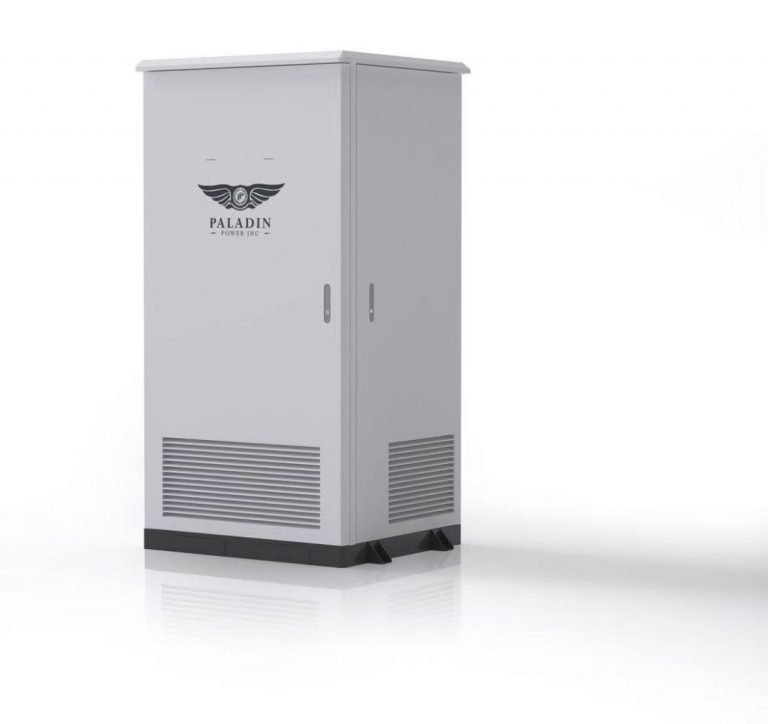
Paladin’s ESS is a modular, integrated system designed to power entire homes or commercial properties from a single platform.
It’s designed to power 100% of home loads, including high-demand appliances such as A/C systems and EV charging, eliminating the need for separate backup circuits.
Its streamlined architecture reduces the need for multiple components, such as standalone batteries and inverters, enabling faster installation and a smaller physical footprint than traditional multi-device setups.
Once installed, the Paladin is engineered to power full home loads and operate independently of the grid. It integrates with multiple energy inputs, including solar, while allowing customers to remain grid-connected if desired.
In this structure, the grid functions as a secondary source rather than the primary one, giving homeowners greater control over how and when they use their energy — and reducing exposure to unpredictable utility rate increases.
Invest in the Future of Decentralized Energy
With proven revenue generation, next-gen tech and a fast scaling distribution model, Paladin is positioned to lead the shift toward decentralized energy.
Accredited and non-accredited investors can participate with a minimum of $1,000.
Benzinga is compensated for publicizing this content. Please read 17b disclosures here.
Disclaimer: Please be advised that alternative investments carry a risk of monetary loss. Neither Benzinga nor its staff recommends that you buy, sell, or hold any security. We do not offer investment advice, personalized or otherwise. All information contained on this website is provided as general commentary for informative and entertainment purposes and does not constitute investment advice. Benzinga will not accept liability for any loss or damage, including without limitation to, any loss of profit, which may arise directly or indirectly from use of or reliance on this information, whether specifically stated in the above Terms of Service or otherwise. Benzinga recommends that you conduct your own due diligence and consult a certified financial professional for personalized advice about your financial situation.



